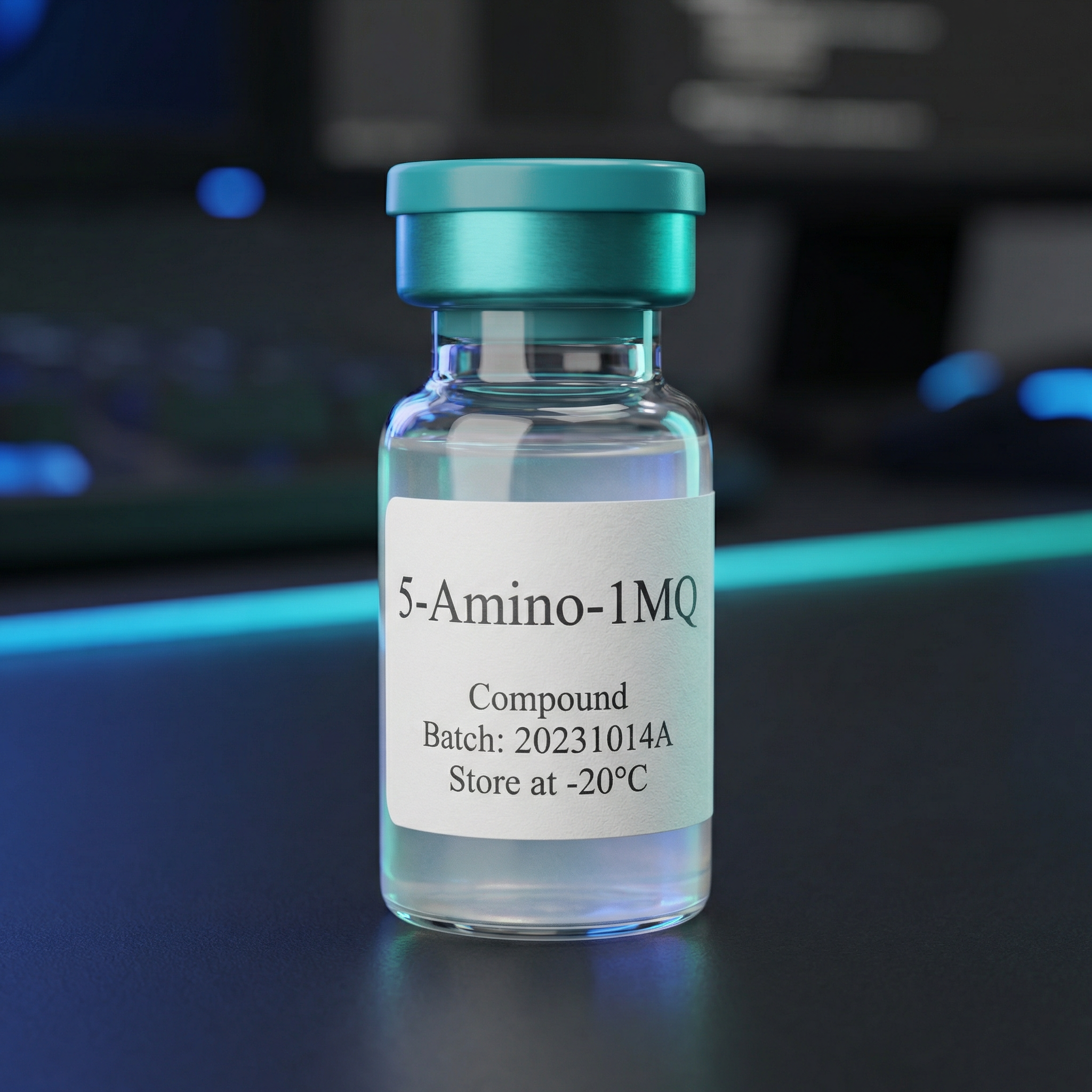
5-Amino-1MQ
Non-peptide small molecule often grouped with peptide-adjacent longevity / body-composition compounds
Primary Target
Nicotinamide N-methyltransferase (NNMT)
Research Focus
Obesity, insulin resistance, hepatic steatosis, NAD+ economy
Confidence Snapshot
Mechanism plausible; human efficacy and safety unknown
5-Amino-1MQ is a small-molecule inhibitor of NNMT, an enzyme linked to methyl-donor use, nicotinamide metabolism, adipocyte biology, and cardiometabolic dysfunction. In the current evidence base it sits firmly in the preclinical category. Rodent studies report reduced fat-mass gain, improved glucose tolerance, better insulin sensitivity, and attenuation of fatty-liver pathology, but no published human efficacy program was identified for this starter record.
Common names include 5-Amino-1MQ, 5A1MQ, and 5-amino-1-methylquinolinium analog references in the NNMT literature. This entry is intentionally labeled as a non-peptide compound so the database can accommodate peptide-adjacent agents without confusing chemical class.
The working mechanism is inhibition of NNMT. By reducing nicotinamide methylation, the compound is proposed to alter methyl-group use and improve intracellular nicotinamide / NAD+ handling in metabolically active tissues. Animal work and review literature position NNMT as a lever for adipocyte differentiation, insulin sensitivity, and liver-fat biology.
Studied for obesity-related metabolic dysfunction, body-composition change, insulin resistance, and fatty-liver phenotypes in animal models. There is not enough human evidence to support medical-use claims for weight loss, longevity, or performance enhancement.
The newest mouse work in this record used subcutaneous dosing and reported measurable systemic exposure with distribution into adipose tissue, liver, and skeletal muscle. Human PK, oral bioavailability, metabolism, clearance, and half-life remain insufficiently characterized in the public literature reviewed for this starter document.
Evidence is preclinical. A 2024 mouse study reported dose-dependent limits on body-weight and fat-mass gain, improved oral glucose tolerance and insulin sensitivity, and improvement in steatosis-related liver findings. Earlier NNMT-inhibitor literature supports the same pathway directionally, but replication across models and translation to humans remain open questions.
Publicly available safety information is limited to preclinical observations. The reviewed mouse literature does not establish long-term human safety, reproductive safety, interaction risk, cardiovascular safety, or chronic-use tolerability. This record should therefore be treated as evidence-limited and high-uncertainty for human use.
No validated human dosing standard was identified. Any dosing claims circulating in clinics, forums, or marketing material should be treated as non-authoritative unless tied to a peer-reviewed human trial or regulated product label.
UNVERIFIED RESEARCHER-REPORTED DOSING INFORMATION
The following dosing information has been compiled from community forums, researcher discussions, and gray-market sources. This information has NOT been verified through peer-reviewed scientific studies or clinical trials. It does NOT constitute medical advice, a prescription, or a recommendation for human use.
This data is presented solely for informational and educational purposes to document what is commonly discussed in research communities. Dosing protocols may be inaccurate, dangerous, or based on anecdotal reports with no scientific validation. Individual responses vary significantly, and unregulated compounds carry inherent risks including contamination, mislabeling, and unknown side effects.
Always consult qualified medical professionals before making any health-related decisions. The repository maintainers assume no liability for the use or misuse of this information.
Researcher-Reported Dosing Protocols
Common Dose Range: 2.5-5 mg per day
Administration Route: Subcutaneous injection
Frequency: Once or twice daily
Timing: Morning administration preferred; if twice daily, split AM/PM.
Schedule / Protocol: Daily administration, with a 50mg vial lasting 10-20 days.
Dose Escalation: Start at 2.5 mg once daily to assess tolerance, then increase to 5 mg once daily or 2.5 mg twice daily.
Additional Notes: Rotate injection sites to reduce local irritation. A mild stinging sensation may occur at the injection site.
This researcher-reported dosing information was compiled from unverified community sources and does not represent validated scientific or medical guidance.
No completed or published human interventional efficacy program was identified during preparation of this starter entry. Future updates should check ClinicalTrials.gov, EU CTIS, published abstracts, and sponsor disclosures.
Not approved by the FDA or EMA as a medicine. Publicly visible development is best described as preclinical / exploratory.
No standardized regulated commercial formulation was identified. Any compounded or research-market presentations should be considered non-interchangeable and difficult to compare across vendors.
Version 0.1 starter entry created March 14, 2026. Evidence basis for this draft: 2024 obesity-metabolism mouse study, prior NNMT inhibitor chemistry work, and public registry / literature scan showing no established human program in this starter review.