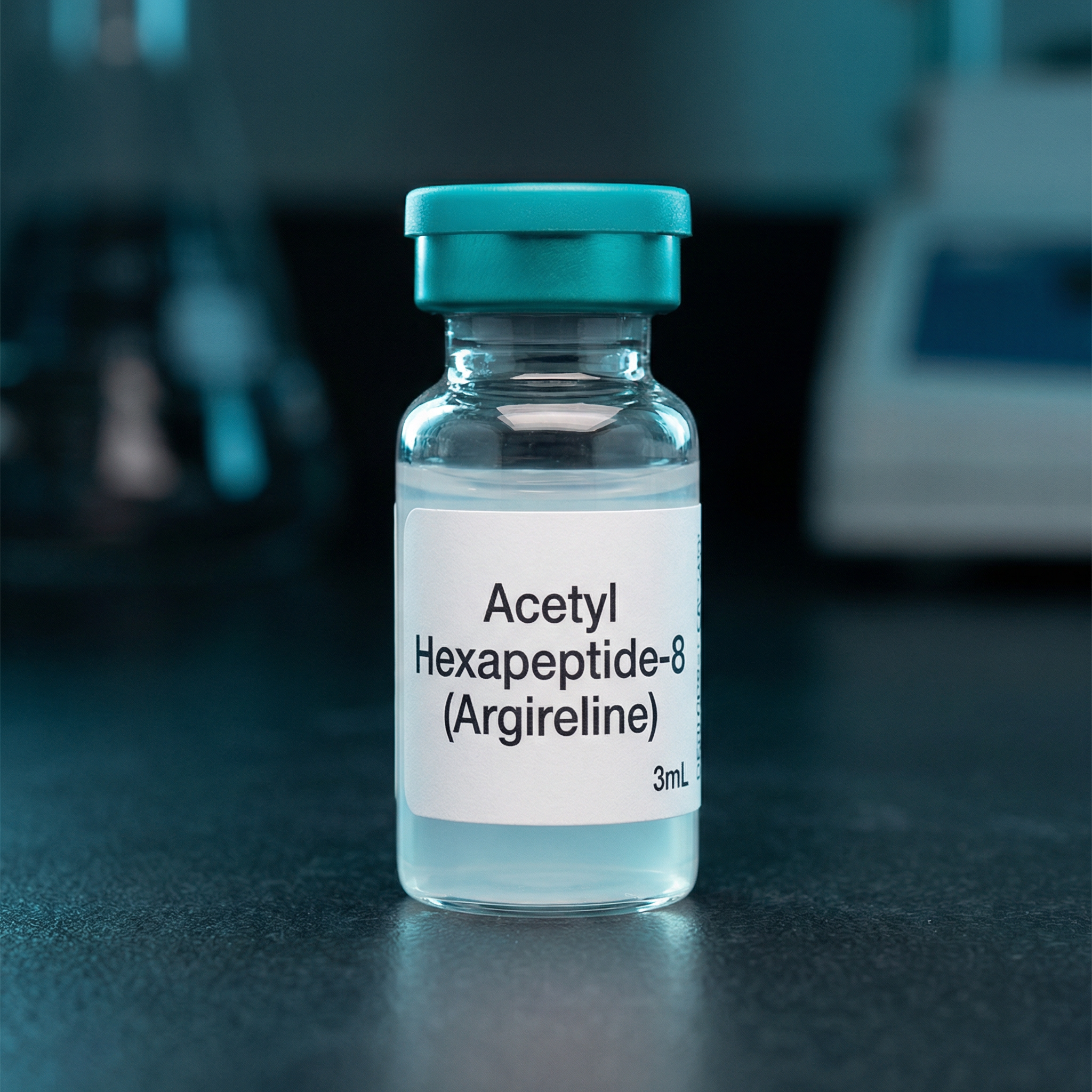
Acetyl Hexapeptide-8 (Argireline)
Topical cosmetic peptide used primarily for wrinkle appearance claims
Primary Target
SNARE-complex / neurotransmitter-release mimic hypothesis
Research Focus
Dynamic wrinkle appearance, skin texture, hydration
Confidence Snapshot
Cosmetic benefit plausible; deep tissue mechanism remains uncertain
Acetyl Hexapeptide-8, commonly marketed as Argireline, is a synthetic topical peptide used in anti-aging skincare. It is often described as a 'Botox-like' cosmetic active, but the evidence supports a much more modest and formulation-dependent effect focused on appearance outcomes rather than true neuromuscular blockade.
Common names include Acetyl Hexapeptide-8 and Argireline. Older commercial and consumer materials sometimes refer to acetyl hexapeptide-3, so synonym handling matters for search and de-duplication inside the repository.
The proposed mechanism is partial interference with SNARE-complex mediated neurotransmitter release, inspired by the SNAP-25 system targeted by botulinum toxin. However, review literature emphasizes that skin penetration is limited and the extent to which topically applied peptide reaches biologically meaningful neuromuscular targets remains uncertain.
Used mainly in cosmetic products for expression-line softening, wrinkle-appearance reduction, and general skin rejuvenation positioning. It may also appear in products marketed for scar appearance or oil-balance support, though those use cases carry thinner evidence.
The practical ADME issue is skin delivery rather than systemic PK. The peptide is hydrophilic and relatively large for passive transdermal movement, which limits penetration across the stratum corneum and helps explain why formulation quality matters so much.
The evidence base is mostly cosmetic and formulation specific. Reviews describe improvements in wrinkle depth, skin elasticity, and hydration in some studies, but the effect size is generally modest and depends heavily on vehicle design, concentration, and study quality.
Topical cosmetic use is generally described as well tolerated, but the database should avoid overstating safety because long-horizon comparative data are thin and product formulas vary widely. The safety profile is not interchangeable with injected botulinum toxin, nor does the efficacy profile match it.
Administration is topical, usually as part of a serum or cream rather than as a standardized drug product. Because this is mainly a cosmetic ingredient, concentration and regimen vary by manufacturer.
UNVERIFIED RESEARCHER-REPORTED DOSING INFORMATION
The following dosing information has been compiled from community forums, researcher discussions, and gray-market sources. This information has NOT been verified through peer-reviewed scientific studies or clinical trials. It does NOT constitute medical advice, a prescription, or a recommendation for human use.
This data is presented solely for informational and educational purposes to document what is commonly discussed in research communities. Dosing protocols may be inaccurate, dangerous, or based on anecdotal reports with no scientific validation. Individual responses vary significantly, and unregulated compounds carry inherent risks including contamination, mislabeling, and unknown side effects.
Always consult qualified medical professionals before making any health-related decisions. The repository maintainers assume no liability for the use or misuse of this information.
Researcher-Reported Dosing Protocols
Common Dose Range: 10% solution/cream
Administration Route: Topical
Frequency: Twice daily
Timing: Morning and evening
Schedule / Protocol: Continuous for at least 30 days
Dose Escalation: It is recommended to perform a spot test prior to applying to a larger area of the skin to check for any adverse reactions.
Additional Notes: Argireline is an ingredient in topical cosmetic products. It is not a research peptide for injection. It is often combined with other ingredients like hyaluronic acid to improve its effectiveness. Avoid using with products containing alcohol. Do not apply to damaged skin.
This researcher-reported dosing information was compiled from unverified community sources and does not represent validated scientific or medical guidance.
No major regulated therapeutic clinical-development program was identified in this starter review. Evidence comes primarily from cosmetic and cosmeceutical studies rather than drug-development trials.
Positioned as a cosmetic ingredient rather than an approved medicine. Regulatory treatment therefore depends on jurisdiction and product claims.
Formulation is central to performance. Emulsions, delivery systems, and companion ingredients can materially affect stability and apparent efficacy, so database fields should capture product context when possible.
Version 0.1 starter entry created March 14, 2026. Evidence basis for this draft: 2025 review of skin permeability and efficacy, supporting cosmetic-use literature, and current public-positioning review.