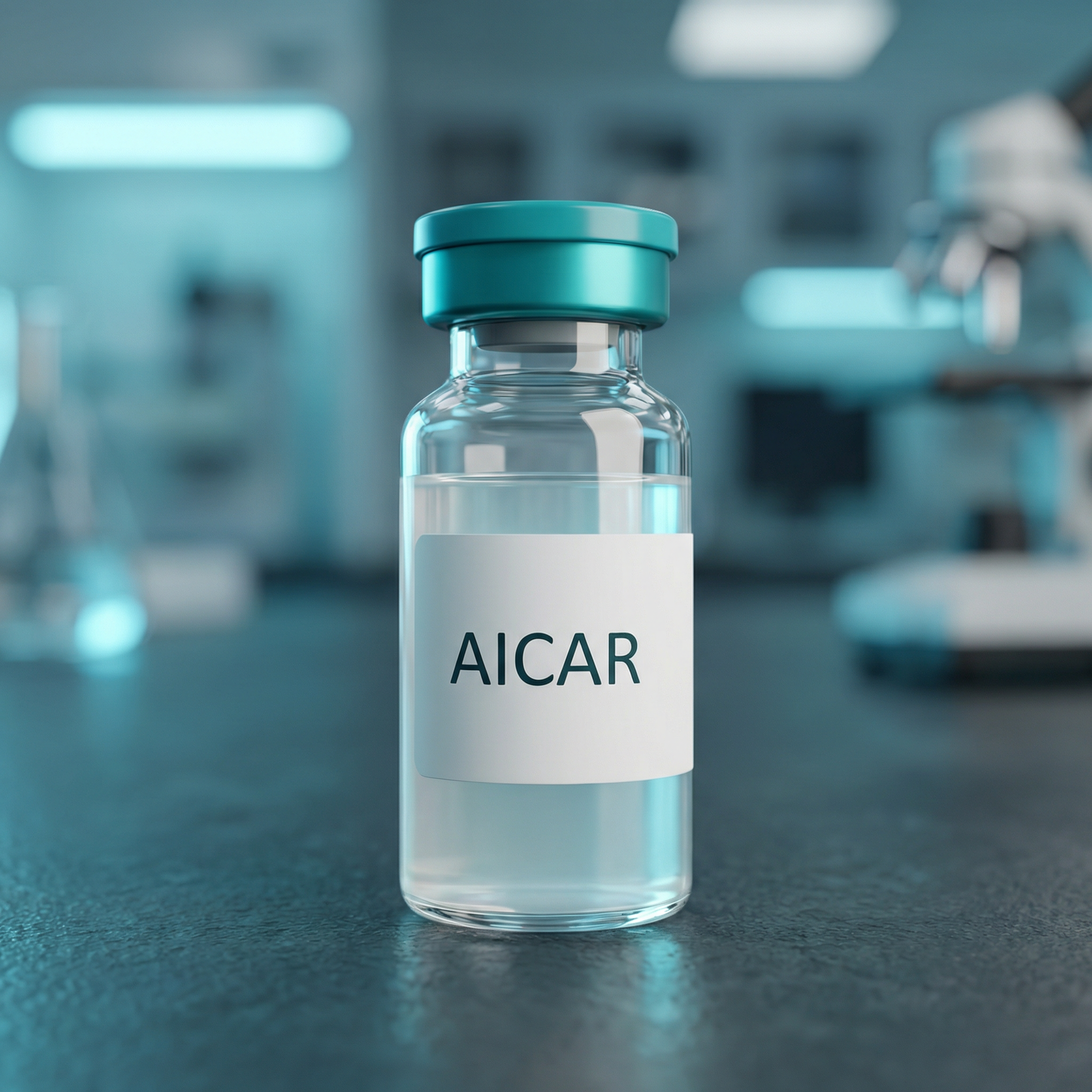
AICAR
AMP analog / AMPK-pathway research compound also known as acadesine or AICAr in strict nomenclature
Primary Target
AMPK activation via intracellular conversion to ZMP / AICAR
Research Focus
Metabolism, ischemia-reperfusion, exercise mimetic biology, oncology
Confidence Snapshot
Biologically influential but mechanistically messy and not clinically established
AICAR is a long-studied research compound used as a pharmacologic activator of AMPK signaling, although modern reviews emphasize that many of its biologic effects are AMPK-independent. It has a deeper and older literature base than many peptide-adjacent compounds in this repository, including both preclinical work and limited human clinical development under the name acadesine.
The literature uses AICAR, AICAr, and acadesine. Strictly speaking, review authors note that AICAr refers to the riboside while AICAR can refer to the phosphorylated intracellular form, but routine scientific usage often collapses the terms. The repository should preserve this nomenclature note because it affects search results.
After transport into cells, the riboside is phosphorylated to ZMP, an AMP analog that activates AMPK-related signaling. Importantly, recent reviews warn that the compound also influences multiple AMP-sensitive pathways beyond AMPK, so database interpretations should not assume clean target selectivity.
Historically studied in metabolism, myocardial protection, ischemia-reperfusion injury, and hematologic malignancy. In modern research it is more often treated as a pathway probe than as an established therapeutic agent.
Human literature suggests poor oral bioavailability and rapid decline in plasma concentrations after infusion. Exposure and effect therefore depend strongly on route and study context, and classic animal 'exercise mimetic' narratives should not be generalized too casually to humans.
The efficacy record is mixed by indication. Cardiac-surgery studies produced enough signal to support major trials, while oncology programs such as relapsed / refractory CLL also entered clinical testing. Yet the overall clinical package was not strong enough to produce routine approved use.
Older early-phase studies described generally manageable short-term tolerability at tested doses, but the broader issue is not just acute adverse events - it is the lack of a durable risk-benefit case across target indications. Mechanistic promiscuity also complicates interpretation.
Published human studies have used both intravenous and oral regimens, depending on the indication. No current approved dosing standard applies for routine clinical use.
UNVERIFIED RESEARCHER-REPORTED DOSING INFORMATION
The following dosing information has been compiled from community forums, researcher discussions, and gray-market sources. This information has NOT been verified through peer-reviewed scientific studies or clinical trials. It does NOT constitute medical advice, a prescription, or a recommendation for human use.
This data is presented solely for informational and educational purposes to document what is commonly discussed in research communities. Dosing protocols may be inaccurate, dangerous, or based on anecdotal reports with no scientific validation. Individual responses vary significantly, and unregulated compounds carry inherent risks including contamination, mislabeling, and unknown side effects.
Always consult qualified medical professionals before making any health-related decisions. The repository maintainers assume no liability for the use or misuse of this information.
Researcher-Reported Dosing Protocols
Common Dose Range: 10-50 mg per day
Administration Route: Subcutaneous injection
Frequency: Once daily
Timing: Often taken in the morning, some suggest pre-workout for performance-related research.
Schedule / Protocol: 2-4 week cycles, followed by a 1-2 month washout period.
Dose Escalation: It is often suggested to start at a lower dose (e.g., 10-15mg/day) and gradually increase to assess tolerance.
Additional Notes: AICAR dosage is highly variable and controversial. Research studies in animals have used doses as high as 500mg/kg, which are not comparable to human use. The high cost of AICAR is a significant factor, and many online sources mention that achieving the doses used in studies is prohibitively expensive. Due to the high doses used in some protocols, researchers often monitor kidney function.
This researcher-reported dosing information was compiled from unverified community sources and does not represent validated scientific or medical guidance.
Human studies have included healthy volunteers, coronary artery bypass surgery programs, and hematologic malignancy work. Reviews summarize Phase I and later-stage investigations, but no active approved therapeutic pathway emerged from this body of work.
Not FDA approved. Best categorized as an extensively studied research compound with historical clinical-development programs rather than as an established marketed therapy.
As a small-molecule nucleoside analog, AICAR fits a different CMC profile from recombinant peptides or fusion proteins. Repository schema should therefore separate chemical class, route, and formulation logic from peptide-only assumptions.
Version 0.1 starter entry created March 14, 2026. Evidence basis for this draft: 2021 systematic review of AICAr biology, older human trial literature in CABG and CLL, and current regulatory-status check.