Ara-290
Tissue-protective erythropoietin-derived peptide also developed as cibinetide
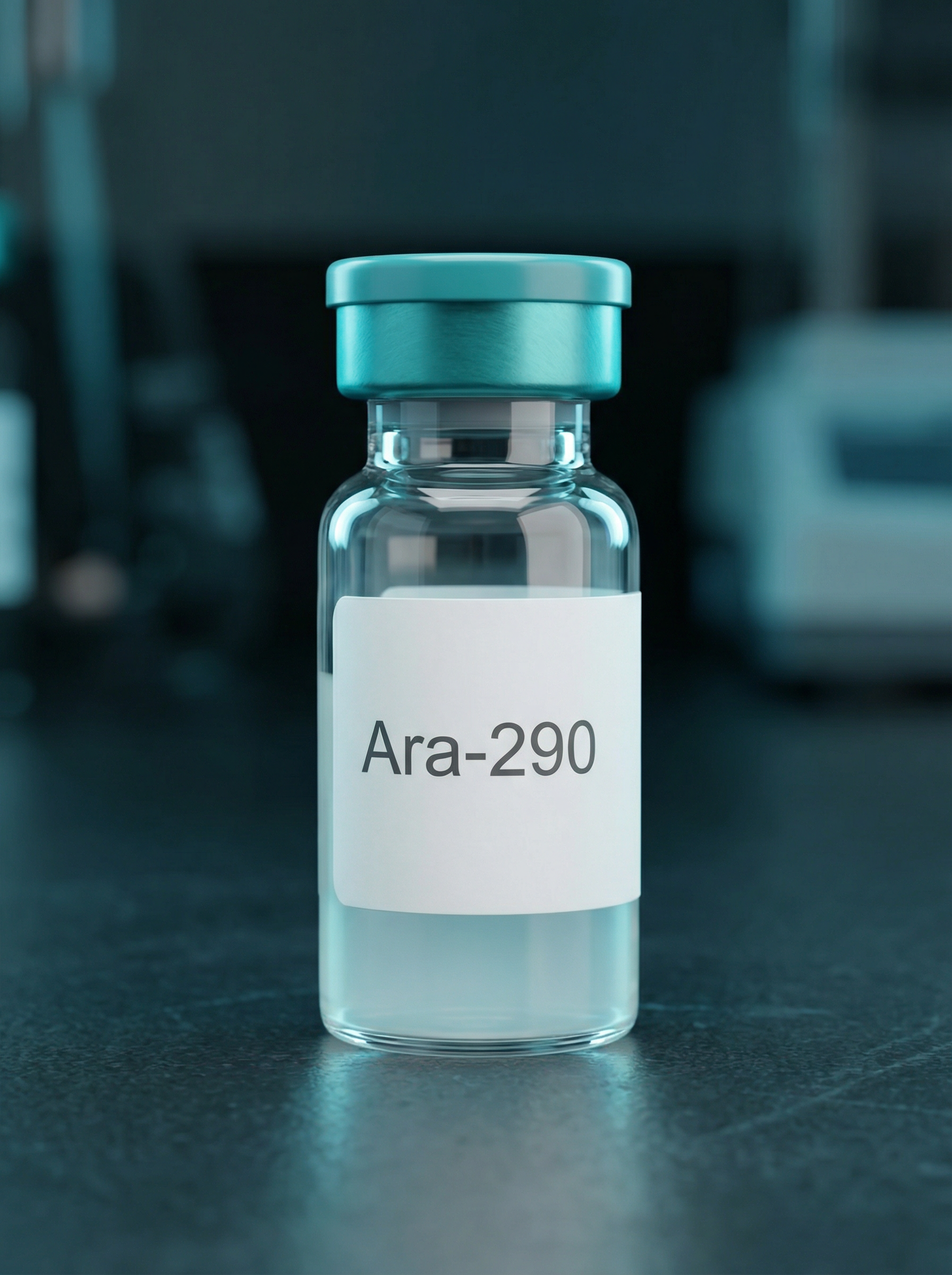
ARA-290, also known as cibinetide, is a small peptide engineered from the helix-B region of erythropoietin to capture tissue-protective and repair signaling without stimulating erythropoiesis. It is one of the more scientifically interesting entries in this repository because it has a coherent mechanistic story and human trial history, yet remains investigational. The highest-quality public signals center on neuropathy and other tissue-injury contexts rather than broad anti-aging claims.
Names used in the literature include ARA 290 and cibinetide. It is commonly described as a nonerythropoietic erythropoietin-derived peptide or helix-B surface peptide analog. Sponsor and program naming changed over time, so the repository should store both names as primary searchable aliases.
ARA-290 is intended to selectively activate the so-called innate repair receptor rather than the classical erythropoietic receptor signaling associated with red-cell production. In practical terms, the development thesis is anti-inflammatory, tissue-protective, and neuroregenerative signaling with reduced hematologic risk compared with erythropoietin itself. The mechanistic model is attractive but should still be labeled as translational rather than fully settled clinical biology.
Human studies have explored painful small-fiber neuropathy in sarcoidosis, neuropathic complications in type 2 diabetes, diabetic macular edema, and related tissue-repair indications. In online peptide culture it is sometimes discussed much more broadly, but the repository should anchor use cases to the actual studied disease areas, especially neuropathy / neurorepair and inflammation-linked tissue injury.
Published studies demonstrate feasibility of repeated subcutaneous dosing and, in some earlier work, intravenous dosing schedules. The central PK-PD concept is brief exposure with durable biologic effects on repair signaling rather than chronic erythropoietic stimulation. Open-source ADME detail is not as mature as for approved drugs, so this section should stay modest and study-specific.
Evidence is encouraging but not definitive. Small randomized trials in sarcoidosis-associated small-fiber neuropathy and a phase 2 diabetic-neuropathy study reported improvements in symptom measures and some objective corneal-nerve metrics, while a diabetic-macular-edema phase 2 study primarily supported safety with selected improvement signals. Overall, the evidence is stronger than for many gray-market peptides, but still below the standard for routine clinical adoption.
A key attraction of ARA-290 has been the attempt to separate tissue protection from erythropoietic side effects. In the reviewed trials, no major hematologic safety signal comparable to erythropoietin was highlighted, and tolerability was generally described as favorable. That said, the database should still mark long-term safety, large-population safety, and product-availability issues as unresolved because the program remains investigational.
Studied regimens have varied by indication and trial, including daily subcutaneous dosing for defined treatment windows and earlier intravenous pilot schedules. Because there is no approved label, the repository should store dose data in a trial-by-trial field structure rather than as a generalized recommendation.
UNVERIFIED RESEARCHER-REPORTED DOSING INFORMATION
The following dosing information has been compiled from community forums, researcher discussions, and gray-market sources. This information has NOT been verified through peer-reviewed scientific studies or clinical trials. It does NOT constitute medical advice, a prescription, or a recommendation for human use.
This data is presented solely for informational and educational purposes to document what is commonly discussed in research communities. Dosing protocols may be inaccurate, dangerous, or based on anecdotal reports with no scientific validation. Individual responses vary significantly, and unregulated compounds carry inherent risks including contamination, mislabeling, and unknown side effects.
Always consult qualified medical professionals before making any health-related decisions. The repository maintainers assume no liability for the use or misuse of this information.
Researcher-Reported Dosing Protocols
Common Dose Range: 2-4 mg
Administration Route: Subcutaneous injection
Frequency: Once daily or every other day
Timing: Consistent time each day
Schedule / Protocol: 4-8 weeks, can be extended up to 16 weeks.
Dose Escalation: Start at a lower dose of 2mg for the first week and increase to 4mg from the second week onwards.
Additional Notes: Rotate injection sites.
This researcher-reported dosing information was compiled from unverified community sources and does not represent validated scientific or medical guidance.
ARA-290 has a real human-trial footprint. Public reports include randomized work in sarcoidosis-associated small-fiber neuropathy, a phase 2 diabetic painful-neuropathy study, and a phase 2 diabetic-macular-edema program. This makes it a good candidate for later conversion into a richer trial-linked repository entry with dedicated tables for endpoints, symptom scales, and objective nerve measures.
Investigational only; no major-market drug approval identified during this update. Best categorized as a clinically studied but non-approved peptide therapeutic.
Because ARA-290 is a short synthetic therapeutic peptide, the relevant manufacturing questions are peptide purity, sequence fidelity, sterile formulation, and validated cold-chain or stability controls where applicable. Gray-market sourcing should not be considered equivalent to clinical-trial material.
Version 0.1 starter entry created March 15, 2026. Evidence basis for this draft: published randomized studies in sarcoidosis-associated small-fiber neuropathy, type 2 diabetes with painful neuropathy, and diabetic macular edema.