Botulinum Toxin
Neurotoxin biologic class used therapeutically and cosmetically
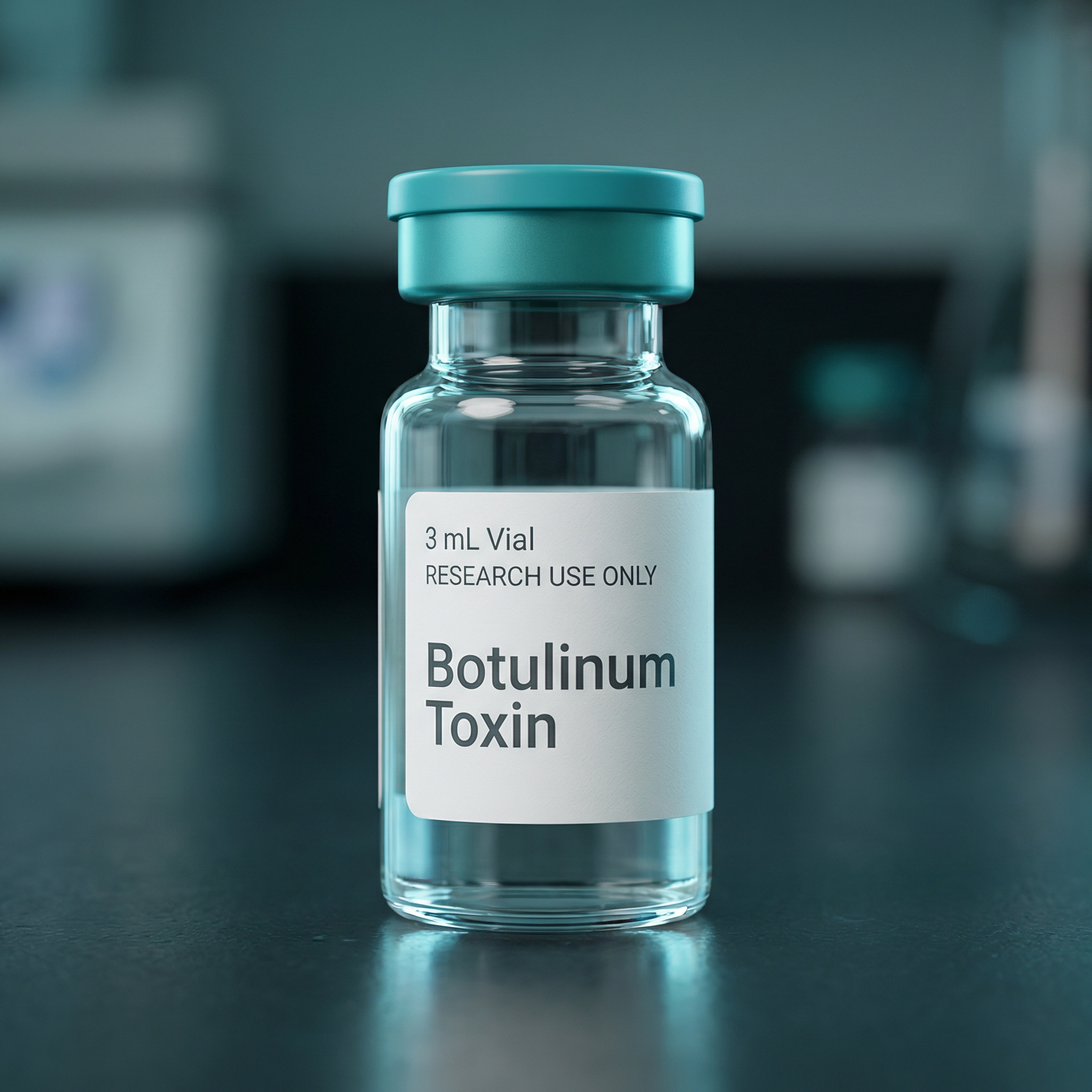
Botulinum toxin is a biologic neurotoxin class used in tightly controlled medical and cosmetic practice to cause temporary chemodenervation. In a peptide repository it should be treated as a comparator biologic rather than a peptide, but it is worth including because many users compare topical cosmetic peptides or muscle-relaxation claims against Botox. This entry should emphasize that approved botulinum toxin products are potent prescription biologics with product-specific dosing and boxed warnings, not interchangeable commodity peptides.
The class includes multiple distinct products and serotypes, such as onabotulinumtoxinA, abobotulinumtoxinA, incobotulinumtoxinA, and rimabotulinumtoxinB. Botox is only one brand and should not be used as a synonym for the entire category in structured data. The repository should therefore keep this as a class entry and, if needed later, create separate product-level entries.
Botulinum neurotoxins block cholinergic neurotransmission by entering nerve terminals and cleaving SNARE-related machinery needed for acetylcholine release. The result is temporary reduction of muscle activity or autonomic secretory activity, depending on where the toxin is administered. This is a direct, high-potency biologic mechanism and not remotely equivalent to the mild surface-level claims often attached to topical cosmetic peptides.
Approved use cases vary by product and include certain dystonias, spasticity, chronic migraine, overactive bladder or detrusor overactivity, hyperhidrosis, blepharospasm, strabismus, and cosmetic treatment of facial lines. The repository should avoid collapsing all indications into one universal record because approval status and dose units differ by product. For broad comparison purposes, the most important use-case categories are focal muscle overactivity, glandular hypersecretion, migraine prevention, and facial-aesthetic line reduction.
Classic systemic ADME framing is less useful than local pharmacodynamics because the intended effect is localized uptake at cholinergic terminals after injection. Duration of effect is measured clinically by gradual recovery of neuromuscular transmission over weeks to months. Units are assay- and product-specific and are not interchangeable across botulinum toxin products.
Evidence is strong for several approved indications because multiple products have undergone extensive clinical development and regulatory review. In cosmetic comparisons, botulinum toxin is the real benchmark for temporary reduction of dynamic facial lines, which is why claims that a topical peptide is Botox-like should always be interpreted cautiously and usually metaphorically rather than literally.
Safety is highly procedure dependent and includes localized weakness, eyelid ptosis, dysphagia, injection-site effects, and indication-specific adverse events. FDA-approved products carry boxed warnings about distant spread of toxin effect, with potentially serious swallowing or breathing complications. Another crucial repository note is that counterfeit, unapproved, or improperly handled botulinum toxin products create serious risk and are not equivalent to approved biologics.
Administration must be product specific, indication specific, and performed by qualified clinicians. Units are not interchangeable between brands, dilution and injection mapping matter, and off-label use requires professional judgment rather than consumer-style extrapolation. This repository should never present a class-level standard dose for botulinum toxin.
UNVERIFIED RESEARCHER-REPORTED DOSING INFORMATION
The following dosing information has been compiled from community forums, researcher discussions, and gray-market sources. This information has NOT been verified through peer-reviewed scientific studies or clinical trials. It does NOT constitute medical advice, a prescription, or a recommendation for human use.
This data is presented solely for informational and educational purposes to document what is commonly discussed in research communities. Dosing protocols may be inaccurate, dangerous, or based on anecdotal reports with no scientific validation. Individual responses vary significantly, and unregulated compounds carry inherent risks including contamination, mislabeling, and unknown side effects.
Always consult qualified medical professionals before making any health-related decisions. The repository maintainers assume no liability for the use or misuse of this information.
Researcher-Reported Dosing Protocols
Common Dose Range: 10-40 units for cosmetic applications (e.g., facial lines); 150-400 units for therapeutic applications (e.g., muscle spasticity, chronic migraine).
Administration Route: Intramuscular injection
Frequency: Typically every 3-4 months, depending on the individual's response and the application.
Timing: Administered during a clinical appointment; no specific time of day is required.
Schedule / Protocol: Administered as needed based on the return of muscle activity or symptoms. Not typically used in a cyclical 'on/off' protocol.
Dose Escalation: Dosing is highly individualized. Practitioners often start with a standard or lower dose and titrate in subsequent treatment sessions based on the patient's response and desired outcome. Adjustments are made by increasing or decreasing the number of units injected into specific muscles.
Additional Notes: Dosing for Botulinum Toxin is highly dependent on the area being treated and the specific medical or cosmetic indication. The doses are measured in 'units' of biological activity. The FDA recommends a maximum cumulative dose of 400 units within a 3-month period for most applications. All administration is performed by qualified medical professionals.
This researcher-reported dosing information was compiled from unverified community sources and does not represent validated scientific or medical guidance.
The botulinum-toxin field contains large mature development programs rather than a single unified trial track. Future expansion would work best through separate product pages that store indication-by-indication trial records. As a class entry, the main point is that this is a clinically validated therapeutic and aesthetic platform, not an experimental peptide niche.
Multiple FDA-approved products exist, but approvals are product and indication specific. Because the class is approved yet heterogeneous, classify this record as approved biologic class with product-specific label requirements. Also note the ongoing regulatory focus on illegal marketing of unapproved botulinum toxin products.
These are highly controlled biologic products produced, standardized, and filled under stringent manufacturing requirements. Potency assays are manufacturer specific, and storage, reconstitution, handling, and transport conditions matter. Research-market or gray-market vials should not be treated as equivalent substitutes for approved products.
Version 0.1 starter entry created March 15, 2026. Evidence basis for this draft: current FDA-approved labeling for BOTOX and BOTOX Cosmetic and recent FDA enforcement communications regarding unapproved botulinum toxin marketing.