Cagrilintide
Long-acting amylin analogue in advanced obesity development
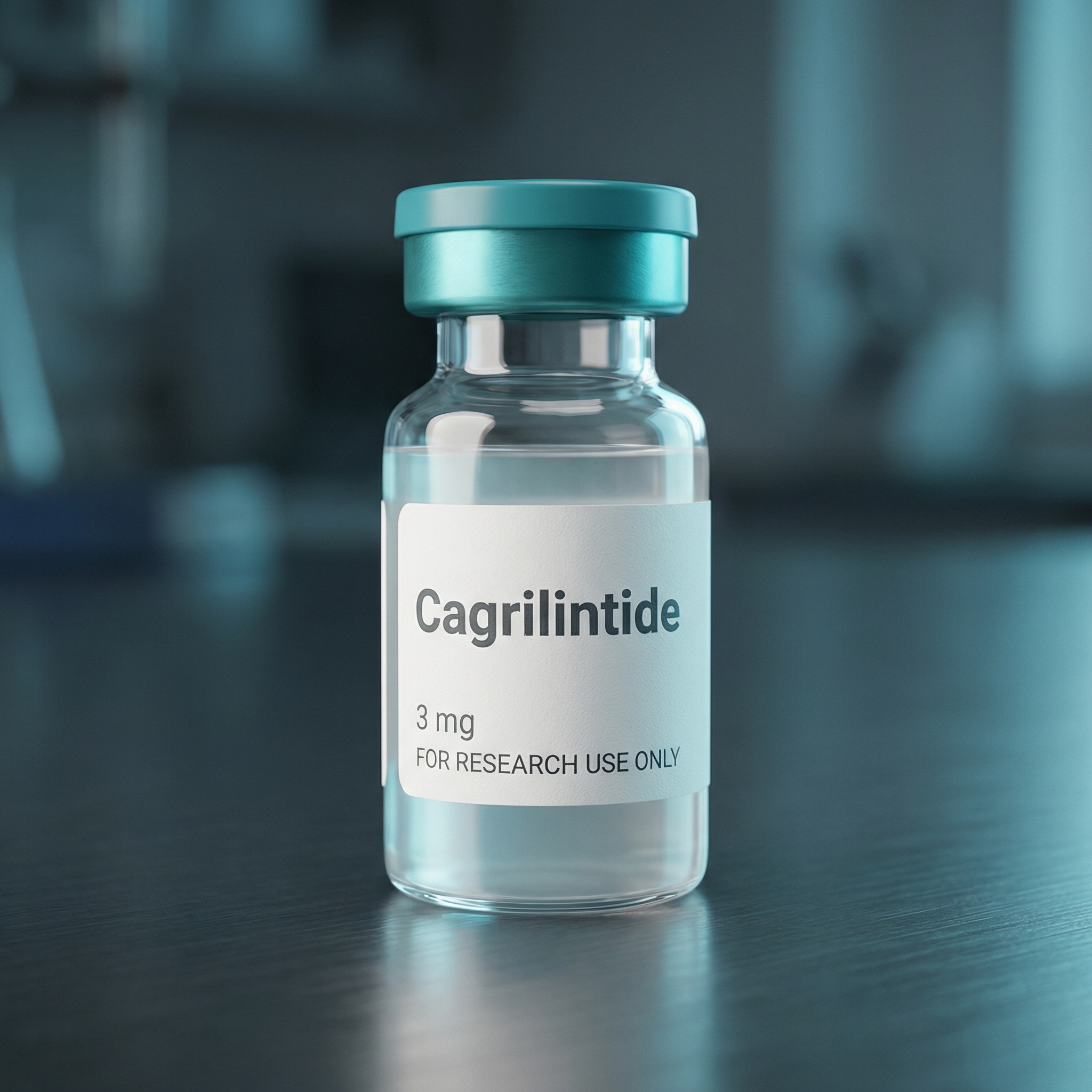
Cagrilintide is a long-acting amylin analogue being developed for obesity and weight-management use, both alone and in combination with semaglutide. Unlike many compounds in this repository, it has a substantial contemporary clinical-development program with late-stage data. It should be treated as a serious investigational metabolic drug candidate rather than a fringe peptide.
The primary name is cagrilintide. It is also encountered in combination-development contexts through CagriSema, the fixed-dose program combining cagrilintide with semaglutide. The repository should keep the monotherapy entry distinct from the combination product because their trial designs, efficacy figures, and regulatory paths differ.
Cagrilintide mimics amylin, a pancreatic hormone involved in satiety signaling, gastric-emptying delay, and appetite regulation. The overall clinical goal is reduction of food intake and body weight through central satiety pathways and complementary metabolic effects that differ from, but can pair with, GLP-1 receptor agonism.
Primary use case is chronic weight management in adults with obesity or overweight with weight-related comorbidity. It has also been studied in type 2 diabetes, especially in combination programs. In a repository context this entry belongs squarely in evidence-based obesity pharmacotherapy development.
Development has focused on once-weekly subcutaneous administration, consistent with a long-acting peptide design intended for chronic outpatient therapy. The clinically relevant pharmacology is appetite suppression, delayed gastric emptying, and sustained weight-loss support rather than a rapid acute effect.
Evidence is strong for an investigational peptide. In Phase 3 REDEFINE 1 reporting, once-weekly cagrilintide 2.4 mg monotherapy plus lifestyle intervention produced about 11.8% average weight loss at 68 weeks under the treatment-adherence estimand, versus about 2.3% with placebo. That places cagrilintide among the more credible next-generation obesity candidates even though combination comparators such as CagriSema and tirzepatide remain highly competitive.
The current safety profile resembles other appetite-regulating peptide therapies in that gastrointestinal adverse events dominate, including nausea, vomiting, diarrhea, and constipation. Available late-stage summaries describe these as mostly transient and mild to moderate, but long-term positioning will depend on broader Phase 3 and regulatory review.
The key studied regimen in major public reporting is once-weekly subcutaneous cagrilintide 2.4 mg. The repository should still store dose information as trial-specific because definitive labeled dosing does not yet exist.
UNVERIFIED RESEARCHER-REPORTED DOSING INFORMATION
The following dosing information has been compiled from community forums, researcher discussions, and gray-market sources. This information has NOT been verified through peer-reviewed scientific studies or clinical trials. It does NOT constitute medical advice, a prescription, or a recommendation for human use.
This data is presented solely for informational and educational purposes to document what is commonly discussed in research communities. Dosing protocols may be inaccurate, dangerous, or based on anecdotal reports with no scientific validation. Individual responses vary significantly, and unregulated compounds carry inherent risks including contamination, mislabeling, and unknown side effects.
Always consult qualified medical professionals before making any health-related decisions. The repository maintainers assume no liability for the use or misuse of this information.
Researcher-Reported Dosing Protocols
Common Dose Range: 0.3-4.5 mg per week
Administration Route: Subcutaneous injection
Frequency: Once weekly
Timing: Administered at any time of day, but on a consistent day each week.
Schedule / Protocol: Designed for continuous, long-term use rather than short-term cycles. Clinical trials have run for durations of 26 to 32 weeks, with some ongoing trials planned for several years.
Dose Escalation: Researchers commonly start with a low dose of 0.25 mg to 0.6 mg per week and gradually increase the dose every 2 to 4 weeks. A typical escalation schedule involves doubling the dose at each interval (e.g., 0.6 mg -> 1.2 mg -> 2.4 mg -> 4.5 mg) until the target maintenance dose is reached, based on tolerability.
Additional Notes: Cagrilintide is often studied in combination with Semaglutide (a GLP-1 receptor agonist) for enhanced weight loss effects. The combination is sometimes referred to as 'CagriSema'. The most commonly reported side effects are gastrointestinal in nature, such as nausea, vomiting, and diarrhea, which are often managed by starting with a lower dose and titrating up slowly.
This researcher-reported dosing information was compiled from unverified community sources and does not represent validated scientific or medical guidance.
Clinical development is robust. Public records include obesity and diabetes studies of cagrilintide alone and in combination with semaglutide, and late-stage obesity reporting has already been presented from the REDEFINE program. This is one of the more clinically mature entries in the repository.
Investigational; not approved in the U.S. or EU as of this update. Novo Nordisk reported in 2025 that dedicated Phase 3 cagrilintide monotherapy development would continue, so the correct tag is advanced clinical development rather than discontinued or speculative.
This is a modern pharmaceutical peptide candidate expected to rely on tightly controlled injectable formulation, device compatibility, stability management, and large-scale GMP manufacture. Repository quality notes should focus on formal development materials rather than gray-market product claims.
Version 0.1 starter entry created March 14, 2026. Evidence basis for this draft: current Novo Nordisk / trial-program reporting, ClinicalTrials.gov records, and recent obesity-development news available at time of writing.