Cardiogen
Short cardiac-focused bioregulator peptide with limited preclinical evidence
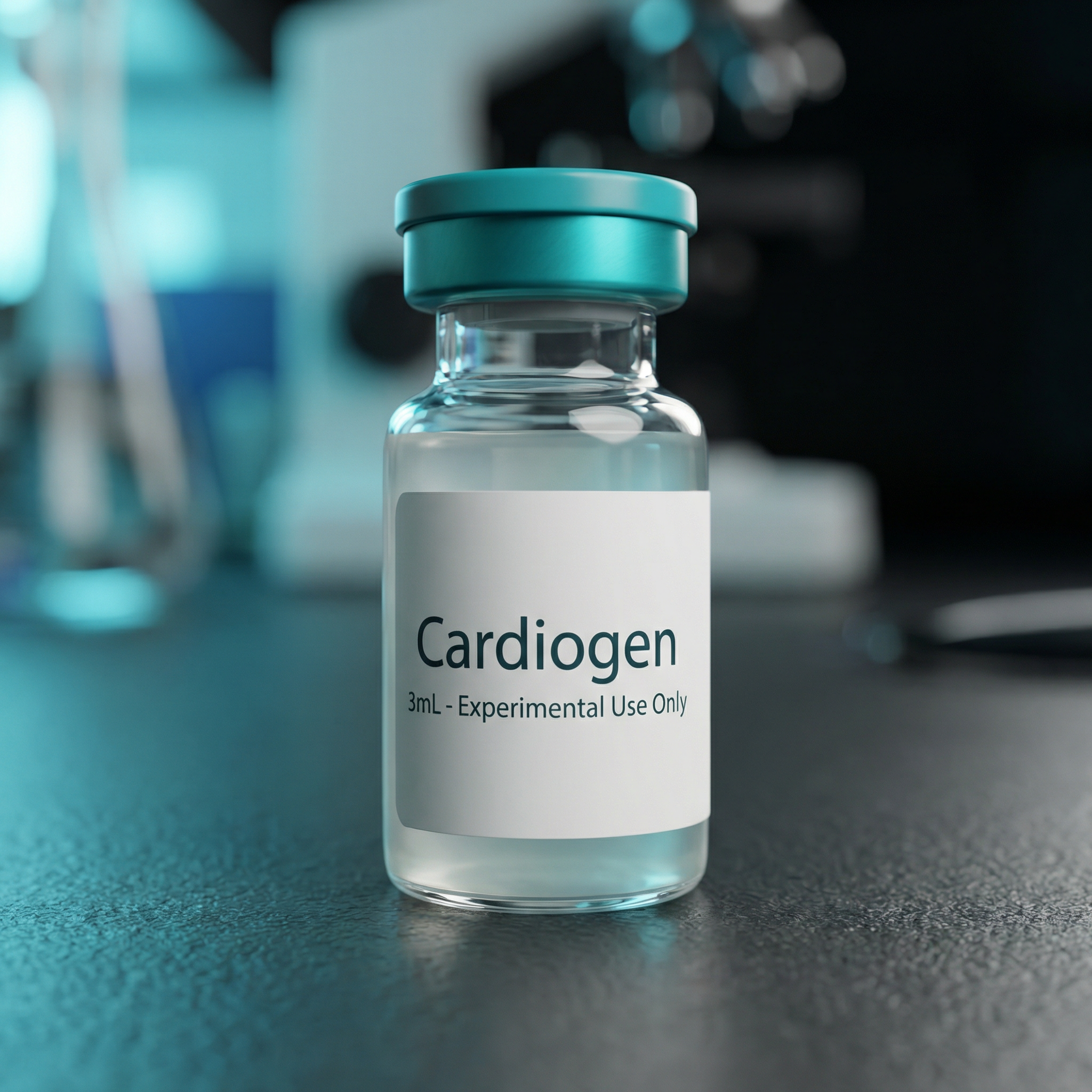
Cardiogen is a short peptide bioregulator associated with myocardial-aging and tissue-repair literature from the Russian gerontology tradition. It should be categorized as an exploratory tissue-specific peptide with sparse high-quality translational evidence. Public interest in Cardiogen far exceeds the amount of internationally validated cardiovascular-drug data.
The compound is generally referenced simply as Cardiogen in English-language transliteration, often in connection with ultrashort peptide bioregulators. Naming is not as standardized as for globally marketed drugs, so the entry should preserve broad synonym mapping once additional source material is added.
The proposed biology involves modulation of myocardial cell proliferation, apoptosis signaling, and gene-expression regulation in cardiac tissue. Experimental papers reported reduced p53-associated signaling and increased proliferation in rat myocardium explants, suggesting a tissue-repair or anti-apoptotic hypothesis rather than a classic receptor-target drug mechanism.
Commonly claimed use cases include myocardial aging, ischemic injury support, and general cardiac-tissue maintenance. These should be treated as exploratory and preclinical; no major-market approved cardiovascular indication was identified.
Modern PK/ADME characterization in human subjects was not identified in major public sources. As with many ultrashort bioregulator peptides, the open literature emphasizes biological effect hypotheses more than formal absorption, distribution, metabolism, and elimination work.
Evidence remains limited. Rat myocardium-explant studies suggested proliferative effects, and separate rodent tumor work showed that Cardiogen altered tumor vascular behavior and apoptosis. Those findings are interesting but do not establish clinically useful cardiac efficacy in humans.
Safety evidence is insufficient. There is no large internationally recognized human program defining adverse events, cardiovascular risk, or drug-interaction profile. The repository should therefore mark this entry as low-certainty for both efficacy and safety.
No authoritative major-market dosing standard was identified. Any future dosing notes should be linked to specific regional product information or trial reports rather than presented as generally accepted medical use.
UNVERIFIED RESEARCHER-REPORTED DOSING INFORMATION
The following dosing information has been compiled from community forums, researcher discussions, and gray-market sources. This information has NOT been verified through peer-reviewed scientific studies or clinical trials. It does NOT constitute medical advice, a prescription, or a recommendation for human use.
This data is presented solely for informational and educational purposes to document what is commonly discussed in research communities. Dosing protocols may be inaccurate, dangerous, or based on anecdotal reports with no scientific validation. Individual responses vary significantly, and unregulated compounds carry inherent risks including contamination, mislabeling, and unknown side effects.
Always consult qualified medical professionals before making any health-related decisions. The repository maintainers assume no liability for the use or misuse of this information.
Researcher-Reported Dosing Protocols
Common Dose Range: 1-5 mg
Administration Route: Subcutaneous injection or Oral
Frequency: Once to twice daily, or twice per week
Timing: AM/PM (split doses)
Schedule / Protocol: 30-60 day cycles, repeated 2-3 times per year
Dose Escalation: No specific dose escalation or titration approach is commonly discussed.
Additional Notes: Reported dosing schedules vary, with some sources suggesting daily administration and others suggesting twice-weekly injections. An oral capsule form has also been mentioned, typically dosed at 1-2 capsules, 1-2 times per day.
This researcher-reported dosing information was compiled from unverified community sources and does not represent validated scientific or medical guidance.
No mature global clinical-development program or major registry presence was identified during this update. Best classified as preclinical or regionally discussed rather than clinically established.
No FDA or EMA approval identified. Cardiogen should be coded as investigational / low-evidence bioregulator material.
For repository purposes, manufacturing notes should emphasize that ultrashort peptide identity, purity, and source verification are critical because market offerings may not map cleanly to the limited published literature. Formal pharmaceutical-development data were not identified in major regulatory sources.
Version 0.1 starter entry created March 14, 2026. Evidence basis for this draft: PubMed-indexed preclinical Cardiogen studies and broader ultrashort-peptide bioregulator reviews available at time of writing.