Cartalax
Cartilage-focused ultrashort peptide bioregulator
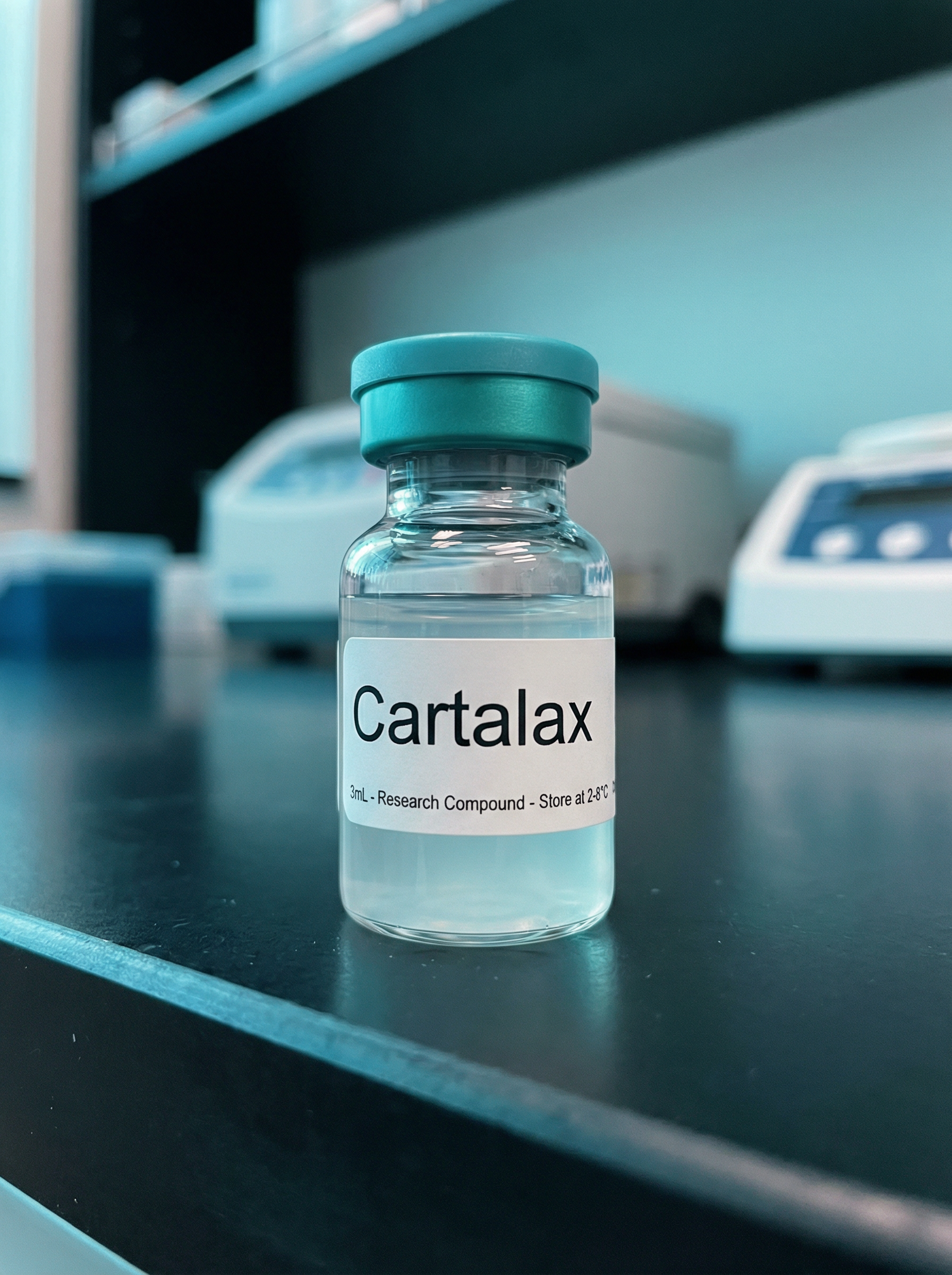
Cartalax is an ultrashort peptide bioregulator associated with cartilage, connective tissue, and musculoskeletal-aging research. It is best treated as a niche chondroprotective research peptide rather than a mainstream approved osteoarthritis therapy.
Cartalax is commonly linked to the peptide shorthand AED and to cartilage-derived bioregulator terminology in the Khavinson-related literature. Search indexing can be inconsistent, so future repository growth should include synonym mapping for cartilage extract and chondroprotective peptide descriptors where supported.
The proposed mechanism centers on regulation of cartilage-cell function, connective-tissue maintenance, and gene-expression effects rather than a single canonical receptor target. Review literature classifies Cartalax as a chondroprotector and links these ultrashort peptides to DNA-binding and transcriptional-regulation hypotheses. This remains exploratory biology, not a validated molecular-mechanism package by contemporary drug-development standards.
Commonly claimed use cases include cartilage degeneration, osteoarthritis-related support, connective-tissue aging, and broader musculoskeletal regeneration. These should be labeled as investigational or region-specific claims because no major-market approved indication was identified.
Formal human ADME characterization was not identified in major public sources. Like several other bioregulator peptides, Cartalax appears in literature that emphasizes tissue effects and aging biology more than conventional PK studies.
Evidence is limited and mostly preclinical. Older rat work on peptide regulators affecting bone and cartilage status in aging and ovariectomy models suggests osteoprotective and connective-tissue effects, but the literature base is small and does not establish clinical efficacy in human joint disease.
Open-source safety evidence is sparse. The short-peptide format and low-dose marketing claims should not be mistaken for proof of safety, especially in the absence of large randomized human datasets and standardized global manufacturing.
No major-market standardized regimen was identified. If later versions of the repository track regional products, administration details should be attached to specific labels or monographs rather than generalized across the entry.
UNVERIFIED RESEARCHER-REPORTED DOSING INFORMATION
The following dosing information has been compiled from community forums, researcher discussions, and gray-market sources. This information has NOT been verified through peer-reviewed scientific studies or clinical trials. It does NOT constitute medical advice, a prescription, or a recommendation for human use.
This data is presented solely for informational and educational purposes to document what is commonly discussed in research communities. Dosing protocols may be inaccurate, dangerous, or based on anecdotal reports with no scientific validation. Individual responses vary significantly, and unregulated compounds carry inherent risks including contamination, mislabeling, and unknown side effects.
Always consult qualified medical professionals before making any health-related decisions. The repository maintainers assume no liability for the use or misuse of this information.
Researcher-Reported Dosing Protocols
Common Dose Range: 2-5 mg per day
Administration Route: Subcutaneous injection is the most common route. Oral capsules and sublingual drops are also mentioned.
Frequency: Once daily
Timing: Not specified, but should be taken at a consistent time each day.
Schedule / Protocol: 8-12 week cycles, with some protocols suggesting a loading phase (daily for month 1, then 10-20 days for months 2-3) followed by a maintenance phase (10-20 day cycles, 3x per year).
Dose Escalation: Start at a lower dose of 2 mg daily and increase by 0.5-1 mg every 1-2 weeks, aiming for a target dose of 4-5 mg daily by week 5-12.
Additional Notes: The information available is based on preclinical studies and researcher discussions, not formal clinical trials. It is consistently stated that Cartalax is for research purposes only and not for human consumption. Individuals with immune system or connective tissue conditions, severe kidney impairment, active infections, and/or autoimmune disorders should exercise caution.
This researcher-reported dosing information was compiled from unverified community sources and does not represent validated scientific or medical guidance.
No substantial internationally recognized clinical-trial program was identified during this update. The evidence profile is therefore preclinical / limited regional literature.
No FDA or EMA approval identified. Best categorized as an investigational cartilage-focused bioregulator.
As an ultrashort synthetic peptide, formulation quality hinges on sequence confirmation, purity, stability, and route-specific handling. Repository notes should distinguish any pharmaceutical-grade information from research-supply or wellness-market sourcing.
Version 0.1 starter entry created March 14, 2026. Evidence basis for this draft: peptide-bioregulator review literature, transport/gene-regulation reviews, and older preclinical musculoskeletal studies available at time of writing.