Dermorphin
Amphibian heptapeptide mu-opioid agonist; research compound, not an approved medicine
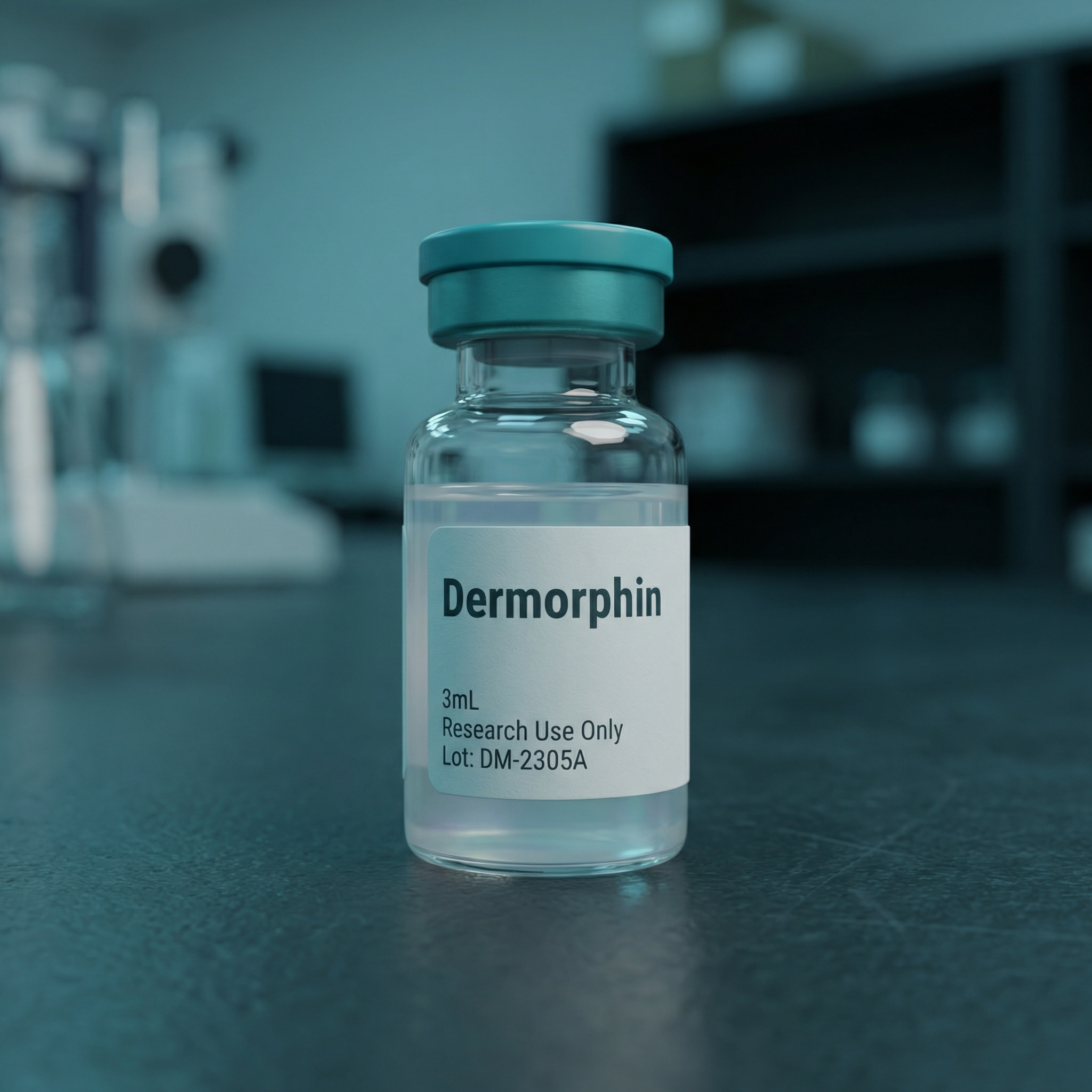
Dermorphin is a naturally derived heptapeptide first isolated from Phyllomedusa frog skin and is best known as a very potent mu-opioid receptor agonist in laboratory pharmacology. It is a real peptide with unusual structural chemistry, but it is not an approved therapeutic product. For repository purposes it should be tagged as a research opioid peptide with high biologic potency and high misuse risk if it appears in non-medical channels.
Common names include dermorphin and dermorfina in older literature. The entry should also carry amphibian-peptide context, source-species notes, and aliases used in receptor-pharmacology papers. No mainstream FDA or EMA brand identity exists.
3. Sequence and structure
Dermorphin is a linear amidated heptapeptide with the sequence Tyr-D-Ala-Phe-Gly-Tyr-Pro-Ser-NH2. Its defining structural feature is the native D-alanine residue at position 2, which is unusual in animal peptides and contributes to its receptor behavior. The repository should flag the amidated C terminus and the D-amino-acid stereochemistry as identity-critical fields.
Dermorphin is primarily a mu-opioid receptor agonist with very high affinity and potency in classic binding and analgesia models. It does not share the canonical sequence of mammalian opioid peptides, but it strongly engages opioid signaling pathways linked to analgesia, respiratory depression, and dependence biology. This is a receptor-pharmacology entry rather than a clinically validated therapeutic mechanism.
Historically, dermorphin has been studied for analgesia, opioid receptor mapping, and peptide medicinal chemistry. Those are research use cases only. The repository should not imply any approved pain-management indication, and any performance-enhancement or gray-market discussion should be clearly separated from legitimate scientific use.
Public ADME information is limited because dermorphin remains largely a laboratory compound. Like many short peptides, it is expected to be vulnerable to enzymatic degradation outside protected formulations, while central opioid activity depends strongly on route and exposure context. The practical takeaway is that pharmacology is potent, but modern human PK characterization is thin.
Preclinical efficacy evidence for analgesic activity is strong at the model-system level. Dermorphin reliably shows potent opioid-like effects in animal and receptor studies, which is why it remains important in peptide-opioid research. That said, there is no mature modern clinical-development package supporting therapeutic use.
Safety concerns track opioid pharmacology: respiratory depression, sedation, nausea, constipation, misuse potential, and dependence risk should all be assumed relevant. Because controlled clinical datasets are limited, the repository should avoid giving a false impression of safe use based on potency alone. The risk profile is best described as pharmacologically serious and clinically undercharacterized.
No standardized approved dosing framework should be presented. Any historical experimental dosing belongs only in source-linked research notes and should not be normalized into a consumer-style dosing field.
UNVERIFIED RESEARCHER-REPORTED DOSING INFORMATION
The following dosing information has been compiled from community forums, researcher discussions, and gray-market sources. This information has NOT been verified through peer-reviewed scientific studies or clinical trials. It does NOT constitute medical advice, a prescription, or a recommendation for human use.
This data is presented solely for informational and educational purposes to document what is commonly discussed in research communities. Dosing protocols may be inaccurate, dangerous, or based on anecdotal reports with no scientific validation. Individual responses vary significantly, and unregulated compounds carry inherent risks including contamination, mislabeling, and unknown side effects.
Always consult qualified medical professionals before making any health-related decisions. The repository maintainers assume no liability for the use or misuse of this information.
Researcher-Reported Dosing Protocols
Common Dose Range: 200 mcg
Administration Route: Subcutaneous injection, Intravenous, or Intrathecal
Frequency: Not specified in researcher reports.
Timing: Not specified in researcher reports.
Schedule / Protocol: Not specified in researcher reports.
Dose Escalation: Not specified in researcher reports.
Additional Notes: Dermorphin is a very potent opioid peptide, reportedly 30-40 times stronger than morphine. There is very limited information available on researcher-reported dosing protocols in humans. The 200mcg dose is from a single forum post and should be interpreted with extreme caution. Most available data is from animal studies or patents, not from established human use. It has been used illegally in horse racing as a performance-enhancing drug. It is generally sold for research purposes only.
This researcher-reported dosing information was compiled from unverified community sources and does not represent validated scientific or medical guidance.
No meaningful contemporary clinical-development pathway was identified for dermorphin in this starter review. The entry should be coded as preclinical / historical research rather than clinically active.
Not approved by the FDA or EMA as a medicine. Best categorized as a non-approved research opioid peptide.
13. References and source quality
Core sources for this entry include PubChem compound records for identity, the original gene and structure literature on dermorphin, and later opioid-peptidomimetic reviews. Source quality for basic identity and receptor pharmacology is high, while modern clinical-use evidence is essentially absent.
Accurate synthesis requires correct stereochemistry, especially the D-Ala residue, plus confirmation of amidation and purity. For repository quality control, chirality errors or misassigned analogs should be treated as critical record defects because small structural changes can materially alter opioid selectivity and potency.
Version 0.1 starter entry created March 14, 2026. Evidence basis for this draft: PubChem identity data, foundational dermorphin sequence papers, and modern opioid-peptide review literature.