EPO
Endogenous erythropoietin and epoetin-class therapeutic reference entry; glycoprotein hormone, not a simple peptide
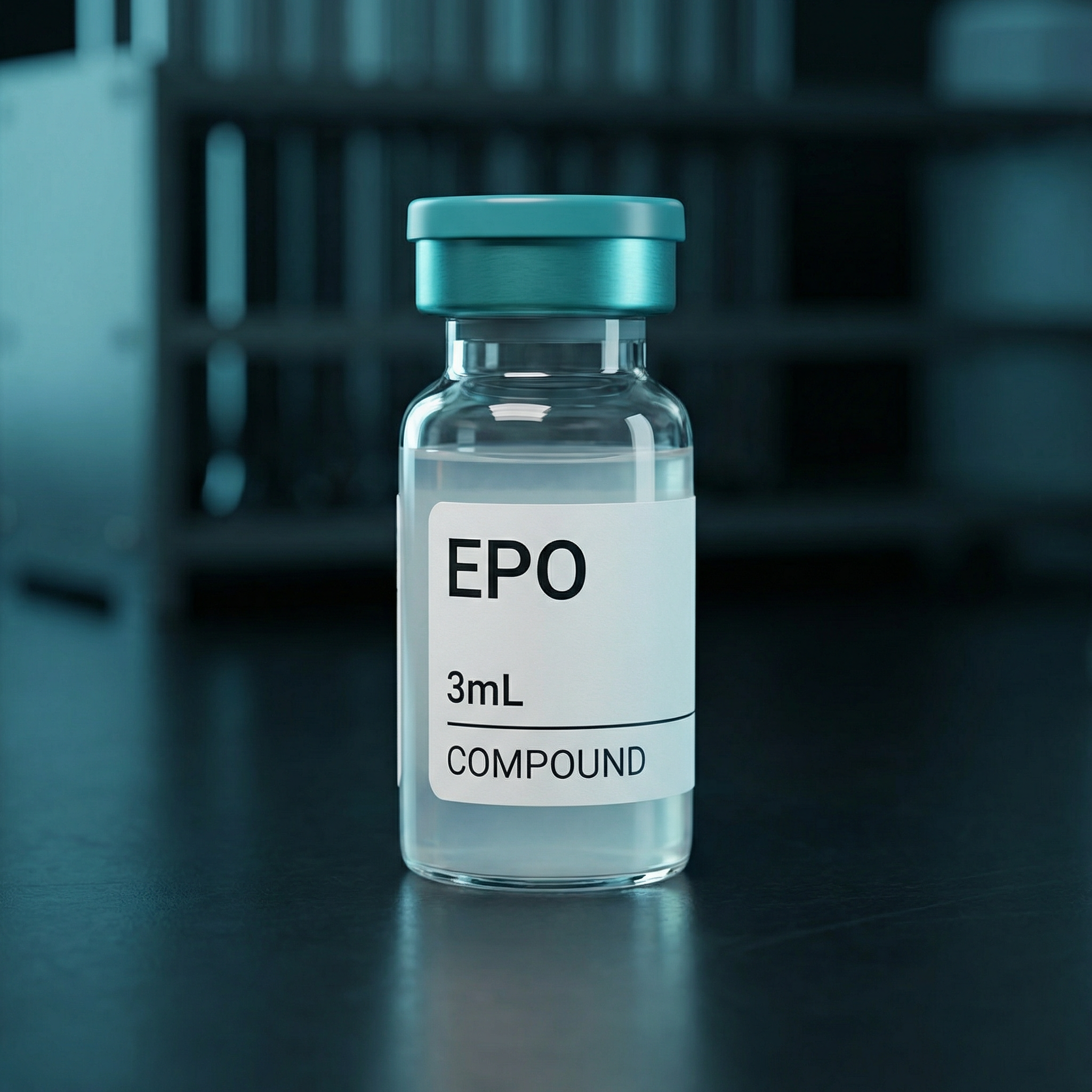
EPO refers to erythropoietin, the endogenous glycoprotein hormone that drives red-blood-cell production and the basis for recombinant epoetin medicines. It is not a small peptide, but it belongs in this repository because it is often discussed alongside peptide and hormone-based performance or recovery compounds. This entry should function as a reference record for the EPO / epoetin class rather than for a single gray-market product label.
Core names include erythropoietin and EPO. Therapeutic relatives include epoetin alfa and other erythropoiesis-stimulating agents, which should be cross-linked but not collapsed into a single undifferentiated synonym list because product labels, glycosylation, and indications differ. The repository should distinguish endogenous EPO biology from specific drug products.
3. Sequence and structure
Human erythropoietin is produced as a 193 amino acid precursor, while the mature secreted hormone is a heavily glycosylated 165 amino acid protein. Recombinant epoetin alfa shares the amino acid sequence of endogenous human erythropoietin, and its clinical behavior depends strongly on glycosylation and higher-order biologic manufacturing attributes rather than sequence alone. This is therefore a protein-hormone entry, not a simple short-peptide entry.
Erythropoietin binds the EPO receptor on erythroid progenitor cells, activating JAK2 and downstream survival and differentiation signaling that increases red-cell production. The biologic effect is clinically powerful and well established. In repository terms, mechanism confidence is high.
Evidence-based medical uses for epoetin products include selected forms of anemia such as chronic kidney disease-associated anemia, chemotherapy-related anemia in defined settings, zidovudine-associated anemia in HIV, and certain perioperative blood-management contexts depending on product labeling. Non-medical performance-enhancement use should be clearly labeled as non-approved and high risk.
EPO biology and ESA pharmacology are well characterized, but PK differs by product, route, glycosylation pattern, and patient population. Intravenous and subcutaneous dosing are both used clinically, and half-life is substantially longer for engineered analogs such as darbepoetin than for epoetin alfa. The repository should therefore avoid pretending that all EPO-type agents share one PK profile.
Efficacy for labeled anemia indications is strong when patients are selected appropriately and hemoglobin targets are managed conservatively. The same literature also shows that overaggressive correction can worsen outcomes, which is why efficacy must be presented together with risk controls. This is one of the highest-evidence entries in the repository.
Safety is clinically important and well documented. ESA labels warn about increased risks of death, myocardial infarction, stroke, venous thromboembolism, vascular-access thrombosis, and tumor progression or recurrence in specific oncology settings when used inappropriately. Pure red cell aplasia due to neutralizing antibodies is rare but classically important.
Dosing is product-specific and indication-specific, usually based on body weight, hemoglobin response, and the clinical context. The repository should not collapse epoetin alfa, darbepoetin, and other ESAs into one generic dosing line. It is better to store dosing at the product-record level if the repository later expands beyond umbrella entries.
UNVERIFIED RESEARCHER-REPORTED DOSING INFORMATION
The following dosing information has been compiled from community forums, researcher discussions, and gray-market sources. This information has NOT been verified through peer-reviewed scientific studies or clinical trials. It does NOT constitute medical advice, a prescription, or a recommendation for human use.
This data is presented solely for informational and educational purposes to document what is commonly discussed in research communities. Dosing protocols may be inaccurate, dangerous, or based on anecdotal reports with no scientific validation. Individual responses vary significantly, and unregulated compounds carry inherent risks including contamination, mislabeling, and unknown side effects.
Always consult qualified medical professionals before making any health-related decisions. The repository maintainers assume no liability for the use or misuse of this information.
Researcher-Reported Dosing Protocols
Common Dose Range: 1000-4000 IU per injection
Administration Route: Subcutaneous injection
Frequency: 2-3x per week
Timing: No specific timing was found.
Schedule / Protocol: 2-4 week cycles
Dose Escalation: No specific escalation protocol was found. Researchers commonly start with a therapeutic dose.
Additional Notes: Researchers commonly supplement with iron, folate, and B12. It is also recommended to take baby aspirin (75-100mg) once daily, avoid using SERMs concurrently, and stay hydrated. Regular monitoring of hematocrit and ferritin levels is crucial.
This researcher-reported dosing information was compiled from unverified community sources and does not represent validated scientific or medical guidance.
This is a mature therapeutic area with decades of clinical trials, post-marketing surveillance, and biosimilar experience. Newer development is usually incremental, involving product comparability, route, or population questions rather than first-in-class proof of concept.
Approved therapeutic class in major markets, though approval status depends on the exact product. The repository should tag the class as approved but keep individual products and biosimilars separable.
13. References and source quality
Highest-value sources are FDA prescribing information for epoetin alfa products, EMA product information for epoetin alfa medicines, and reviewed protein databases such as UniProt for endogenous EPO biology. Source quality is high for mechanism, sequence, indications, and safety.
Manufacturing is mammalian-cell biologics manufacturing, with glycosylation control, potency testing, and comparability assessment central to product quality. This entry should not be modeled like a short synthetic peptide because manufacturing complexity is much higher.
Version 0.1 starter entry created March 14, 2026. Evidence basis for this draft: FDA and EMA product information for epoetin alfa medicines, UniProt protein data, and standard ESA clinical literature.