GHRP-2 Acetate
Synthetic ghrelin-receptor agonist hexapeptide; pralmorelin reference entry with region-specific diagnostic use
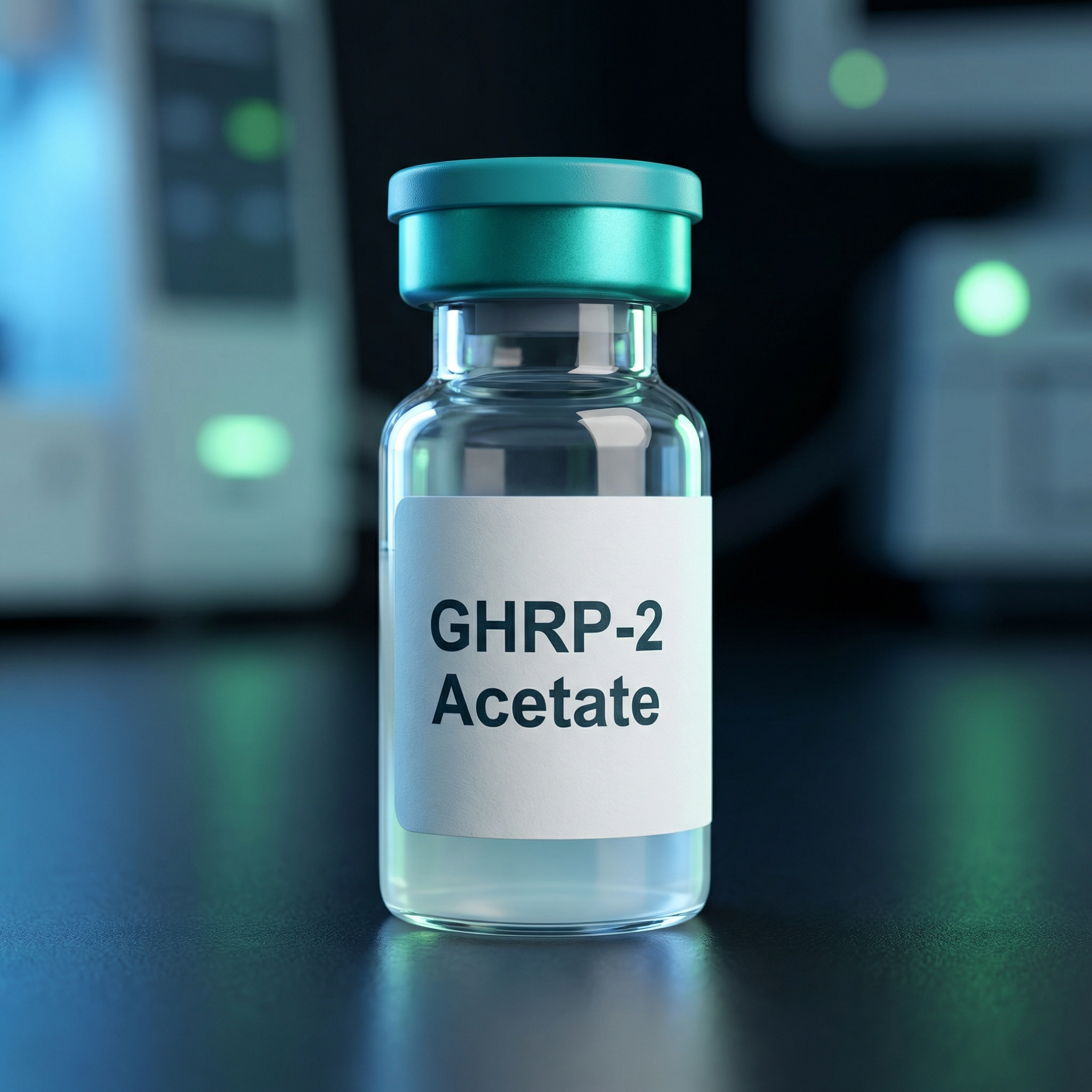
GHRP-2 is a synthetic growth-hormone secretagogue peptide best known pharmacologically as a ghrelin-receptor agonist. It has stronger formal clinical grounding than many bodybuilding-market peptides because the pralmorelin version reached diagnostic use in Japan. Even so, therapeutic and gray-market narratives should not be confused with that narrow diagnostic evidence base.
Key names include GHRP-2, pralmorelin, KP-102, and related salt-form names such as acetate or dihydrochloride. The repository should cross-link pralmorelin separately because some regulatory or clinical documents use the international nonproprietary name rather than GHRP-2.
3. Sequence and structure
GHRP-2 is a linear hexapeptide with the sequence D-Ala-D-betaNal-Ala-Trp-D-Phe-Lys-NH2. It is a modified peptide with nonstandard aromatic residue chemistry and multiple D-residues, features that are important to activity and should be stored explicitly. Salt form should be captured as metadata rather than folded into the core sequence field.
The peptide activates the growth hormone secretagogue receptor, now understood as the ghrelin receptor system, leading to pulsatile growth-hormone release and related neuroendocrine effects. Secondary endocrine effects such as hunger, cortisol, prolactin, or ACTH changes may also occur depending on context. Mechanistic confidence is high.
The most evidence-based use case is diagnostic stimulation testing of growth-hormone deficiency in Japan under the pralmorelin / GHRP-2 framework. Outside that context, most interest involves experimental GH-axis stimulation, pituitary testing, or non-approved physique and recovery claims. The repository should clearly separate diagnostic legitimacy from non-approved therapeutic marketing.
GHRP-2 is an active endocrine secretagogue with fairly rapid biologic effects on GH release. However, PK and response depend strongly on route, patient endocrine status, and the distinction between diagnostic single-use testing and repeated experimental administration. Practical database handling should therefore distinguish acute stimulation testing from chronic-use claims.
Efficacy for provoking GH release is well demonstrated, which is why pralmorelin became clinically relevant as a diagnostic agent in Japan. Evidence is much weaker for broader lifestyle or therapeutic claims outside approved diagnostic frameworks. This should be scored as high for acute GH stimulation and low to moderate for other outcomes.
Safety is better characterized than for most gray-market GHRPs, but the repository should still note endocrine perturbation, appetite changes, and the possibility of off-target hormonal responses. Outside regulated diagnostic use, long-term repeated-administration safety is not well established.
No one-size-fits-all dosing line should be used. Diagnostic use is protocol-driven and distinct from the highly variable non-approved regimens seen online, which should not be normalized into the repository as evidence-based practice.
UNVERIFIED RESEARCHER-REPORTED DOSING INFORMATION
The following dosing information has been compiled from community forums, researcher discussions, and gray-market sources. This information has NOT been verified through peer-reviewed scientific studies or clinical trials. It does NOT constitute medical advice, a prescription, or a recommendation for human use.
This data is presented solely for informational and educational purposes to document what is commonly discussed in research communities. Dosing protocols may be inaccurate, dangerous, or based on anecdotal reports with no scientific validation. Individual responses vary significantly, and unregulated compounds carry inherent risks including contamination, mislabeling, and unknown side effects.
Always consult qualified medical professionals before making any health-related decisions. The repository maintainers assume no liability for the use or misuse of this information.
Researcher-Reported Dosing Protocols
Common Dose Range: 100-300 mcg per injection
Administration Route: Subcutaneous injection
Frequency: 2-3 times daily
Timing: Morning on an empty stomach, post-workout, and before bed. It is advised to inject on an empty stomach and avoid food for about 60 minutes before and after injection.
Schedule / Protocol: 8-12 week cycles
Dose Escalation: It is commonly recommended to start with a lower dose of 100-150 mcg per injection and titrate up as needed. Do not exceed 4 doses per 24 hours.
Additional Notes: GHRP-2 is often stacked with CJC-1295 (no DAC) to enhance the growth hormone pulse amplitude. It is important to rotate injection sites to avoid tissue irritation.
This researcher-reported dosing information was compiled from unverified community sources and does not represent validated scientific or medical guidance.
Clinical development for GHRP-2 / pralmorelin has included diagnostic testing and therapeutic exploration, but the strongest durable clinical footprint is diagnostic use in Japan rather than broad therapeutic approval. The entry should reflect that narrower real-world status.
Region-specific approved diagnostic use exists in Japan for GH-deficiency assessment, while broad therapeutic approval in major Western markets was not identified. Best categorized as regionally approved diagnostic peptide plus non-approved therapeutic peptide.
13. References and source quality
Key sources include PubChem records for chemistry, pralmorelin drug summaries, endocrine reviews of growth-hormone secretagogues, and literature noting Japan-specific diagnostic approval. Source quality is high for mechanism and diagnostic relevance, lower for non-approved chronic-use claims.
Because salt forms vary across reference standards and commercial products, the repository should separate core peptide sequence from acetate, hydrochloride, or other presentation details. Analytical verification matters because structurally related GHRPs and analogs are easy to confuse.
Version 0.1 starter entry created March 14, 2026. Evidence basis for this draft: PubChem chemistry data, endocrine reviews of GHRP-2 / pralmorelin, and sources documenting Japan-specific diagnostic approval and development history.