GHRP-6 Acetate
Classic synthetic ghrelin-receptor agonist hexapeptide; research and gray-market peptide without mainstream therapeutic approval
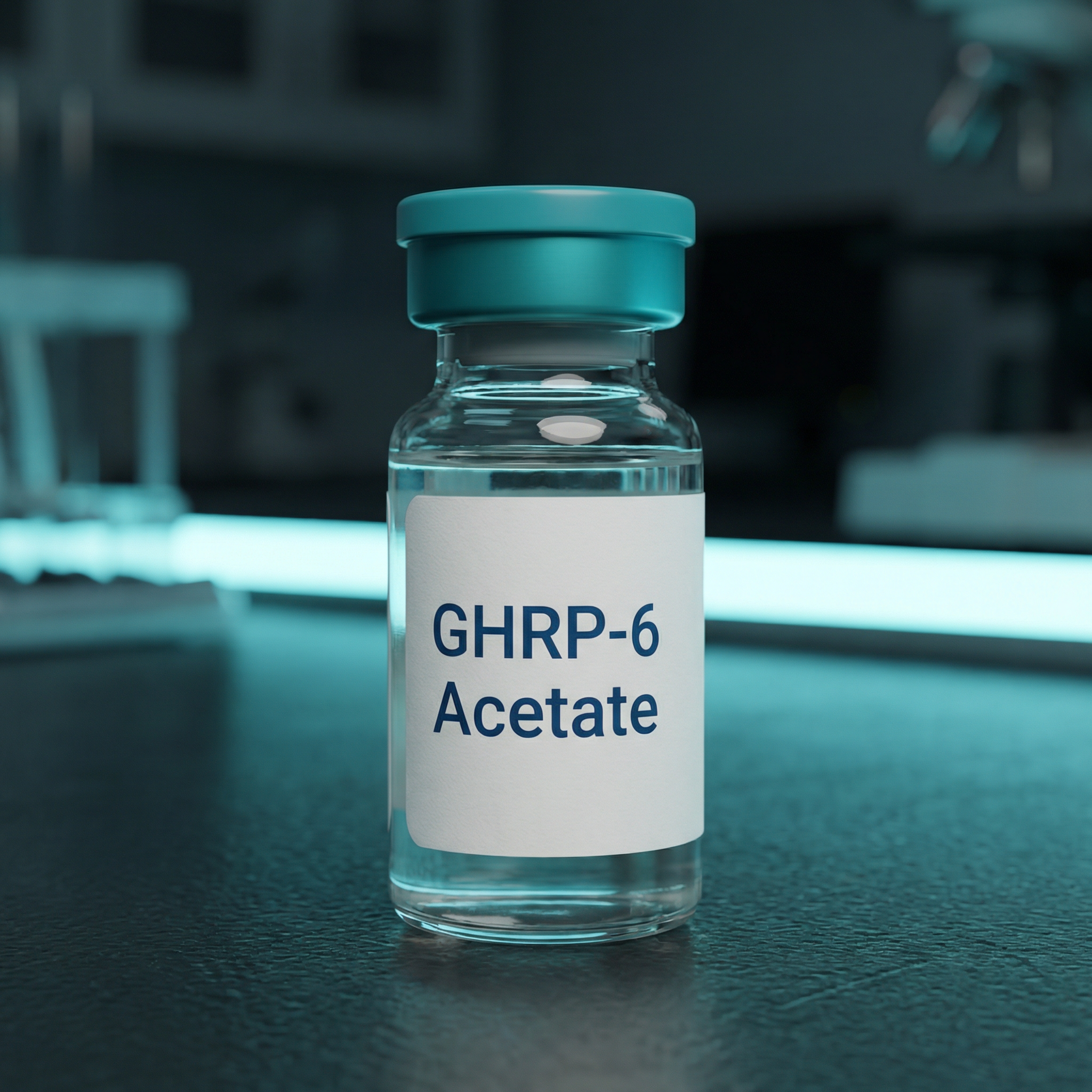
GHRP-6 is one of the classic synthetic growth-hormone-releasing peptides and remains widely discussed in endocrine research and physique-focused peptide markets. It has a clear secretagogue mechanism and long scientific history, but it does not have the same region-specific diagnostic footing as GHRP-2. The repository should therefore classify it as an experimental GH-axis peptide rather than an approved therapy.
Primary names include GHRP-6, growth hormone-releasing peptide-6, and growth hormone releasing hexapeptide. Salt-form naming such as acetate should be stored separately from the parent sequence record.
3. Sequence and structure
GHRP-6 is a linear hexapeptide with the sequence His-D-Trp-Ala-Trp-D-Phe-Lys-NH2. Like other classic GHRPs, it uses D-amino-acid substitutions that are central to activity and should be recorded explicitly. The repository should also preserve the amidated C terminus and any salt form as separate metadata.
GHRP-6 activates the growth hormone secretagogue receptor and stimulates GH release through pathways distinct from but synergistic with GHRH signaling. It also has orexigenic and broader neuroendocrine effects that make its biology broader than GH alone. Mechanistic confidence is high at the receptor and endocrine-response level.
The literature supports its use mainly as a research secretagogue and endocrine probe. Online use cases often emphasize appetite, GH support, recovery, or body-composition goals, but those should be labeled as non-approved. No mainstream FDA or EMA therapeutic indication was identified.
GHRP-6 has rapid endocrine activity after administration, but formal modern human PK packages are limited. Repeated-use claims often rely more on practice lore than on high-quality dose-exposure studies. The repository should therefore focus on acute secretagogue biology rather than pretend chronic-use PK is fully mapped.
The compound reliably stimulates GH release in experimental settings, and there is a long literature supporting that endocrine effect. Broader therapeutic outcomes such as durable body-composition improvement or tissue repair are much less well established. Evidence strength should be graded high for acute GH stimulation and low to moderate for downstream lifestyle claims.
Potential concerns include endocrine disruption, appetite effects, glucose or insulin-related downstream changes, prolactin or cortisol shifts, and the uncertainties of repeated non-approved use. Because long-term medical-grade safety characterization is limited, the repository should avoid describing it as well validated for chronic therapy.
No approved therapeutic dosing framework was identified. Any dose information added later should be linked to named protocols or studies and kept separate from informal online schedules.
UNVERIFIED RESEARCHER-REPORTED DOSING INFORMATION
The following dosing information has been compiled from community forums, researcher discussions, and gray-market sources. This information has NOT been verified through peer-reviewed scientific studies or clinical trials. It does NOT constitute medical advice, a prescription, or a recommendation for human use.
This data is presented solely for informational and educational purposes to document what is commonly discussed in research communities. Dosing protocols may be inaccurate, dangerous, or based on anecdotal reports with no scientific validation. Individual responses vary significantly, and unregulated compounds carry inherent risks including contamination, mislabeling, and unknown side effects.
Always consult qualified medical professionals before making any health-related decisions. The repository maintainers assume no liability for the use or misuse of this information.
Researcher-Reported Dosing Protocols
Common Dose Range: 100-300 mcg per injection
Administration Route: Subcutaneous or intramuscular injection.
Frequency: 2-3 times per day
Timing: On an empty stomach, such as upon waking, pre-workout, or before bed. Avoid taking within 1-2 hours of carbohydrate-heavy meals.
Schedule / Protocol: 8-12 week cycles, with 4-6 weeks off between cycles.
Dose Escalation: Start at a lower dose of 100 mcg, 2-3 times daily. More advanced users may titrate up to 300 mcg per injection.
Additional Notes: GHRP-6 is often taken on an empty stomach to maximize its effectiveness, as elevated blood glucose or insulin can blunt GH release.
This researcher-reported dosing information was compiled from unverified community sources and does not represent validated scientific or medical guidance.
GHRP-6 has extensive experimental literature but no mature mainstream approved therapeutic pathway was identified in this review. It should be coded as experimental / non-approved.
Not approved by the FDA or EMA as a therapeutic product. Best categorized as a research secretagogue peptide.
13. References and source quality
Core sources include PubChem chemistry pages, foundational endocrinology papers on GHRP-6 sequence and GH release, and newer preclinical studies that expand on cytoprotective or cardiometabolic signaling. Source quality is high for endocrine mechanism and limited for many modern gray-market use claims.
Manufacturing control should verify sequence, D-residue placement, amidation, and salt form. Because GHRP-6 is structurally close to other GHRPs, analytical differentiation is important for repository integrity and anti-mislabeling purposes.
Version 0.1 starter entry created March 14, 2026. Evidence basis for this draft: PubChem chemistry data, foundational GHRP-6 endocrinology literature, and more recent mechanistic studies on secretagogue biology.