GLP-1
Endogenous incretin peptide and class-anchor biology for GLP-1 receptor agonist therapeutics
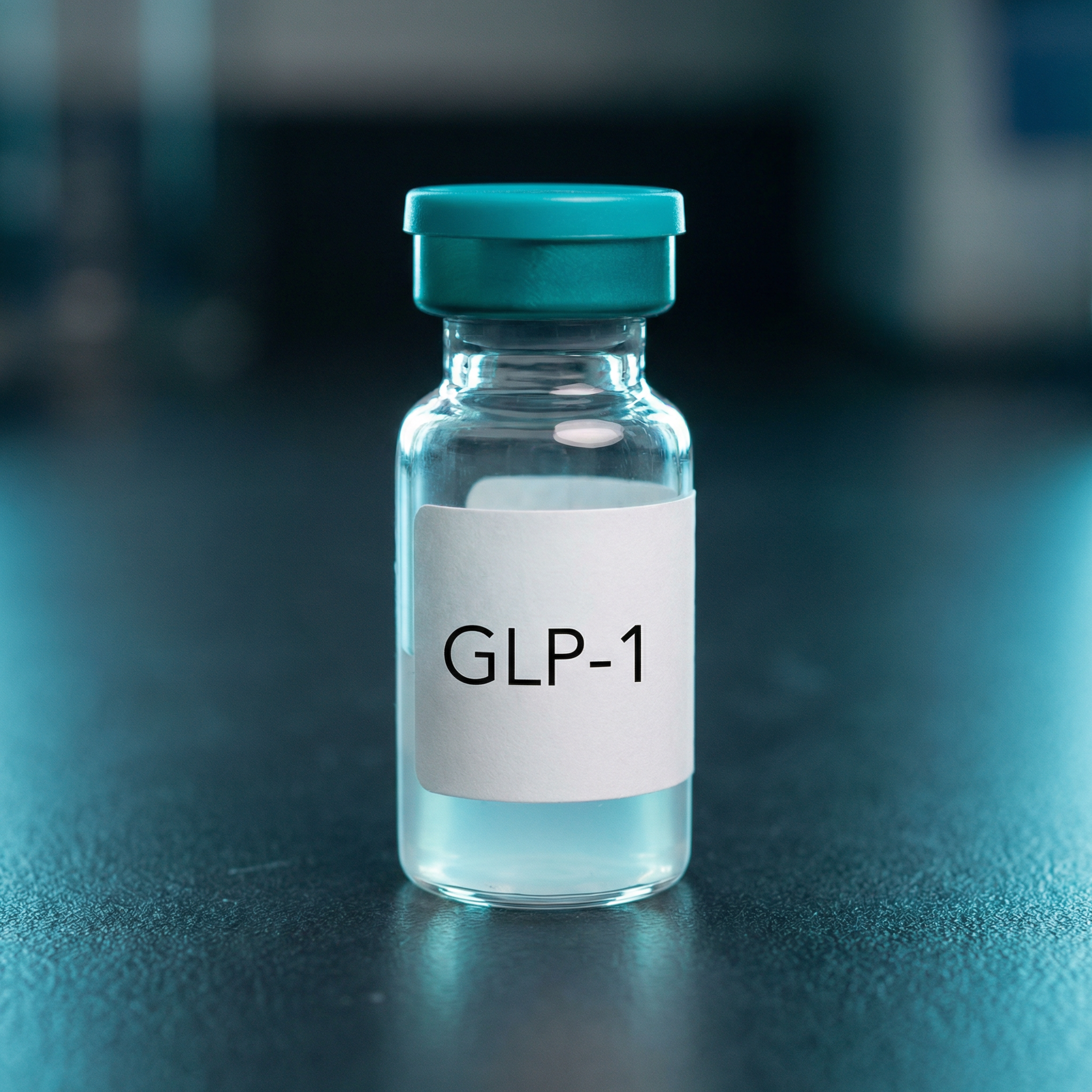
GLP-1 (glucagon-like peptide-1) is an endogenous incretin peptide generated from proglucagon processing and is central to glucose control, appetite regulation, and gastrointestinal signaling. In the repository it is best treated as both a native hormone entry and a class-anchor for the much larger GLP-1 receptor agonist drug family. The strongest real-world therapeutic evidence belongs to modified GLP-1 receptor agonists and multi-agonists rather than to short-lived native GLP-1 itself.
Primary names include glucagon-like peptide-1, GLP-1, GLP1, and active physiologic forms such as GLP-1(7-36) amide and GLP-1(7-37). The hormone is derived from the GCG (proglucagon) precursor and signals mainly through the GLP-1 receptor (GLP1R). Repository records should distinguish native GLP-1 from drug analogs such as exenatide, liraglutide, semaglutide, and newer dual or triple agonists.
3. Sequence and structure
GLP-1 is a linear proglucagon-derived peptide. The two principal active human forms are GLP-1(7-36) amide, the dominant circulating bioactive form, and GLP-1(7-37). Because native GLP-1 is rapidly cleaved by DPP-4 and other enzymes, structure-preserving modifications are the key reason therapeutic GLP-1 agonists can achieve clinically useful exposure.
GLP-1 activates GLP1R, a class B GPCR, producing glucose-dependent insulin secretion, suppression of inappropriate glucagon release, slowed gastric emptying, and increased satiety. Additional biology discussed in the literature includes cardiovascular, anti-inflammatory, and central nervous system effects, but the most established repository focus should remain metabolic regulation and incretin signaling.
Native GLP-1 is primarily a physiology and translational-biology reference molecule rather than a practical standalone medicine. The use cases with the strongest evidence are type 2 diabetes, obesity, and cardiometabolic risk reduction, but those indications are served clinically by modified GLP-1 receptor agonists, not by routine administration of native GLP-1 itself.
Endogenous GLP-1 has an extremely short circulating half-life measured in minutes because it is rapidly degraded, especially by DPP-4. That makes unmodified GLP-1 mainly a research or infusion-study tool. Drug development in this space has therefore focused on half-life extension, enzyme resistance, albumin binding, and depot-friendly formulations.
There is strong physiologic evidence that GLP-1 signaling improves glucose-dependent insulin secretion and lowers postprandial glycemia. However, the practical efficacy story is really the success of the GLP-1 drug class rather than the native peptide. Repository readers should be directed toward analog-specific entries for product-level efficacy conclusions.
For class context, the most recognized adverse effects are gastrointestinal intolerance, nausea, vomiting, and delayed gastric emptying, with rarer concerns including gallbladder events, pancreatitis signals, and peri-procedural aspiration risk from slowed gastric emptying. Native GLP-1 infusion research is not the same as chronic commercial GLP-1 agonist exposure, so safety language should remain class-aware and formulation-specific.
No universal practical dosing framework should be presented for native GLP-1 in this repository starter entry. If dose lines are added later, they should be tied to named infusion protocols or specific investigational settings rather than borrowed from approved GLP-1 receptor agonist drugs.
UNVERIFIED RESEARCHER-REPORTED DOSING INFORMATION
The following dosing information has been compiled from community forums, researcher discussions, and gray-market sources. This information has NOT been verified through peer-reviewed scientific studies or clinical trials. It does NOT constitute medical advice, a prescription, or a recommendation for human use.
This data is presented solely for informational and educational purposes to document what is commonly discussed in research communities. Dosing protocols may be inaccurate, dangerous, or based on anecdotal reports with no scientific validation. Individual responses vary significantly, and unregulated compounds carry inherent risks including contamination, mislabeling, and unknown side effects.
Always consult qualified medical professionals before making any health-related decisions. The repository maintainers assume no liability for the use or misuse of this information.
Researcher-Reported Dosing Protocols
Common Dose Range: Semaglutide: 0.25 - 2.4 mg per injection; Liraglutide: 0.6 - 3.0 mg per injection
Administration Route: Subcutaneous injection
Frequency: Semaglutide: Once weekly; Liraglutide: Once daily
Timing: Can be administered at any time of day, without regard to meals.
Schedule / Protocol: Continuous
Dose Escalation: Both Semaglutide and Liraglutide require a dose escalation period to improve tolerability. Semaglutide typically starts at 0.25 mg once weekly and the dose is increased every 4 weeks. Liraglutide typically starts at 0.6 mg once daily and the dose is increased weekly.
Additional Notes: Semaglutide and Liraglutide are different medications within the GLP-1 receptor agonist class and have distinct dosing protocols. The information provided here summarizes the common protocols for each.
This researcher-reported dosing information was compiled from unverified community sources and does not represent validated scientific or medical guidance.
Human trial activity began with physiologic infusion and mechanism studies. Modern large-scale clinical development has centered on engineered GLP-1 receptor agonists and combination incretin drugs, not on routine therapeutic use of the short native peptide.
Native GLP-1 is best categorized as endogenous hormone biology and translational reference material. The broader GLP-1 receptor agonist class is well established clinically, but the unmodified peptide itself is not the main approved drug format in current practice.
13. References and source quality
Core sources include the major GLP-1 review by Müller and colleagues (2019), newer GLP-1-based therapy reviews such as Drucker (2025), and drug-development histories summarizing how rapid degradation of native GLP-1 led to the approved agonist class. These are high-quality review sources for mechanism and class context.
For research use, the entry should specify which active form is being discussed, especially GLP-1(7-36) amide versus GLP-1(7-37), because sequence end-state and amidation matter. Formulation considerations focus on peptide stability, protease susceptibility, storage temperature, and adsorption losses in dilute preparations.
Version 0.1 starter entry created March 14, 2026. Evidence basis for this draft: major GLP-1 reviews, drug-class reviews, and regulatory-era summaries of GLP-1 receptor agonist development.