Hexarelin Acetate
Synthetic ghrelin-receptor agonist hexapeptide; potent growth-hormone secretagogue with research-only status
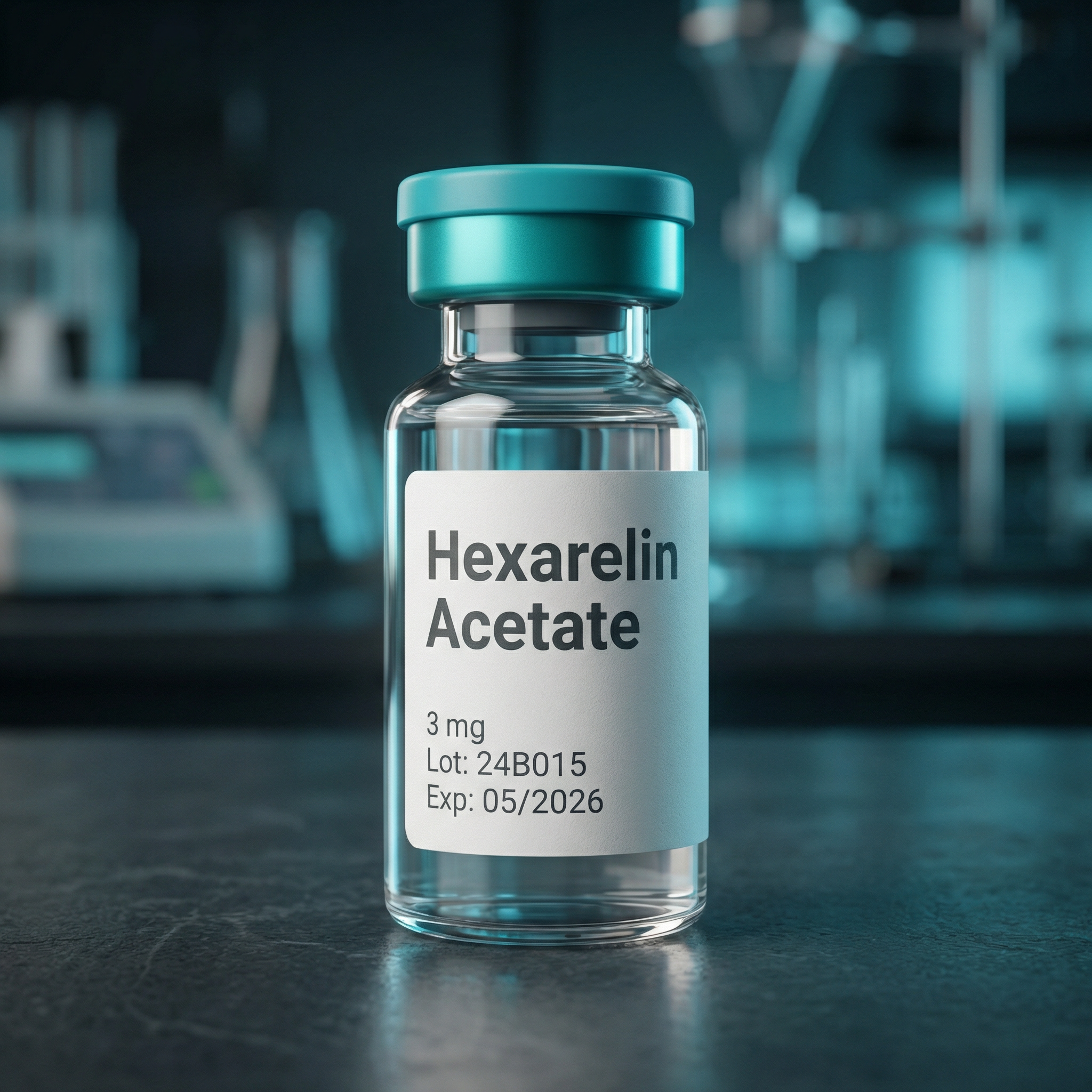
Hexarelin is a synthetic growth hormone secretagogue peptide and ghrelin-receptor agonist best known from endocrine research. It has stronger and more defined pharmacology than many gray-market peptides, but it never became a mainstream approved therapeutic. In the repository it should be framed as a research secretagogue with meaningful human experimental literature and no routine approved drug role.
Key names include hexarelin, examorelin, EP-23905, and salt-form names such as hexarelin acetate. Because salts and vendor naming can vary, the core entry should distinguish the active peptide from the specific formulated salt.
3. Sequence and structure
Hexarelin is a synthetic hexapeptide. A common sequence representation is His-D-2-methyl-Trp-Ala-Trp-D-Phe-Lys-NH2, with the acetate designation reflecting the salt form rather than a change in the peptide core. The presence of D-residues and the 2-methyl-tryptophan modification should be captured in sequence-aware repository fields.
The peptide activates the ghrelin receptor / growth hormone secretagogue receptor (GHS-R1a), producing robust GH release. It can also influence ACTH, cortisol, prolactin, appetite-related pathways, and possibly cardiometabolic signaling, which explains the broader exploratory literature around it.
The defensible use case is research in endocrine stimulation, secretagogue pharmacology, and ghrelin-system biology. Community claims about body composition or performance are much less evidence-secure and should not be represented as approved or established therapy.
Hexarelin produces rapid endocrine effects after administration, but formal contemporary PK packages are limited. Repeated receptor stimulation may lead to desensitization, and biologic effects extend beyond GH alone, which is important for both interpretation and safety.
Human and preclinical studies clearly show that hexarelin can stimulate GH release. There is also exploratory cardiometabolic literature, but not a mature therapeutic efficacy package that would support routine clinical use. The strongest conclusion is pharmacologic potency, not clinical approval.
Potential concerns include endocrine perturbation, altered prolactin or cortisol signaling, appetite effects, glucose-related changes, edema-like downstream effects, and unknowns around repeated nonmedical use. Because the compound was never standardized into mainstream clinical practice, long-term safety certainty remains limited.
No approved therapeutic dosing framework should be presented. Any future dosing data should be linked to named studies and route-specific protocols rather than copied from commercial peptide sales pages.
UNVERIFIED RESEARCHER-REPORTED DOSING INFORMATION
The following dosing information has been compiled from community forums, researcher discussions, and gray-market sources. This information has NOT been verified through peer-reviewed scientific studies or clinical trials. It does NOT constitute medical advice, a prescription, or a recommendation for human use.
This data is presented solely for informational and educational purposes to document what is commonly discussed in research communities. Dosing protocols may be inaccurate, dangerous, or based on anecdotal reports with no scientific validation. Individual responses vary significantly, and unregulated compounds carry inherent risks including contamination, mislabeling, and unknown side effects.
Always consult qualified medical professionals before making any health-related decisions. The repository maintainers assume no liability for the use or misuse of this information.
Researcher-Reported Dosing Protocols
Common Dose Range: 100-200 mcg per injection
Administration Route: Subcutaneous injection
Frequency: Once to three times daily
Timing: Commonly administered at bedtime. Some sources suggest taking it on an empty stomach and waiting 30-60 minutes before eating, while others state it is not necessary.
Schedule / Protocol: 4-16 week cycles, with a 2-4 week break
Dose Escalation: It is commonly recommended to start with a lower dose to assess tolerance before increasing to a full dose.
Additional Notes: Hexarelin is known to cause receptor desensitization, so cycling is often recommended to maintain its effectiveness. Reconstitution with bacteriostatic water is required before use.
This researcher-reported dosing information was compiled from unverified community sources and does not represent validated scientific or medical guidance.
Human studies have demonstrated GH-releasing activity and broader endocrine effects, but there is no established modern registration pathway leading to routine approved use. The clinical-trial footprint is therefore real but incomplete.
Best categorized as a research peptide and investigational secretagogue. No mainstream FDA or EMA therapeutic approval was identified for hexarelin acetate.
13. References and source quality
Core sources include the classic human GH-release studies by Imbimbo and colleagues (1994), endocrine work by Arvat and colleagues (1997), ghrelin/hexarelin reviews, and PubChem chemistry entries for sequence and identity. These sources are much stronger than bodybuilding summaries.
Manufacturing controls should verify the modified residue pattern, amidation, salt form, sequence integrity, and peptide purity. The repository should also track whether the material is acetate, another counterion, or a lyophilized research standard.
Version 0.1 starter entry created March 14, 2026. Evidence basis for this draft: classic human hexarelin studies, ghrelin-receptor literature, and chemistry database records.