HGH 191AA (Somatropin)
Recombinant human growth hormone; approved 191-amino-acid biologic with extensive pediatric and adult endocrine use
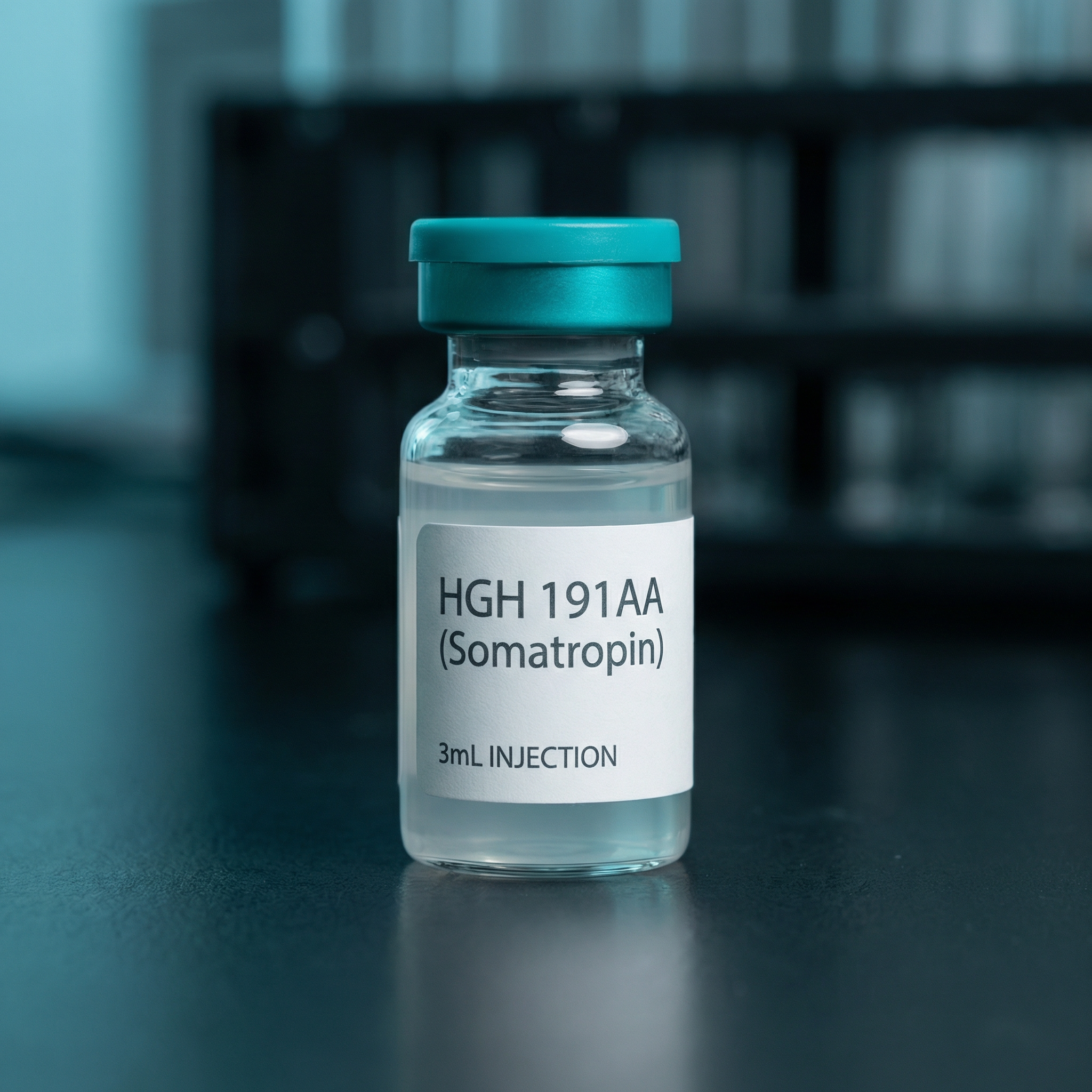
Somatropin is recombinant human growth hormone and one of the most clinically established biologic hormones in endocrine medicine. Unlike many entries in this repository, it is not speculative: it is an approved therapeutic protein with decades of clinical use. Because the user list calls it HGH 191AA, the repository should explicitly connect that shorthand to the approved drug substance somatropin.
Primary names include somatropin, recombinant human growth hormone, rhGH, human growth hormone 191AA, and multiple brand-specific products. The repository should distinguish short-acting daily somatropin products from newer long-acting GH formulations, which are related but not the same entry.
3. Sequence and structure
Somatropin is a 191-amino-acid single-chain protein with a molecular weight of about 22.1 kDa. Its amino acid sequence is identical to human pituitary growth hormone. Because it is a full recombinant protein, not a short peptide fragment, formulation, aggregation control, and device format matter substantially.
Somatropin activates the growth hormone receptor and drives downstream IGF-1 production along with direct metabolic and anabolic effects. The biology includes linear growth promotion, protein anabolism, lipolysis, and broad endocrine regulation, with tissue response varying by age, baseline deficiency state, and dose.
Approved uses vary by product but broadly include pediatric growth hormone deficiency and several pediatric growth disorders, as well as adult growth hormone deficiency and selected catabolic or syndrome-specific indications. In the repository, approved endocrinology use should be kept separate from performance-enhancement misuse.
Somatropin is typically administered subcutaneously, with PK depending on product, device, and schedule. Clinical response is often followed through IGF-1 and growth endpoints rather than plasma drug levels alone. Route, adherence, and product formulation all matter to exposure.
The efficacy base is strong and mature. Somatropin improves growth outcomes in appropriate pediatric deficiency or disorder settings and supports validated endpoints in approved adult indications. This is one of the highest-confidence entries in the repository.
Important safety themes include edema, arthralgia, insulin resistance or glucose intolerance, intracranial hypertension, slipped capital femoral epiphysis in pediatric settings, fluid retention, and label-based cautions around malignancy risk, acute critical illness, and inappropriate dosing. Interpretation must always be indication-specific.
Dosing is product-, age-, and indication-specific and is often weight- or body-surface-area-based, with IGF-1 and clinical monitoring used to guide adjustment. The starter entry should avoid flattening diverse label regimens into a single number.
UNVERIFIED RESEARCHER-REPORTED DOSING INFORMATION
The following dosing information has been compiled from community forums, researcher discussions, and gray-market sources. This information has NOT been verified through peer-reviewed scientific studies or clinical trials. It does NOT constitute medical advice, a prescription, or a recommendation for human use.
This data is presented solely for informational and educational purposes to document what is commonly discussed in research communities. Dosing protocols may be inaccurate, dangerous, or based on anecdotal reports with no scientific validation. Individual responses vary significantly, and unregulated compounds carry inherent risks including contamination, mislabeling, and unknown side effects.
Always consult qualified medical professionals before making any health-related decisions. The repository maintainers assume no liability for the use or misuse of this information.
Researcher-Reported Dosing Protocols
Common Dose Range: 200-900 mcg daily (conservative), up to 1000-2000 mcg/day (advanced)
Administration Route: Subcutaneous injection
Frequency: Once daily
Timing: Preferably at bedtime
Schedule / Protocol: 8-week cycles, with optional extensions to 12 or 16 weeks
Dose Escalation: Start at a low dose (e.g., 200 mcg) and increase gradually by ~100 mcg each week.
Additional Notes: Rotate injection sites to prevent lipoatrophy. Higher doses increase the risk of side effects. It is important to monitor fasting glucose weekly at doses >= 2 IU/day as HGH can cause dose-dependent insulin resistance.
This researcher-reported dosing information was compiled from unverified community sources and does not represent validated scientific or medical guidance.
Somatropin has extensive registration, comparative, and post-marketing clinical literature. Newer development in the GH field often involves long-acting analogs or alternative delivery systems rather than re-proving the core somatropin concept.
Approved and widely established in regulated markets through multiple branded and biosimilar or follow-on products. This entry should be labeled as approved biologic therapy, not investigational peptide.
13. References and source quality
Best sources include DailyMed labeling for products such as Omnitrope or Genotropin, endocrine society guidance, and pediatric or adult GH-deficiency practice reviews. These are authoritative for structure, indication scope, and major safety themes.
Critical repository fields include recombinant expression system, concentration, preservative content, cartridge or vial format, cold-chain handling, and reconstitution requirements where applicable. Protein aggregation and device compatibility matter more here than in small-peptide entries.
Version 0.1 starter entry created March 14, 2026. Evidence basis for this draft: current DailyMed labeling and established endocrine practice literature.