HGH Fragment 176-191
C-terminal human growth hormone fragment; widely marketed for fat-loss claims but much less validated than somatropin or approved obesity drugs
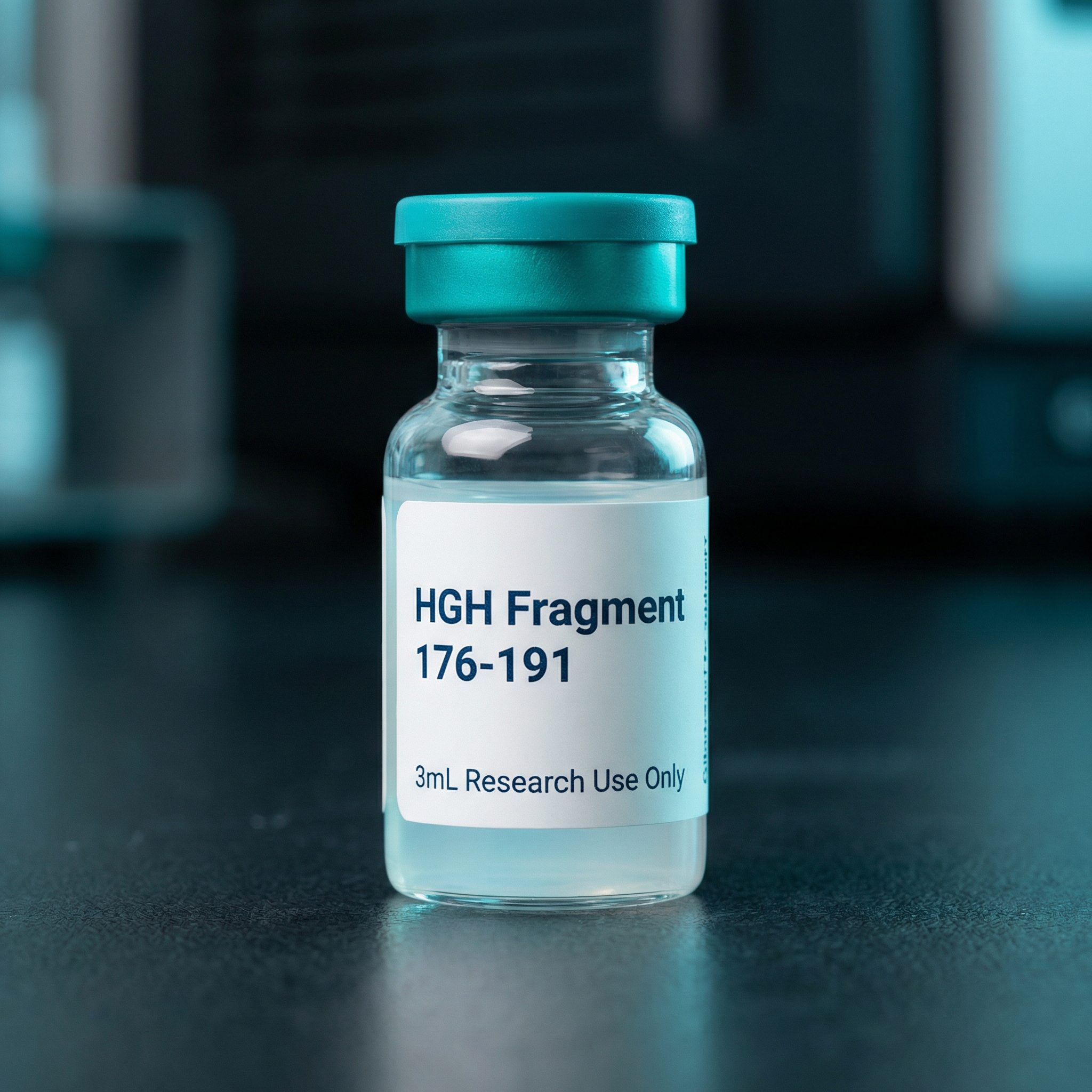
HGH Fragment 176-191 is a short C-terminal fragment derived from human growth hormone and is widely discussed in gray-market fat-loss circles. The evidence base is much weaker than the marketing culture around it, and the repository should clearly distinguish this entry from full-length somatropin and from the modified analog AOD9604. Most strong claims in public circulation overstate what has actually been shown for the unmodified fragment.
Common names include hGH fragment 176-191, HGH frag 176-191, and growth hormone fragment 176-191. AOD9604 is related but should be tracked as a separate entry because it is a modified analog rather than the same molecule.
3. Sequence and structure
This entry refers to the C-terminal 16-amino-acid fragment corresponding to residues 176-191 of human growth hormone. Sequence-aware records should note that the unmodified fragment is distinct from AOD9604 and other derivatives. Because short fragments can be mislabeled commercially, identity confirmation and exact sequence reporting are particularly important.
The peptide is commonly presented as representing a lipolytic or antilipogenic domain of growth hormone, but the mechanistic picture is not fully established. A persistent repository caution is that some mechanistic and efficacy claims are extrapolated from modified analog work rather than from the raw fragment itself.
The dominant public use case is fat-loss or body-composition support, but this should be labeled as investigational / low-evidence rather than approved therapy. The compound is better understood as a research fragment than as a clinically established anti-obesity agent.
Formal human PK data for the unmodified fragment are limited. In practice, claims about duration, receptor selectivity, or fat-targeting precision are often stronger than the publicly documented evidence can support.
There is historical preclinical work on lipolytic domains and later work on related modified fragments, but the unmodified HGH fragment 176-191 does not have a robust approved-human efficacy package. Readers should not treat it as equivalent to modern obesity drugs or to full-length GH therapy.
Systematic human safety characterization is limited. Risks include the general uncertainties of nonapproved peptide exposure, formulation quality issues, and the possibility that commercial materials may not match the claimed identity.
No approved dosing framework exists. Any future dose notes should be tied to named studies and must distinguish unmodified fragment from AOD9604 or other derivatives.
UNVERIFIED RESEARCHER-REPORTED DOSING INFORMATION
The following dosing information has been compiled from community forums, researcher discussions, and gray-market sources. This information has NOT been verified through peer-reviewed scientific studies or clinical trials. It does NOT constitute medical advice, a prescription, or a recommendation for human use.
This data is presented solely for informational and educational purposes to document what is commonly discussed in research communities. Dosing protocols may be inaccurate, dangerous, or based on anecdotal reports with no scientific validation. Individual responses vary significantly, and unregulated compounds carry inherent risks including contamination, mislabeling, and unknown side effects.
Always consult qualified medical professionals before making any health-related decisions. The repository maintainers assume no liability for the use or misuse of this information.
Researcher-Reported Dosing Protocols
Common Dose Range: 200-500 mcg per day
Administration Route: Subcutaneous injection
Frequency: Once or twice daily
Timing: Administered on an empty stomach. If once daily, in the morning, at least one hour before breakfast. If twice daily, the second dose is typically taken in the evening, several hours after the last meal, or before a workout.
Schedule / Protocol: 4-12 week cycles
Dose Escalation: It is commonly recommended to start at a lower dose (e.g., 200-250 mcg) to assess tolerance before gradually increasing.
Additional Notes: HGH Fragment 176-191 is a synthetic peptide fragment of human growth hormone, primarily researched for its lipolytic (fat-burning) properties. It is often used in research settings for fat loss and to improve recovery. The peptide is typically reconstituted with bacteriostatic water and should be stored in a refrigerator after reconstitution.
This researcher-reported dosing information was compiled from unverified community sources and does not represent validated scientific or medical guidance.
The better-known human clinical history in this area is tied to modified analog programs such as AOD9604, not to widespread direct testing of the raw fragment 176-191 itself. That distinction should remain explicit in the repository.
Not identified as an approved therapeutic product in major regulated markets. Best categorized as research / investigational and frequently over-marketed.
13. References and source quality
Most useful references include early work on the GH lipolytic domain, studies of related analogs such as AOD9604, PubChem compound records, and newer papers that make clear the distinction between the raw fragment and modified versions. Commercial peptide pages are low-quality sources for this entry.
Manufacturing fields should capture exact sequence, purity, oxidation state, counterion, and whether the material is explicitly the unmodified 176-191 fragment or a modified analog. This is an entry where COA quality matters a great deal.
Version 0.1 starter entry created March 14, 2026. Evidence basis for this draft: historical GH-fragment literature, AOD9604-related research, and public chemistry records.