Hyaluronic Acid
Matrix glycosaminoglycan used across dermatology, aesthetics, ophthalmology, and device-based medicine; not a peptide
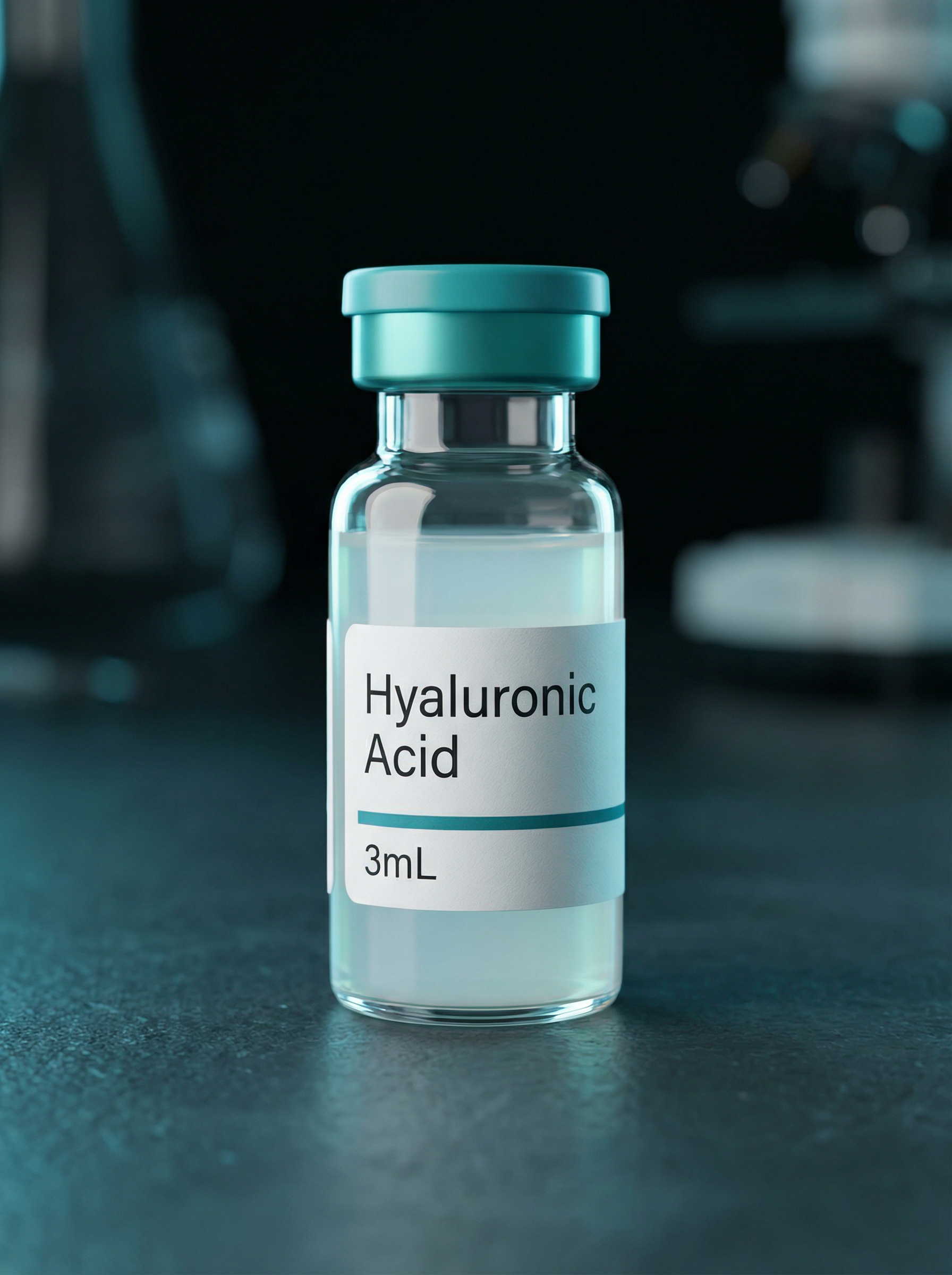
Hyaluronic acid belongs in this repository only with a clear note that it is not a peptide. It is a glycosaminoglycan and extracellular-matrix biomaterial with major use across skincare, wound support, ophthalmology, viscosupplementation, and dermal fillers. Because it is so widely marketed, repository value comes from organizing application-specific evidence instead of treating it as one uniform intervention.
Primary names include hyaluronic acid, hyaluronan, HA, and sodium hyaluronate. Cross-linked filler products, eye-drop products, injectable joint preparations, and topical serums are all related but not interchangeable and should be tracked as separate formulation classes.
3. Sequence and structure
HA is not a peptide sequence but a repeating disaccharide polymer composed of D-glucuronic acid and N-acetyl-D-glucosamine. Molecular weight, degree of cross-linking, source, and formulation architecture strongly influence behavior. Those fields are more important for HA than peptide-style amino-acid notation.
HA binds water, supports viscoelasticity, contributes to extracellular-matrix architecture, and interacts with receptors such as CD44. Depending on molecular weight and formulation, it can function as a lubricant, space-filling scaffold, hydration-support material, or tissue-healing adjunct.
Evidence-backed uses include dermal fillers, ocular lubrication, wound and skin hydration products, and selected medical-device or procedure-support applications. Some joint-injection uses are common in practice, though product status and guideline enthusiasm vary by jurisdiction and indication.
PK is highly formulation-specific. Topical HA acts mostly locally at the skin surface or near-surface environment, while fillers and injected products show persistence that depends on molecular weight, cross-linking, placement, and enzymatic breakdown. There is no single HA pharmacology profile.
Evidence is strongest when the application is clearly defined. Dermal filler and hydration-related uses are far better supported than broad anti-aging claims detached from product type. Topical literature generally supports hydration and skin-quality benefits, though study quality varies.
Topical products are usually well tolerated, but injected HA products carry distinct risks including bruising, edema, nodules, inflammatory reactions, and rare vascular compromise in aesthetic settings. Safety language should always be tied to route and device class.
Dose, concentration, and administration vary enormously by product class. A serum, eye drop, dermal filler, and intra-articular product cannot share one generic dosing field, so route-specific structured subfields are preferable if the repository expands this entry.
UNVERIFIED RESEARCHER-REPORTED DOSING INFORMATION
The following dosing information has been compiled from community forums, researcher discussions, and gray-market sources. This information has NOT been verified through peer-reviewed scientific studies or clinical trials. It does NOT constitute medical advice, a prescription, or a recommendation for human use.
This data is presented solely for informational and educational purposes to document what is commonly discussed in research communities. Dosing protocols may be inaccurate, dangerous, or based on anecdotal reports with no scientific validation. Individual responses vary significantly, and unregulated compounds carry inherent risks including contamination, mislabeling, and unknown side effects.
Always consult qualified medical professionals before making any health-related decisions. The repository maintainers assume no liability for the use or misuse of this information.
Researcher-Reported Dosing Protocols
Common Dose Range: 100-240 mg for oral supplementation. For intra-articular injections, doses vary by product (e.g., 20-88 mg per injection).
Administration Route: Oral and Intra-articular injection.
Frequency: Once daily for oral supplementation. For injections, it can be a single injection or a series of 2-5 weekly injections.
Timing: Not consistently specified, but oral supplements are often taken with meals.
Schedule / Protocol: Oral supplementation is often taken in 8-12 week cycles. Injection protocols are typically a single treatment course.
Dose Escalation: For oral supplementation, some users may increase their dose, but it is generally recommended to stay within the 100-240mg range. No escalation for injections as it is administered by a professional.
Additional Notes: Hyaluronic Acid is available as an oral supplement and as an injectable for medical procedures like treating knee osteoarthritis. The dosing information varies significantly between these two routes of administration. Oral supplementation is often combined with collagen.
This researcher-reported dosing information was compiled from unverified community sources and does not represent validated scientific or medical guidance.
HA has a very broad clinical literature spanning dermatology, cosmetic medicine, ophthalmology, wound support, dentistry, and orthopedics. Trial interpretation must stay application-specific because positive evidence in one class does not automatically transfer to another.
Numerous HA-based products are approved, cleared, or regulated across drug, device, cosmetic, and combination-product pathways depending on jurisdiction and formulation. This is better treated as a platform material class than as one single global approval story.
13. References and source quality
High-value sources include the 2022 review on topical HA and skin-quality evidence, newer reviews of clinical applications, and product-label or regulatory documents for specific filler, ocular, or device classes. Generic beauty-marketing pages are low-quality evidence.
The repository should capture molecular-weight range, source method such as bacterial fermentation or animal-derived origin, degree of cross-linking, concentration, sterility, endotoxin control, and intended route. These formulation variables largely determine real-world behavior.
Version 0.1 starter entry created March 14, 2026. Evidence basis for this draft: topical HA literature reviews, broader clinical-application reviews, and route-specific product-class knowledge.