IGF-1 LR3
Long R3 IGF-1 analog with reduced IGF-binding-protein interaction; potent experimental growth factor with no approved human use
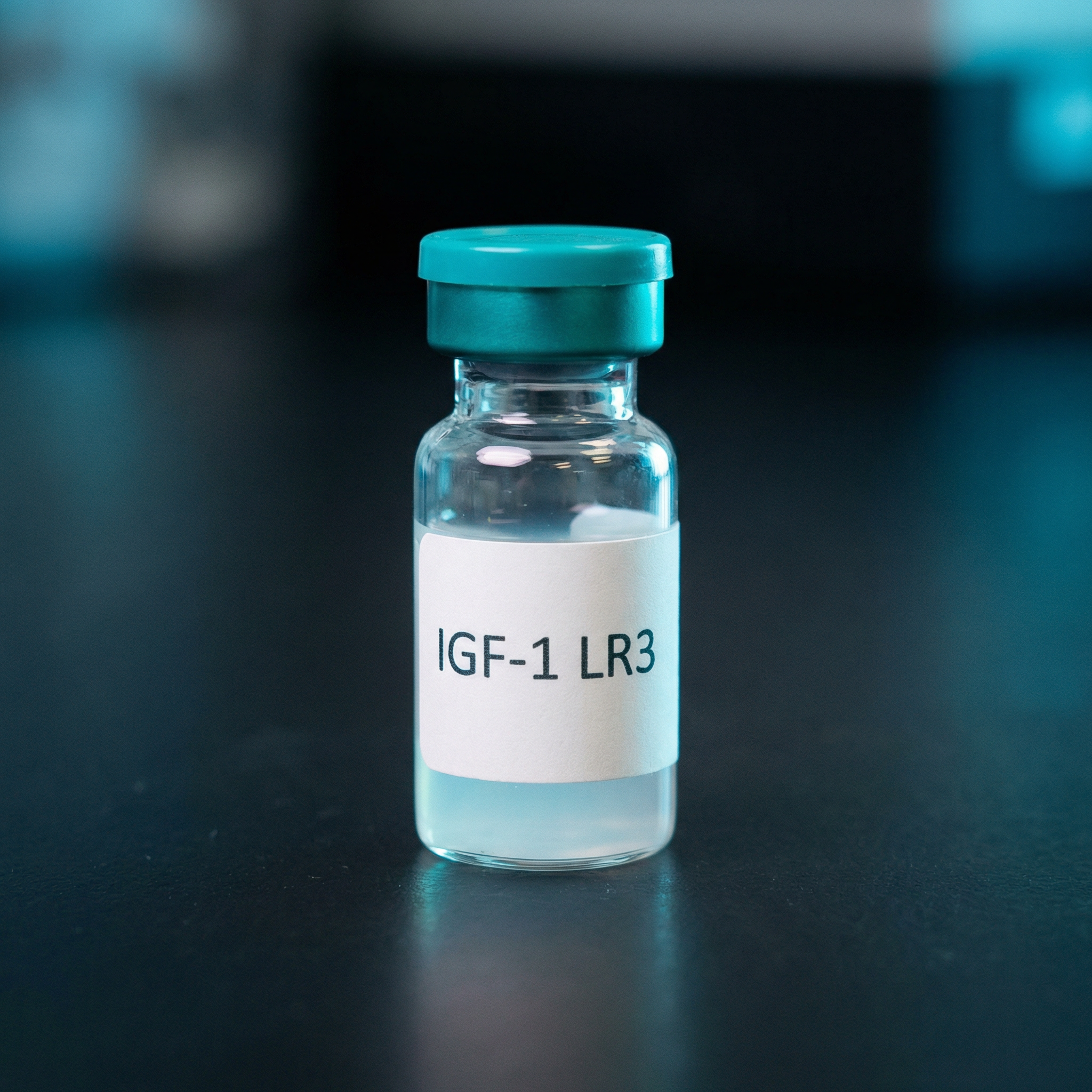
IGF-1 LR3 is a modified insulin-like growth factor-1 analog used in experimental biology and widely discussed in performance-enhancement circles. Its core appeal is altered interaction with IGF-binding proteins and strong downstream growth signaling. The repository should make clear that this is not an approved human therapeutic and that much real-world exposure exists in gray-market contexts.
Common names include long R3 IGF-1, LR3 IGF-1, LongR3-IGF-I, and recombinant LR3 IGF-I. The entry should also distinguish LR3 from native IGF-1 and from shorter or truncated analogs such as des(1-3)IGF-I.
3. Sequence and structure
LR3 IGF-1 is an engineered analog of IGF-1 that includes an arginine substitution at position 3 and an additional N-terminal extension, creating a longer molecule than native human IGF-1. Functionally, these changes reduce affinity for IGF-binding proteins and alter the way free bioactive peptide is distributed in experimental systems.
The analog signals through the IGF-1 receptor with strong anabolic and proliferative downstream biology involving PI3K/Akt and related pathways. Reduced binding-protein sequestration is a central reason LR3 can appear more potent or more sustained in some experimental contexts than native IGF-1.
The defensible use case is laboratory research on growth signaling, tissue response, and comparative IGF pharmacology. Public performance, muscle-building, and anti-aging narratives should be labeled investigational / unsupported rather than therapeutic.
LR3 differs from native IGF-1 in binding-protein interactions and free-bioactive behavior, which complicates simple PK comparisons. Formal human therapeutic PK packages are not established in the way they would be for an approved medicine.
Preclinical studies show clear biologic activity, including tissue and organ-growth effects in animals and robust cell-signaling potency. That is not the same as clinical efficacy. No approved human efficacy package was identified for therapeutic use.
Potential risks include hypoglycemia, edema, excessive tissue-growth signaling, theoretical tumor-promotion concerns, and all the uncertainties that come with nonapproved growth-factor exposure. Because real-world use can involve mislabeled products, quality risk is part of safety risk here.
No approved dosing framework exists. Any future dosing lines must be explicitly tied to named experimental protocols and should never be populated from gray-market marketing material.
UNVERIFIED RESEARCHER-REPORTED DOSING INFORMATION
The following dosing information has been compiled from community forums, researcher discussions, and gray-market sources. This information has NOT been verified through peer-reviewed scientific studies or clinical trials. It does NOT constitute medical advice, a prescription, or a recommendation for human use.
This data is presented solely for informational and educational purposes to document what is commonly discussed in research communities. Dosing protocols may be inaccurate, dangerous, or based on anecdotal reports with no scientific validation. Individual responses vary significantly, and unregulated compounds carry inherent risks including contamination, mislabeling, and unknown side effects.
Always consult qualified medical professionals before making any health-related decisions. The repository maintainers assume no liability for the use or misuse of this information.
Researcher-Reported Dosing Protocols
Common Dose Range: 20-50 mcg per day
Administration Route: Subcutaneous or Intramuscular injection
Frequency: Once daily
Timing: Post-workout on training days. It is often advised to avoid administration within two hours of bedtime.
Schedule / Protocol: 4-6 week cycles, followed by a 4-6 week washout period
Dose Escalation: It is commonly recommended to start at a lower dose (e.g., 20-30 mcg/day) for the first 1-2 weeks to assess tolerance before gradually increasing the dosage.
Additional Notes: To prevent hypoglycemia, it is recommended to consume a meal rich in carbohydrates and protein following the injection. Injection sites should be rotated to prevent tissue irritation.
This researcher-reported dosing information was compiled from unverified community sources and does not represent validated scientific or medical guidance.
Clinical development was not identified as an approved therapeutic pathway. Anti-doping literature instead emphasizes detectability and black-market availability of LR3 and related IGF analogs.
Not approved for human therapeutic use in mainstream regulated markets and prohibited in sport. Best categorized as experimental IGF analog / research chemical.
13. References and source quality
Core sources include classic LR3 infusion and growth papers from the 1990s, modern anti-doping detection literature documenting that LongR3-IGF-I has never been approved for human use, and newer experimental expression or disease-model studies. These are stronger than bodybuilding-source writeups.
Critical fields include exact analog identity, sequence confirmation, recombinant expression details, purity, aggregation control, and assay verification for biologic activity. LR3 mislabeling risk is high enough that source quality should be treated as part of the record.
Version 0.1 starter entry created March 14, 2026. Evidence basis for this draft: classic LR3 literature, anti-doping detection studies, and experimental biology sources.