Ipamorelin
Selective ghrelin-receptor agonist pentapeptide; experimental growth-hormone secretagogue without mainstream therapeutic approval
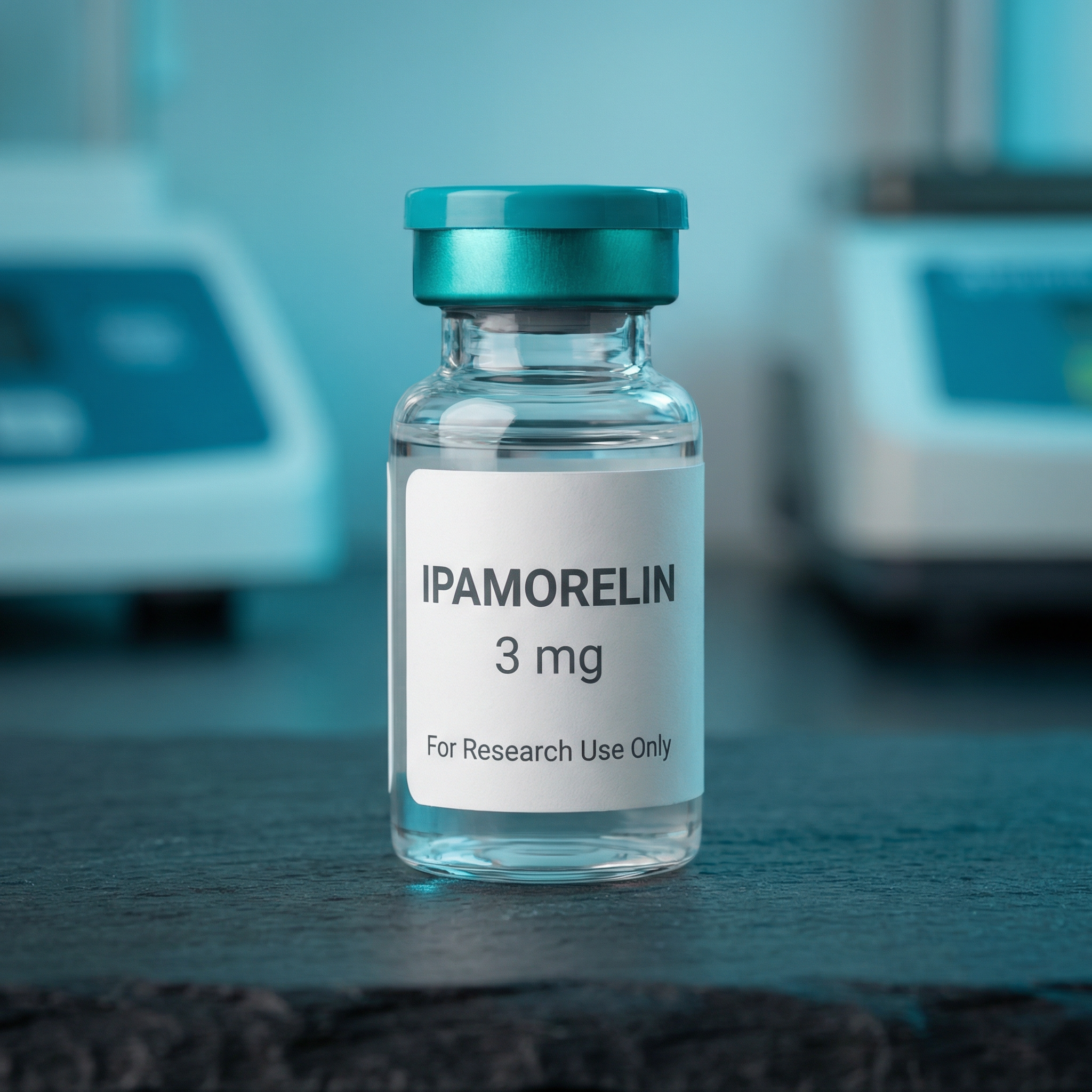
Ipamorelin is a synthetic growth-hormone secretagogue peptide designed to stimulate GH release through the ghrelin / growth-hormone secretagogue receptor pathway with greater selectivity than older GHRPs. It is widely discussed in peptide clinics and bodybuilding markets, but its formal regulatory footprint is far thinner than the marketing language around it. The repository should classify it as an experimental endocrine peptide, not an approved anti-aging or body-composition therapy.
Key names include ipamorelin, NNC 26-0161, and salt-form names such as ipamorelin acetate. The identity section should distinguish the core pentapeptide from acetylated or other modified derivatives and from neighboring secretagogues such as GHRP-2, GHRP-6, hexarelin, and sermorelin. No mainstream FDA or EMA product identity was identified for therapeutic use.
3. Sequence and structure
Ipamorelin is a pentapeptide with the sequence Aib-His-D-2-Nal-D-Phe-Lys-NH2. Its structure includes noncanonical residues and D-amino-acid substitutions that are central to receptor activity and should be stored explicitly, along with the amidated C terminus and any salt form. This is a compact synthetic secretagogue rather than a naturally circulating peptide hormone.
Ipamorelin acts as an agonist at the ghrelin receptor / growth-hormone secretagogue receptor and stimulates pulsatile GH release. Compared with older GHRPs, it has often been described as relatively selective for GH release with less ACTH or cortisol stimulation in early studies, though real-world physiologic effects still depend on route, dose, and endocrine context. Mechanistic confidence is high at the receptor level.
The strongest defensible use case is experimental study of GH-axis stimulation and comparative secretagogue biology. Public claims often extend this to fat loss, muscle gain, sleep, anti-aging, or recovery support, but those narratives are not equivalent to approved medical indications. The repository should code those as non-approved or low-evidence use claims.
Ipamorelin has rapid secretagogue activity, but the formal human pharmacokinetic package is modest compared with approved endocrine drugs. Route, timing, and interaction with the endogenous GH pulse pattern matter substantially, making chronic-use lore much more confident than the literature actually warrants. Practical handling should emphasize acute endocrine pharmacology rather than pretend that long-term PK/PD is fully settled.
Evidence that ipamorelin can stimulate GH release is solid at the mechanistic and early clinical level. Evidence for durable downstream outcomes such as meaningful body-composition change, tissue repair, or anti-aging benefit is much weaker and far less standardized. In repository terms, efficacy is high for acute GH secretion and low to moderate for broader marketed outcomes.
Potential concerns include endocrine perturbation, edema, glucose-handling changes, headache, appetite or GI effects, and the quality-control risks of compounded or gray-market products. Long-term safety in repeated non-approved use is not well characterized. The database should separate relatively clean early-phase endocrine data from the far murkier real-world use environment.
No approved therapeutic dosing standard should be presented. If dose information is added later, it should be tied to named studies or protocols and clearly separated from clinic-marketing or forum-derived regimens.
UNVERIFIED RESEARCHER-REPORTED DOSING INFORMATION
The following dosing information has been compiled from community forums, researcher discussions, and gray-market sources. This information has NOT been verified through peer-reviewed scientific studies or clinical trials. It does NOT constitute medical advice, a prescription, or a recommendation for human use.
This data is presented solely for informational and educational purposes to document what is commonly discussed in research communities. Dosing protocols may be inaccurate, dangerous, or based on anecdotal reports with no scientific validation. Individual responses vary significantly, and unregulated compounds carry inherent risks including contamination, mislabeling, and unknown side effects.
Always consult qualified medical professionals before making any health-related decisions. The repository maintainers assume no liability for the use or misuse of this information.
Researcher-Reported Dosing Protocols
Common Dose Range: 100-300 mcg per injection
Administration Route: Subcutaneous injection
Frequency: Once or twice daily, 5-7 days per week
Timing: Typically administered before bed on an empty stomach. Some protocols suggest splitting the dose into morning and evening injections.
Schedule / Protocol: 12-24 week cycles, with some protocols suggesting 5 days on / 2 days off.
Dose Escalation: Beginners often start at a lower dose of 100-150 mcg per day before increasing.
Additional Notes: Ipamorelin is often stacked with CJC-1295 for a synergistic effect.
This researcher-reported dosing information was compiled from unverified community sources and does not represent validated scientific or medical guidance.
Clinical research has demonstrated endocrine activity, but no robust mainstream late-stage approval pathway was identified. The entry should therefore be categorized as clinically investigated but not approved.
Not identified as an FDA- or EMA-approved therapeutic peptide. Best categorized as an experimental GH secretagogue with some human research history but no established regulated clinical role.
13. References and source quality
Core sources include PubChem chemistry entries for the parent and acetate forms, early human studies describing selective GH release, and endocrine reviews of growth-hormone secretagogues. Source quality is high for mechanism and sequence identity, moderate for human endocrine effects, and low for many wellness-clinic claims.
Critical quality fields include noncanonical residue placement, amidation, salt form, and analytical differentiation from related GHRPs. Because adjacent secretagogues can be confused or mislabeled in commercial channels, sequence verification and purity testing are especially important.
Version 0.1 starter entry created March 14, 2026. Evidence basis for this draft: PubChem sequence data, classic ipamorelin human pharmacology studies, and endocrine review literature on secretagogues.