Kisspeptin-10
Decapeptide fragment of kisspeptin; reproductive-neuroendocrine research peptide with active human investigation but no mainstream approval
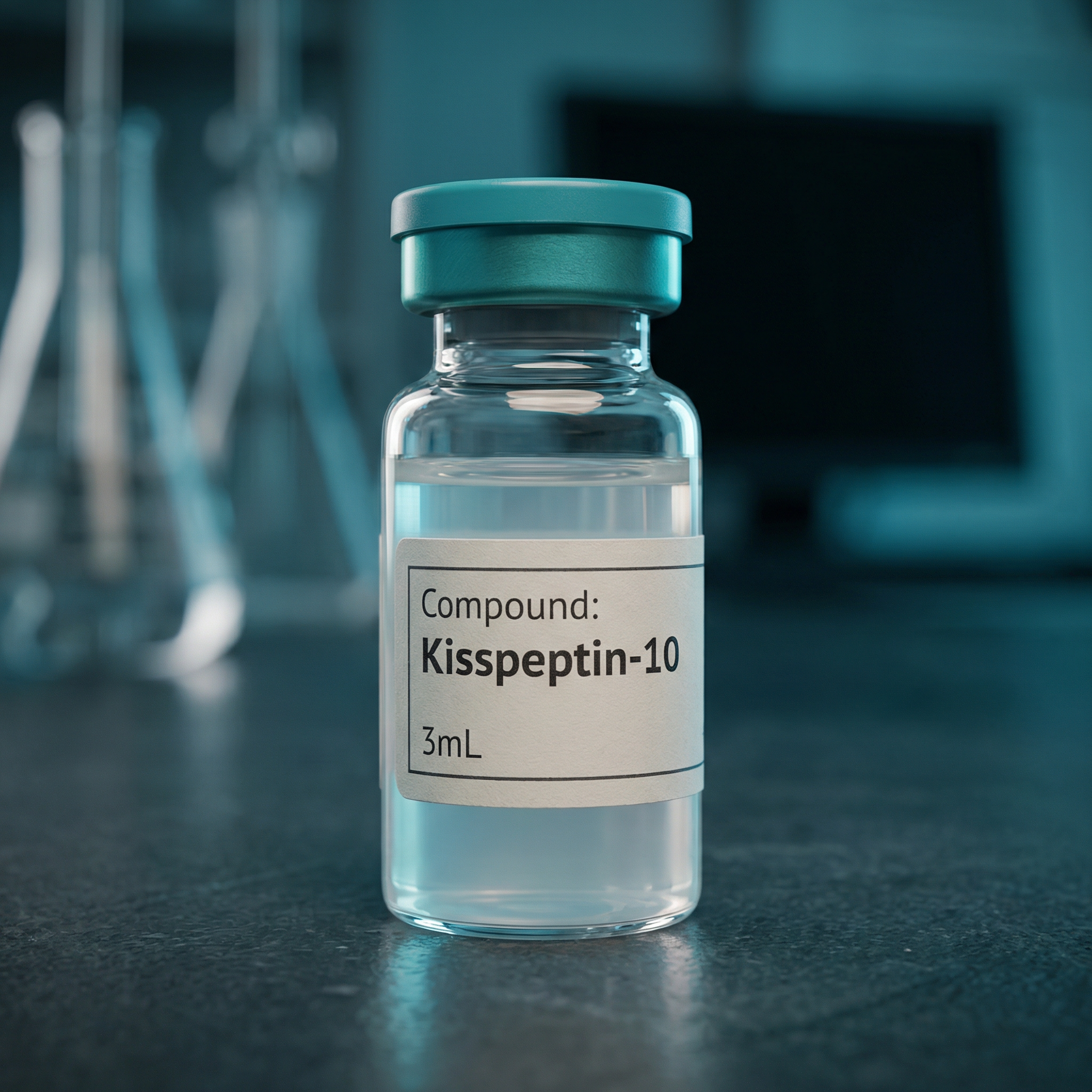
Kisspeptin-10 is the C-terminal decapeptide fragment of kisspeptin and is an important experimental tool in reproductive neuroendocrinology. It has credible human translational relevance because kisspeptin signaling is central to GnRH release and reproductive-axis control, but the specific KP-10 fragment remains an investigative peptide rather than an approved standard drug. The repository should rank it above many speculative peptides for biologic plausibility while still tagging it as non-approved.
Relevant names include kisspeptin-10, KP-10, metastin fragment, and kisspeptin decapeptide. The identity section should differentiate KP-10 from longer endogenous kisspeptins such as kisspeptin-54, because sequence length, route, and clinical use cases can differ materially. Human-study references should be linked at the family and fragment levels.
3. Sequence and structure
Kisspeptin-10 is an amidated decapeptide with the sequence Tyr-Asn-Trp-Asn-Ser-Phe-Gly-Leu-Arg-Phe-NH2, often abbreviated YNWNSFGLRF-NH2. The amidated C terminus is important to identity, and the entry should clearly link the fragment to the larger kisspeptin precursor family. This is a native-family signaling peptide rather than a random synthetic screening construct.
Kisspeptin peptides activate the KISS1 receptor, also known as GPR54, upstream of GnRH neurons and downstream reproductive hormone signaling. The biologic consequences include effects on LH and FSH release, gonadal steroid regulation, and broader reproductive-axis timing. Mechanistic confidence is high for the pathway, although specific dosing contexts and fragment behavior can vary.
The most evidence-based use cases are research and clinical investigation in reproductive endocrinology, infertility-related physiology, hypothalamic-pituitary-gonadal axis probing, and possibly selected diagnostic or therapeutic contexts. Online narratives sometimes extend this to libido or general hormone optimization, but those claims should be kept clearly separate from formal reproductive research.
Kisspeptin peptides generally produce prompt endocrine responses but have short peptide-like exposure characteristics unless formulation or route changes are used. The database should avoid pretending that one universal half-life defines all kisspeptin use because fragment length, administration route, and the measured endpoint all matter. Human PK and PD are meaningful enough to discuss, but still less mature than for approved endocrine agents.
Evidence is strong that kisspeptin signaling can acutely modulate reproductive hormones in humans and animals. What remains more limited is the extent to which KP-10 itself, as opposed to other kisspeptin formulations or family members, will become a standardized therapy. The repository should therefore score the pathway evidence high and the product-level therapeutic evidence moderate at most.
Available human research generally supports manageable acute tolerability, but the overall dataset is still modest relative to approved hormone therapies. Endocrine perturbation, reproductive-axis effects, and context-specific risks should be assumed relevant, especially in fertility settings or populations with endocrine disorders. Long-term routine-use safety is not established.
No broadly approved dose standard exists. Any future dose information should be tied to named reproductive-endocrinology studies and should distinguish bolus endocrine-probe use from longer therapeutic-administration concepts.
UNVERIFIED RESEARCHER-REPORTED DOSING INFORMATION
The following dosing information has been compiled from community forums, researcher discussions, and gray-market sources. This information has NOT been verified through peer-reviewed scientific studies or clinical trials. It does NOT constitute medical advice, a prescription, or a recommendation for human use.
This data is presented solely for informational and educational purposes to document what is commonly discussed in research communities. Dosing protocols may be inaccurate, dangerous, or based on anecdotal reports with no scientific validation. Individual responses vary significantly, and unregulated compounds carry inherent risks including contamination, mislabeling, and unknown side effects.
Always consult qualified medical professionals before making any health-related decisions. The repository maintainers assume no liability for the use or misuse of this information.
Researcher-Reported Dosing Protocols
Common Dose Range: 100-200 mcg per injection
Administration Route: Subcutaneous injection
Frequency: Once daily, or 2-3 times per week
Timing: Any consistent time of day.
Schedule / Protocol: 8-12 week cycles, followed by a break to prevent tachyphylaxis.
Dose Escalation: It is common to start with a lower dose of 100 mcg daily for the first 1-2 weeks to assess tolerance before increasing to 200 mcg daily.
Additional Notes: Kisspeptin-10 is often used by researchers alongside Testosterone Replacement Therapy (TRT) to help maintain natural testosterone production and prevent testicular atrophy. Some advanced protocols explore pulsatile dosing to mimic the body's natural release of GnRH, but this is less common due to its complexity.
This researcher-reported dosing information was compiled from unverified community sources and does not represent validated scientific or medical guidance.
Kisspeptin-10 has appeared in human clinical investigation, including studies of insulin secretion and reproductive endocrine function, but no mainstream broad therapeutic approval was identified. It remains a clinically active research peptide.
Not identified as an FDA- or EMA-approved medicine in the KP-10 fragment form. Best categorized as an investigational reproductive-neuroendocrine peptide with credible translational momentum.
13. References and source quality
Core sources include PubChem sequence and chemistry records, human endocrine studies involving KP-10, and major reviews on kisspeptin biology and reproductive control. Source quality is high for mechanism and moderate for product-level therapeutic development.
Critical fields include exact fragment length, amidation status, purity, and route-specific formulation. Because multiple kisspeptin lengths circulate in the literature, fragment misidentification should be treated as a meaningful data-quality problem.
Version 0.1 starter entry created March 14, 2026. Evidence basis for this draft: PubChem sequence data, clinical-trial indexing on KP-10, and reproductive-endocrinology review literature.