KPV
Lys-Pro-Val tripeptide from alpha-MSH; anti-inflammatory research peptide with topical and gut-delivery interest but no approved drug status
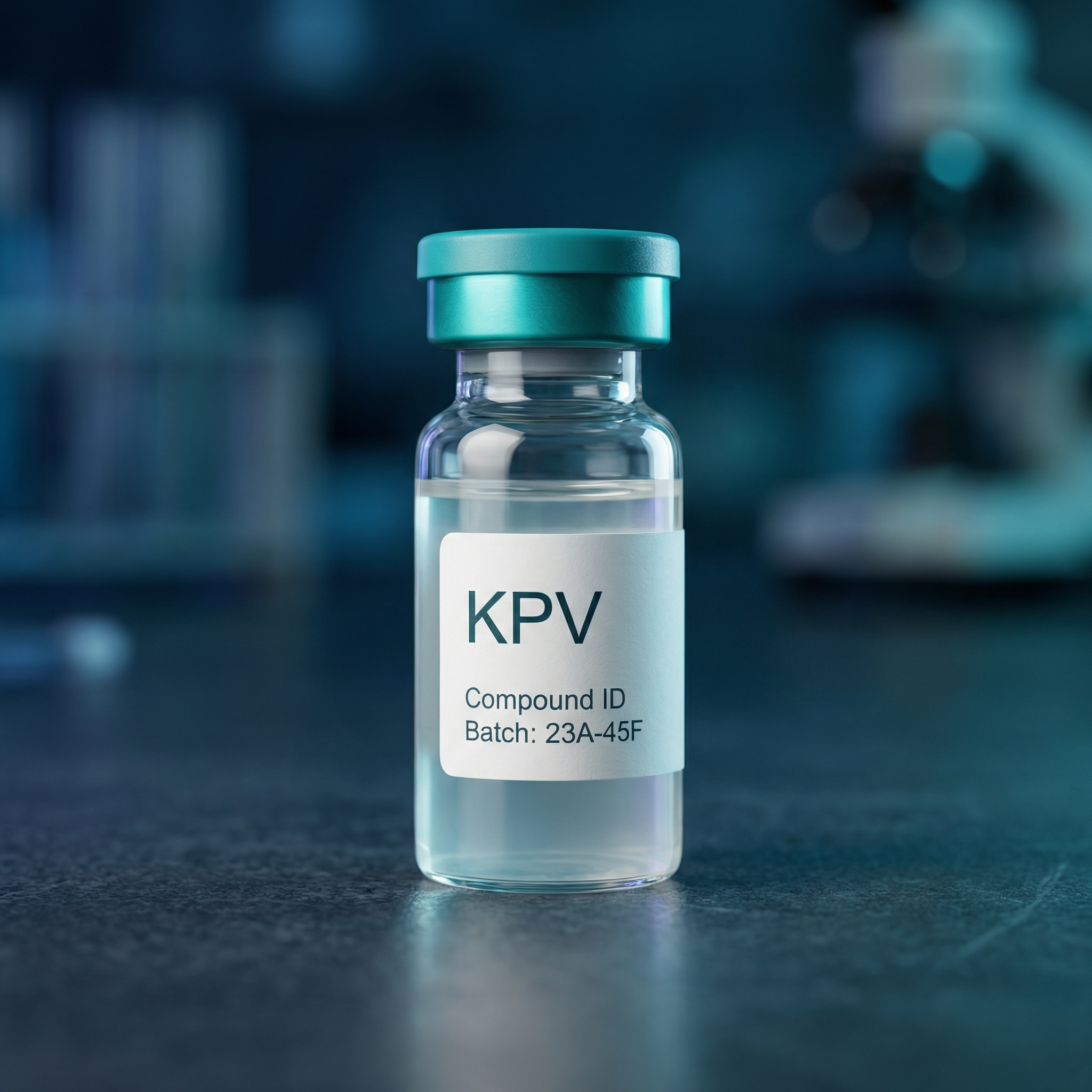
KPV is a very short tripeptide derived from the C-terminal end of alpha-melanocyte-stimulating hormone and is mainly studied for anti-inflammatory and barrier-support biology. It appears in skincare, gut-inflammation, and wound-healing discussions, but the evidence base is still dominated by preclinical and formulation-focused work rather than large drug-style trials. The repository should classify it as a biologically interesting but still experimental peptide.
Primary names include KPV, Lys-Pro-Val, and alpha-MSH(11-13). The identity section should explicitly link KPV to alpha-MSH while distinguishing the parent hormone from the isolated tripeptide, because the fragment has different delivery challenges and often different use claims. No mainstream regulated drug identity was identified.
3. Sequence and structure
KPV is the tripeptide Lys-Pro-Val. Its simplicity is part of the story: it is small, hydrophilic, and easy to describe at the sequence level, but that same simplicity contributes to delivery and stability challenges. The repository should store it both as one-letter sequence KPV and as the alpha-MSH C-terminal fragment designation.
KPV is linked to anti-inflammatory signaling derived from melanocortin biology, with literature supporting reduction in inflammatory cytokine signaling and beneficial effects in epithelial and mucosal models. Mechanistic discussions sometimes invoke melanocortin-linked pathways, NF-kB modulation, oxidative-stress reduction, and barrier effects, but the exact dominant mechanism can vary by model. This should be tagged as a plausible but still partly model-dependent anti-inflammatory mechanism.
Most defensible use cases are experimental work in inflammatory bowel disease models, epithelial repair, skin inflammation, and topical anti-inflammatory applications. Retail or clinic claims about broad systemic healing should be labeled as weakly supported unless tied to specific delivery platforms and studies. The repository should emphasize formulation-dependent research uses over generalized therapy claims.
KPV has notable delivery constraints because it is small and hydrophilic, with poor passive penetration across barriers such as skin and likely limited stability in unprotected systemic contexts. Much of the practical literature therefore focuses on nanoparticles, transdermal enhancement, or localized delivery systems rather than on free-peptide systemic PK. That formulation dependence should be captured explicitly.
Preclinical evidence is encouraging for anti-inflammatory and tissue-protective effects in gut and skin models, including targeted-delivery studies. However, the leap from those data to broad clinical claims has not been completed. Evidence strength is therefore moderate for preclinical anti-inflammatory activity and low for established human therapeutic efficacy.
The inherent toxicology profile does not appear alarming from the limited literature, but that is not the same thing as a mature human safety package. Route, excipients, and delivery technology may create much of the real-world risk profile. The database should therefore avoid overstating safety simply because the molecule is short.
No approved dosing standard exists. Future dose records should be tied to the exact topical, oral-targeted, nanoparticle, or transdermal formulation studied rather than to a generic peptide-wide number.
UNVERIFIED RESEARCHER-REPORTED DOSING INFORMATION
The following dosing information has been compiled from community forums, researcher discussions, and gray-market sources. This information has NOT been verified through peer-reviewed scientific studies or clinical trials. It does NOT constitute medical advice, a prescription, or a recommendation for human use.
This data is presented solely for informational and educational purposes to document what is commonly discussed in research communities. Dosing protocols may be inaccurate, dangerous, or based on anecdotal reports with no scientific validation. Individual responses vary significantly, and unregulated compounds carry inherent risks including contamination, mislabeling, and unknown side effects.
Always consult qualified medical professionals before making any health-related decisions. The repository maintainers assume no liability for the use or misuse of this information.
Researcher-Reported Dosing Protocols
Common Dose Range: 200-500 mcg per injection for subcutaneous/intramuscular administration; 10-20 mg for oral administration.
Administration Route: Subcutaneous injection, intramuscular injection, oral, and topical.
Frequency: Once or twice daily.
Timing: Can be taken at any consistent time of day. For oral use, it is often recommended on an empty stomach.
Schedule / Protocol: Typically 4-12 week cycles, but can be used for longer periods for chronic conditions.
Dose Escalation: A common approach is to start at a lower dose (e.g., 200 mcg/day) and gradually increase by about 100 mcg each week to a target maintenance dose of 400-500 mcg/day.
Additional Notes: KPV is available in injectable, oral, and topical forms. The choice of administration route often depends on the target application, with oral for gut-related issues, topical for skin conditions, and injectable for systemic inflammation. It is important to rotate injection sites to avoid local irritation.
This researcher-reported dosing information was compiled from unverified community sources and does not represent validated scientific or medical guidance.
Meaningful mainstream late-stage clinical development was not identified in this review. KPV remains best classified as a preclinical / translational research peptide.
Not identified as an FDA- or EMA-approved drug. Best categorized as an experimental anti-inflammatory peptide fragment with cosmetic and formulation-research interest.
13. References and source quality
Core sources include foundational alpha-MSH / KPV anti-inflammatory reviews, targeted-delivery studies in inflammatory bowel disease and skin, and newer mechanistic papers exploring oxidative-stress and cytokine pathways. Source quality is moderate for preclinical biology and limited for human therapeutic claims.
For KPV, formulation is almost as important as identity. Repository fields should capture whether the record refers to free peptide, salt form, nanoparticle-encapsulated KPV, transdermal system, or topical vehicle, because delivery technology strongly shapes apparent efficacy.
Version 0.1 starter entry created March 14, 2026. Evidence basis for this draft: alpha-MSH/KPV review literature, delivery-focused gut and skin studies, and newer mechanistic work on inflammation modulation.