Melatonin
Endogenous indoleamine sleep-regulating hormone; not actually a peptide, but included as an adjacent bioactive because it appears in peptide-use lists
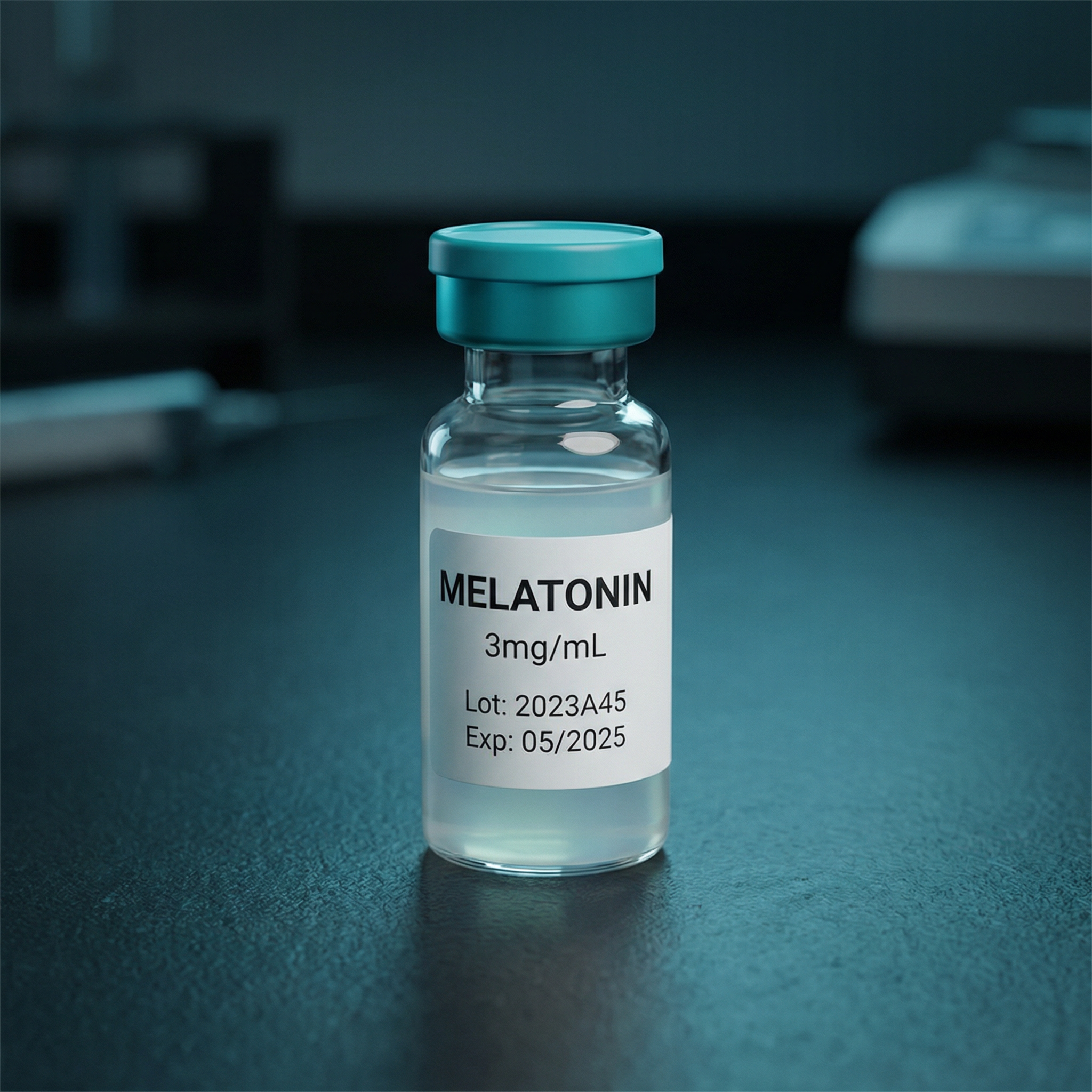
Melatonin is not a peptide. It is an endogenous indoleamine hormone involved in circadian timing and sleep regulation, but it is often grouped with peptides in wellness or clinic menus because it is a bioactive signaling molecule. The repository should keep the entry because users will search for it, while clearly tagging it as non-peptide / adjacent hormone rather than forcing it into the peptide bucket.
The entry should be indexed under melatonin with cross-links to pineal hormone and circadian-rhythm regulator terminology. It should also link to separate entries for melatonin-receptor agonist drugs such as ramelteon and tasimelteon, because those are distinct approved pharmaceuticals. In the United States, exogenous melatonin is generally sold as a dietary supplement rather than as an FDA-approved melatonin drug.
3. Sequence and structure
Melatonin has no amino-acid sequence because it is not a peptide. Structurally it is a small indoleamine derived from tryptophan metabolism, and that fact should be stated explicitly so the repository does not blur peptide and non-peptide entities. This is one of the clearest examples of why the database should support a broader bioactive-class field.
Melatonin primarily signals through MT1 and MT2 melatonin receptors and helps regulate circadian phase, sleep timing, and related neuroendocrine rhythms. Mechanistic confidence is high, though clinical effect depends strongly on timing, formulation, and the sleep problem being targeted. This is chronobiology more than peptide pharmacology.
Evidence-based use cases center on circadian-rhythm support and selected sleep-onset contexts. In the United States it is widely used as a supplement, while approved prescription drugs in this area are typically melatonin-receptor agonists rather than melatonin itself. The repository should distinguish common use from formal approval status.
Melatonin pharmacology is highly formulation- and timing-dependent, with immediate-release and prolonged-release presentations behaving differently. Oral bioavailability is variable, and the clinical effect is often determined as much by clock timing as by dose size. The repository should therefore store chronopharmacology fields, not just standard ADME fields.
Evidence supports utility in some circadian and sleep-onset settings, but effect sizes are context-dependent and often more modest than casual consumer narratives imply. The strongest framing is that melatonin can be useful when aligned to the right timing problem, not that it is a universal hypnotic. Evidence quality is moderate to high for circadian-related use and lower for broad sleep marketing.
Melatonin is often viewed as benign, but adverse effects such as daytime sleepiness, vivid dreams, headache, and product-quality variability are relevant. Because many users obtain it as a supplement, lot-to-lot consistency and labeling accuracy matter more than people assume. The repository should not confuse wide availability with rigorous pharmaceutical-grade standardization.
Any dosing section should be timing-aware and formulation-aware. A single generic dose line is less useful than fields for immediate versus extended release, target bedtime, circadian indication, and duration of use.
UNVERIFIED RESEARCHER-REPORTED DOSING INFORMATION
The following dosing information has been compiled from community forums, researcher discussions, and gray-market sources. This information has NOT been verified through peer-reviewed scientific studies or clinical trials. It does NOT constitute medical advice, a prescription, or a recommendation for human use.
This data is presented solely for informational and educational purposes to document what is commonly discussed in research communities. Dosing protocols may be inaccurate, dangerous, or based on anecdotal reports with no scientific validation. Individual responses vary significantly, and unregulated compounds carry inherent risks including contamination, mislabeling, and unknown side effects.
Always consult qualified medical professionals before making any health-related decisions. The repository maintainers assume no liability for the use or misuse of this information.
Researcher-Reported Dosing Protocols
Common Dose Range: 1-10 mg, with some researchers exploring doses up to 200 mg for specific conditions.
Administration Route: Oral (tablets, capsules, gummies, liquids), intranasal, transdermal patch, or rectal suppositories.
Frequency: Once daily
Timing: 30 minutes to 2 hours before bedtime.
Schedule / Protocol: Continuous use for sleep regulation.
Dose Escalation: It is commonly recommended to start with a low dose (e.g., 1 mg) and gradually increase the dosage by 1 mg each week if necessary, without exceeding 10 mg.
Additional Notes: Melatonin is a hormone that helps regulate the sleep-wake cycle and is not a sedative. Its effectiveness can be diminished by exposure to light, especially from screens, before bedtime. Higher doses are not always more effective and may increase the risk of side effects.
This researcher-reported dosing information was compiled from unverified community sources and does not represent validated scientific or medical guidance.
Melatonin has extensive human-study literature, but in the U.S. the parent compound remains outside the standard FDA-approved drug pathway for routine prescription use. This entry is therefore heavily studied but not straightforwardly approved as a melatonin drug in the American regulatory sense.
Not FDA-approved in the United States as a conventional melatonin drug product, though widely marketed as a dietary supplement there. Regulatory treatment differs internationally, so jurisdiction should be stored explicitly.
13. References and source quality
Highest-value sources include clinical reviews on melatonin pharmacology, NCBI monographs, and jurisdiction-specific regulatory information. Source quality is high for mechanism and broad clinical use, but commercial supplement claims often overrun the evidence.
For this entry, formulation and quality control are central because immediate-release versus prolonged-release behavior and supplement-label variability strongly shape outcomes. The repository should include a non-peptide flag, formulation type, and jurisdiction-specific regulatory category.
Version 0.1 starter entry created March 14, 2026. Evidence basis for this draft: StatPearls and other clinical reviews on melatonin, plus U.S. regulatory context around supplement versus drug status.