Oxytocin Acetate
Synthetic oxytocin nonapeptide, usually encountered in approved medicine as oxytocin and in research catalogs with acetate salt labeling; a mainstream established peptide hormone rather than a fringe peptide-market item.
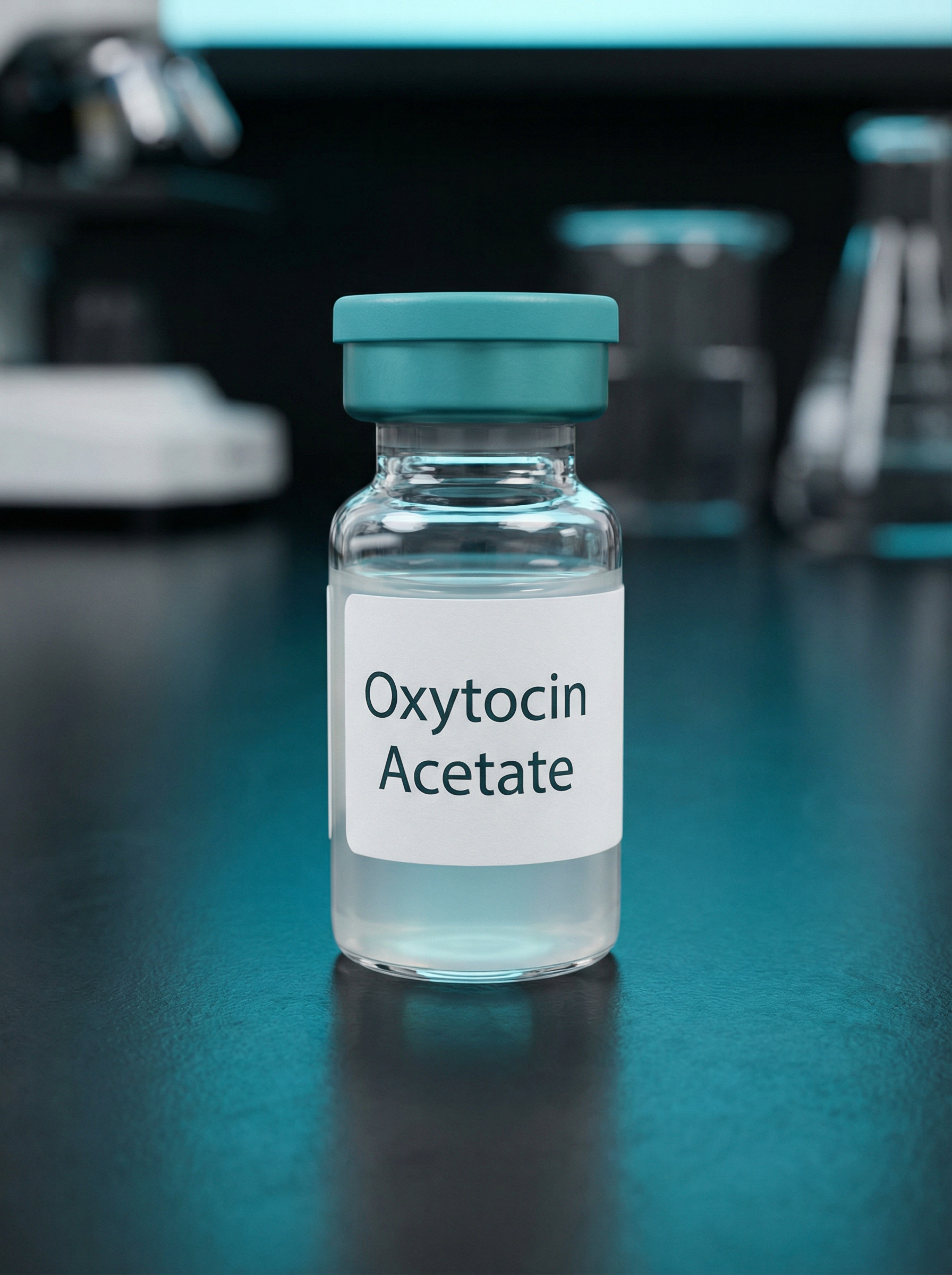
Oxytocin is a well-established endogenous neurohypophyseal hormone and an equally established synthetic peptide medicine. In serious clinical use it is primarily an obstetric drug used to induce or augment uterine contractions and to help control postpartum bleeding. The phrase oxytocin acetate usually points to a salt-form or ingredient-labeling context rather than a distinct new pharmacology.
Important names include oxytocin, synthetic oxytocin, Pitocin, Syntocinon, and oxytocin acetate in ingredient or research-supply contexts. The entry should distinguish the active peptide from salt-form descriptors and from intranasal or experimental neuropsychiatric use narratives. Because the approved drug identity is mature and standardized, this is one of the cleaner entries in the repository.
3. Sequence and structure
Oxytocin is a cyclic nonapeptide with the sequence Cys-Tyr-Ile-Gln-Asn-Cys-Pro-Leu-Gly-NH2 and a disulfide bridge between residues 1 and 6. Section 3 should capture the cyclic nonapeptide architecture, amidated C-terminus, and close structural relationship to vasopressin-family peptides. If the acetate form is stored separately in formulation metadata, the parent active moiety should still remain the primary identity.
Oxytocin acts primarily as an agonist at the oxytocin receptor, producing uterine smooth-muscle contraction and milk let-down effects. It is also deeply relevant in neurobiology and behavior research, which explains the large literature on social, stress, and bonding-related effects. Those central nervous system narratives should be clearly separated from the robust obstetric mechanism and evidence base.
Evidence-based approved use cases center on induction or augmentation of labor in appropriate settings and control of postpartum bleeding or hemorrhage. Additional research or off-label use cases include lactation and neurobehavioral research, but these do not carry the same level of standard regulatory support. The entry should therefore foreground obstetric uses and place behavioral research in a secondary investigational layer.
Oxytocin is a short-acting peptide with clinically important onset and offset dynamics in parenteral use. It is rapidly degraded enzymatically, which is why dosing in medical settings is tightly protocol-driven and route-dependent. Section 6 should emphasize infusion-based and injection-based hospital pharmacology rather than generic peptide self-administration framing.
Clinical efficacy in approved obstetric use is strong and supported by decades of real-world use and formal guidance. By contrast, evidence for neuropsychiatric, social-cognition, and intranasal behavioral applications is much more variable and often inconsistent. The repository should therefore treat oxytocin as a high-confidence obstetric peptide medicine with mixed evidence outside that domain.
Safety issues are well known and clinically important: uterine hyperstimulation, fetal distress when used intrapartum, hypotension in some settings, and water intoxication / hyponatremia risk with prolonged high exposure because of vasopressin-like effects. These are not hypothetical concerns and should be surfaced prominently. Monitoring context is part of the safety profile for this drug.
This is not an entry where a generic peptide dose line is appropriate. Administration is route-, indication-, and protocol-specific, often by IV infusion or IM injection in supervised settings. The repository should store dosing as approved-product / obstetric-protocol information rather than as a casual peptide-administration field.
UNVERIFIED RESEARCHER-REPORTED DOSING INFORMATION
The following dosing information has been compiled from community forums, researcher discussions, and gray-market sources. This information has NOT been verified through peer-reviewed scientific studies or clinical trials. It does NOT constitute medical advice, a prescription, or a recommendation for human use.
This data is presented solely for informational and educational purposes to document what is commonly discussed in research communities. Dosing protocols may be inaccurate, dangerous, or based on anecdotal reports with no scientific validation. Individual responses vary significantly, and unregulated compounds carry inherent risks including contamination, mislabeling, and unknown side effects.
Always consult qualified medical professionals before making any health-related decisions. The repository maintainers assume no liability for the use or misuse of this information.
Researcher-Reported Dosing Protocols
Common Dose Range: Intranasal: 16-48 IU per day; IV for labor induction: 0.5-2 mIU/min; IV for postpartum hemorrhage: 60-200 mIU/min; IM for postpartum hemorrhage: 10 units
Administration Route: Intranasal, Intravenous (IV), Intramuscular (IM)
Frequency: Intranasal: Once or twice daily
Timing: Not consistently reported for research purposes outside of labor and delivery.
Schedule / Protocol: Intranasal: Continuous daily use for several weeks (e.g., 4-24 week cycles). IV/IM: As needed during and after labor.
Dose Escalation: For IV labor induction, the dose is titrated upwards every 15-60 minutes. For intranasal use, researchers often start with a lower dose and increase it over time.
Additional Notes: The most common administration route in research settings is intranasal. Dosing for intranasal administration varies significantly between studies. IV and IM routes are primarily used in clinical settings for labor, delivery, and postpartum hemorrhage.
This researcher-reported dosing information was compiled from unverified community sources and does not represent validated scientific or medical guidance.
Oxytocin has a mature clinical and post-marketing history rather than a still-forming development program. Clinical-trial content should therefore emphasize the breadth of established use plus ongoing research questions in behavioral and psychiatric domains. Users should be able to distinguish routine approved practice from experimental CNS applications.
Oxytocin is an established approved medicine in multiple jurisdictions and a core obstetric therapeutic. The repository should label it as approved / clinically established, with acetate captured as a formulation or ingredient detail rather than as a separate development-stage novelty product.
13. References and source quality
Highest-value sources include FDA labeling and regulatory documents for oxytocin injection, authoritative obstetric guidelines, and major pharmacology references such as PubChem and standard drug monographs. Behavioral-use narratives from research or popular media should be stored separately from the core approved-use source stack.
Important manufacturing fields include peptide synthesis quality, salt form, sterility, preservative content, concentration, vial or ampule presentation, and cold-chain or storage instructions. Because oxytocin is a hospital medicine, formulation and stability details matter in a more conventional pharmaceutical way than in many research-peptide entries.
Version 0.1 starter entry created March 14, 2026. Evidence basis for this draft: FDA labeling, core pharmacology references, and established clinical practice context. Confidence level: high.