Pancragen
Tetrapeptide bioregulator most often described with the sequence Lys-Glu-Asp-Trp (KEDW); positioned in Russian and peptide-bioregulator literature around pancreatic aging, glucose regulation, and endocrine support.
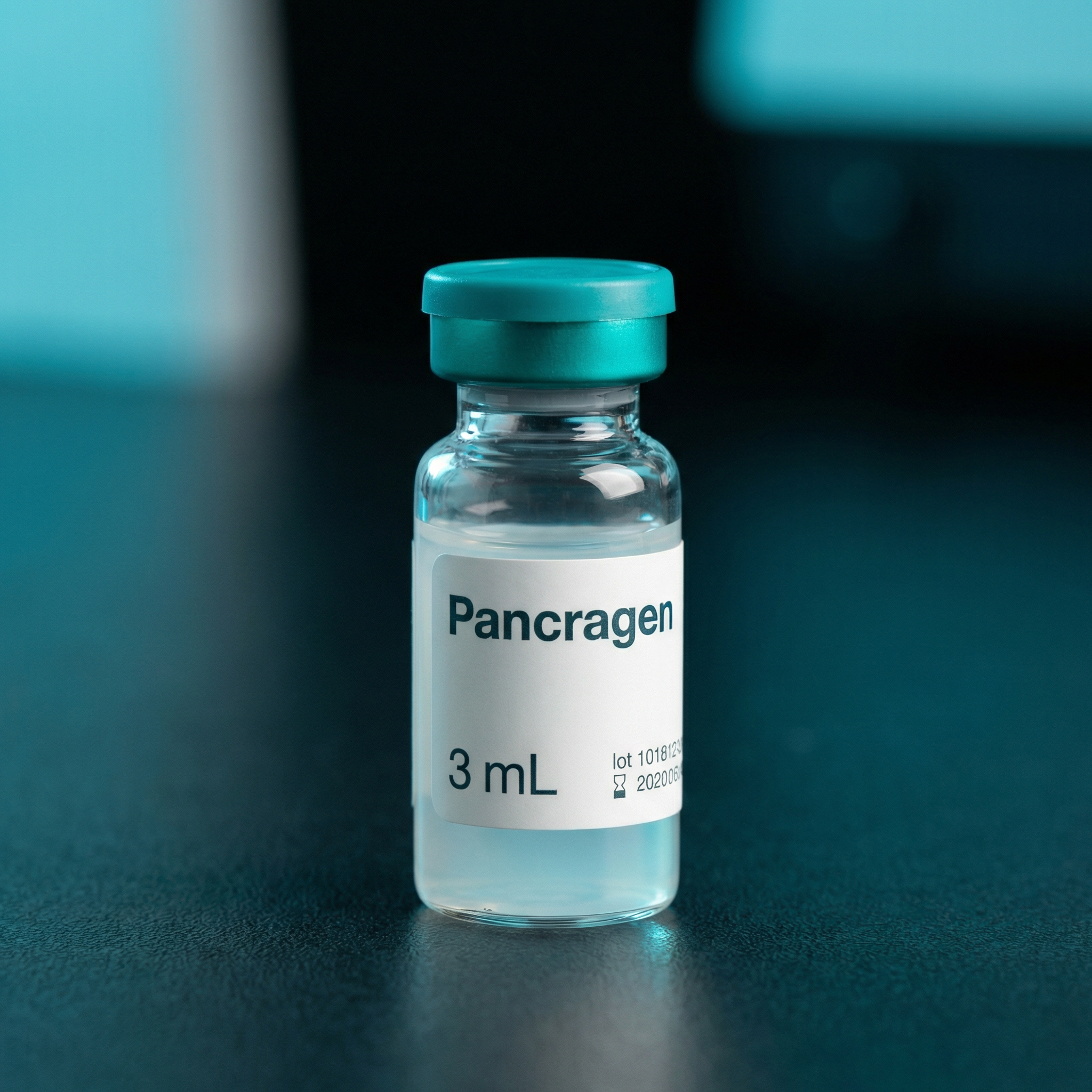
Pancragen is a short peptide bioregulator associated with pancreatic function and age-related metabolic regulation. It sits in the same general ecosystem as other Khavinson-line tissue peptides: interesting, sequence-defined, but supported mainly by niche literature traditions rather than broad modern global drug development. It should therefore be presented as a research / bioregulator entry, not as an established approved diabetes medicine.
Names include Pancragen, Pancragen peptide, and the sequence-based shorthand KEDW. Public descriptions typically frame it as a synthetic analog derived from pancreatic peptide material. Identity fields should capture that it is a tetrapeptide with a more stable public sequence assignment than some other bioregulators, while still noting that the overall evidence environment remains niche.
3. Sequence and structure
Pancragen is generally described as the tetrapeptide Lys-Glu-Asp-Trp (KEDW). Section 3 should record its short linear peptide structure, amino-acid order, and any amidation or salt-form detail provided by a specific source or vendor. Because this is a small peptide, exact sequence confirmation matters a great deal for repository accuracy.
Mechanistic claims center on peptide bioregulation of pancreatic tissue, modulation of gene expression, endocrine support, and effects on pancreatic-cell differentiation markers. Some laboratory work has linked KEDW to pancreatic marker expression in cell systems, which gives the entry more mechanistic specificity than purely marketing-style claims. Even so, the mechanism is not established in the same way as a modern receptor-targeted metabolic drug.
Use cases cluster around pancreatic aging, glucose regulation, endocrine support, metabolic-syndrome narratives, and tissue-repair research. None of these should be presented as approved indications. The most responsible framing is investigational pancreatic / metabolic bioregulation.
Modern PK and ADME characterization is limited. Pancragen is often discussed in peptide-bioregulator dosing traditions rather than in full contemporary pharmacology packages. For repository purposes, route, absorption assumptions, and exposure claims should remain source-linked and low confidence until better data are available.
Evidence includes preclinical work and older niche literature suggesting effects on glucose handling, microcirculation, and pancreatic endocrine function. There is biologic signal worth capturing, but not the kind of rigorous contemporary large-trial evidence needed to treat it as a validated therapeutic. The efficacy section should therefore emphasize exploratory and limited evidence.
Safety evidence is sparse by modern regulatory standards. Absence of obvious large-scale safety alarms should not be confused with a complete safety package. If users later add product-specific tolerability reports, those should remain clearly separated from established clinical safety conclusions.
No standardized approved dosing schedule should be shown. Any administration details should be tied to a specific study or product source, including oral versus injectable context if relevant. This entry needs provenance before normalization.
UNVERIFIED RESEARCHER-REPORTED DOSING INFORMATION
The following dosing information has been compiled from community forums, researcher discussions, and gray-market sources. This information has NOT been verified through peer-reviewed scientific studies or clinical trials. It does NOT constitute medical advice, a prescription, or a recommendation for human use.
This data is presented solely for informational and educational purposes to document what is commonly discussed in research communities. Dosing protocols may be inaccurate, dangerous, or based on anecdotal reports with no scientific validation. Individual responses vary significantly, and unregulated compounds carry inherent risks including contamination, mislabeling, and unknown side effects.
Always consult qualified medical professionals before making any health-related decisions. The repository maintainers assume no liability for the use or misuse of this information.
Researcher-Reported Dosing Protocols
Common Dose Range: 50-100 mcg (intramuscular) or 500 mcg - 1 mg (oral)
Administration Route: Intramuscular, Subcutaneous, or Oral
Frequency: Once daily (intramuscular) or twice daily (oral)
Timing: Morning or evening, at a consistent time.
Schedule / Protocol: 10-28 day cycles, repeated every 3-6 months
Dose Escalation: Dose may be increased if therapeutic goals are not met and the current dose is well-tolerated. Dose should be decreased if side effects are bothersome. Dose adjustments should be guided by a healthcare provider based on clinical response and lab work.
Additional Notes: Pancragen can be taken with or without food. It is often used in combination with other bioregulators like Livagen and Epithalon. For injections, it is recommended to rotate injection sites to prevent tissue irritation.
This researcher-reported dosing information was compiled from unverified community sources and does not represent validated scientific or medical guidance.
No broad modern international clinical-development program leading to approval was identified. The evidence base instead appears to consist of laboratory studies, animal work, and smaller niche clinical or translational reports. That should be stated plainly.
No FDA- or EMA-approved Pancragen product was identified. Best categorized as a sequence-defined peptide bioregulator with limited modern clinical validation and no mainstream regulatory approval.
13. References and source quality
Highest-value sources include PubMed-indexed papers on KEDW / Pancragen biology and differentiation effects, peptide-bioregulator reviews, and any primary manufacturer materials that specify exact sequence and formulation. Vendor pages can help with nomenclature but should not drive efficacy conclusions.
Because Pancragen is a short tetrapeptide, identity control should capture exact sequence, purity, salt form, and whether the product is sold as capsule, injectable research material, or another format. Product lineage and manufacturer provenance matter because the same name can appear across heterogeneous markets.
Version 0.1 starter entry created March 14, 2026. Evidence basis for this draft: PubMed-indexed Pancragen / KEDW studies and peptide-bioregulator review material. Confidence level: moderate for sequence identity, lower for clinical efficacy.