PNC-27
Experimental anticancer chimeric peptide derived from the p53 HDM-2-binding region and a membrane-penetrating sequence; notable in preclinical oncology but not an approved human cancer therapy.
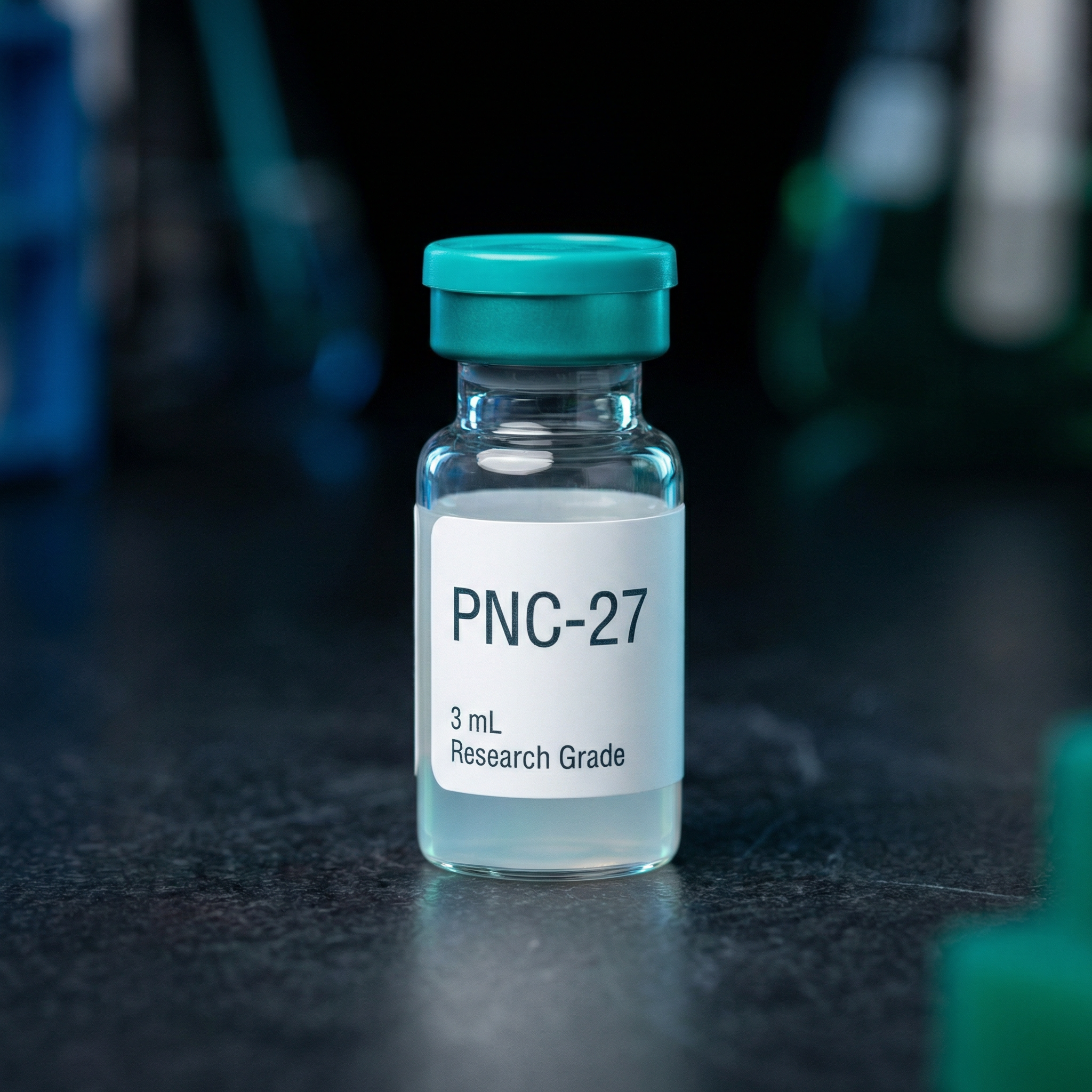
PNC-27 is an experimental anticancer peptide concept designed to exploit HDM-2 / MDM2-related cancer-cell biology and induce selective tumor-cell membrane disruption. It is one of the more mechanistically distinctive entries in the database: not a wellness peptide and not a mainstream approved oncology drug, but a serious preclinical therapeutic idea with a specific proposed mode of action.
Important names include PNC-27 and anti-cancer peptide PNC-27. The identity section should make clear that PNC-27 is a chimeric peptide derived from the p53 transactivation-domain binding region linked to a membrane-penetrating segment, and that it is conceptually paired in the literature with the related construct PNC-28. Primary-paper definitions should control the record rather than vendor shorthand.
3. Sequence and structure
PNC-27 is a chimeric peptide rather than a simple endogenous sequence. Public descriptions define it as a p53-derived HDM-2-binding peptide segment fused to a membrane-residency / penetratin-type sequence to facilitate cancer-cell targeting. Because exact sequence representation matters for this construct family, the repository should prefer the primary oncology papers for the definitive sequence field rather than relying on reseller descriptions.
The central mechanistic claim is that PNC-27 binds HDM-2 / MDM2 expressed in cancer-cell membranes and triggers pore formation with rapid tumor-cell membranolysis, sometimes described in the literature as peptide-induced poptosis. This is a more specific and experimentally anchored mechanism than many gray-market peptide claims, even though it remains preclinical. Mechanism fields should also note that selectivity depends on membrane HDM-2 expression patterns.
PNC-27 is best categorized under experimental oncology, especially tumor-cell killing and resistant-cancer models. It should not be listed with approved cancer indications because no such approvals were identified. Relevant research areas include ovarian cancer, leukemia, and broader HDM-2-positive tumor systems.
Pharmacology remains underdeveloped from a drug-development standpoint. The peptide has strong mechanistic preclinical interest, but mature human PK, exposure-response, and formulation-development data were not identified. Route and stability considerations should therefore be stored as preclinical-development questions rather than standardized clinical facts.
Efficacy evidence is preclinical but meaningful: cell-line work, ex vivo studies on human cancer cells, and animal-model experiments have reported selective anticancer activity. That makes PNC-27 more substantive than a purely hypothetical peptide, but it still lacks the human trial evidence required for therapeutic validation. The efficacy section should therefore read as promising preclinical oncology rather than clinical proof.
Selectivity toward malignant versus normal cells is a core part of the PNC-27 story, but there is no mature human safety package. Safety claims should therefore be framed as preclinical selectivity findings, not as established clinical tolerability. Unknowns around immunogenicity, off-target effects, and human administration remain important.
No approved dosing framework exists. Any dose fields should remain tied to specific preclinical studies or future clinical protocols rather than generalized for human use.
UNVERIFIED RESEARCHER-REPORTED DOSING INFORMATION
The following dosing information has been compiled from community forums, researcher discussions, and gray-market sources. This information has NOT been verified through peer-reviewed scientific studies or clinical trials. It does NOT constitute medical advice, a prescription, or a recommendation for human use.
This data is presented solely for informational and educational purposes to document what is commonly discussed in research communities. Dosing protocols may be inaccurate, dangerous, or based on anecdotal reports with no scientific validation. Individual responses vary significantly, and unregulated compounds carry inherent risks including contamination, mislabeling, and unknown side effects.
Always consult qualified medical professionals before making any health-related decisions. The repository maintainers assume no liability for the use or misuse of this information.
Researcher-Reported Dosing Protocols
Common Dose Range: 100-500 mcg per injection
Administration Route: Subcutaneous injection
Frequency: Once daily
Timing: Any consistent time of day.
Schedule / Protocol: 8-12 week cycles, with optional extension to 16 weeks.
Dose Escalation: Start at 100 mcg daily for 1-2 weeks, increasing by approximately 100 mcg every 2 weeks as tolerated.
Additional Notes: No human clinical trials exist for PNC-27. The FDA has issued warnings stating that PNC-27 is an unapproved drug and its safety and efficacy have not been established. The dosing information is based on preclinical studies and anecdotal reports from research communities, not from controlled human trials.
This researcher-reported dosing information was compiled from unverified community sources and does not represent validated scientific or medical guidance.
No broad human clinical-trial program or marketed oncology product for PNC-27 was identified in this review. The entry belongs in the preclinical / translational oncology tier of the repository.
Not identified as an FDA- or EMA-approved medicine. Best categorized as an experimental anticancer peptide with preclinical literature support and no established mainstream regulatory pathway yet.
13. References and source quality
Highest-value sources include the original and follow-up PubMed-indexed oncology papers on PNC-27, ex vivo efficacy reports, and modern review articles discussing peptide-induced poptosis and HDM-2 membrane targeting. Commercial pages should not be used to define efficacy or development status.
Manufacturing fields should capture the exact chimeric sequence, synthesis quality, purity, linker details if any, and formulation used in each study. Because this is a mechanism-dependent oncology construct, sequence fidelity is especially important.
Version 0.1 starter entry created March 14, 2026. Evidence basis for this draft: primary PNC-27 oncology publications and review articles on peptide-induced poptosis. Confidence level: moderate to high for mechanism framing, low for human-translational certainty.