Selank
Synthetic heptapeptide tuftsin analogue used mainly as a Russian anxiolytic / nootropic drug and research peptide rather than a broadly approved international medicine.
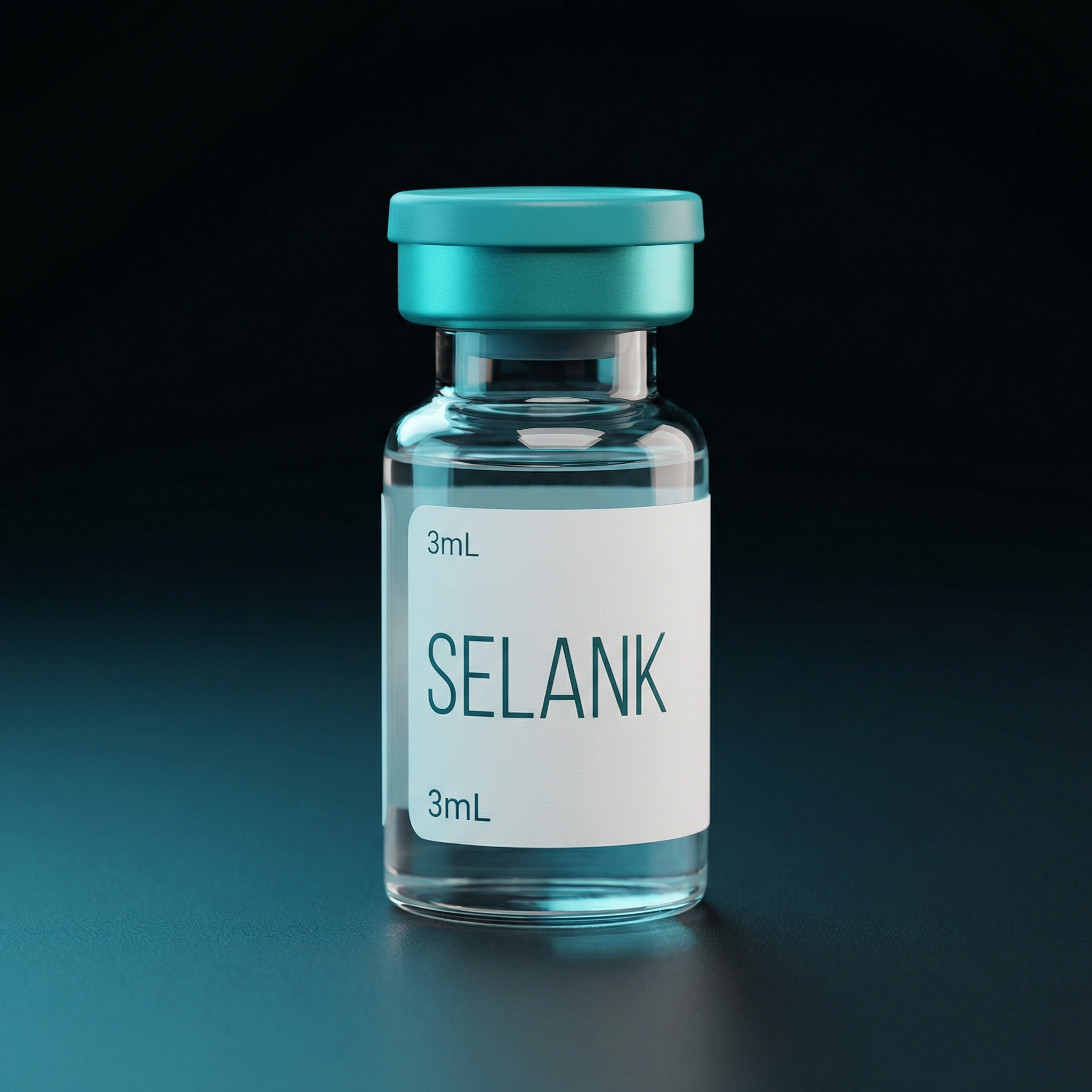
Selank is a short synthetic peptide best known as a tuftsin-derived anxiolytic / nootropic compound developed in Russia. In peptide-market discussions it is often treated as a wellness product, but the more defensible description is that it is a regional peptide drug and research compound with a limited international evidence base. Public literature supports biologic activity in stress, anxiety, cognition, and immune signaling, yet much of the human evidence comes from small studies or Russian-language publications rather than large contemporary multinational trials. In this repository it should therefore be labeled as regionally used, mechanistically interesting, and incompletely validated outside that ecosystem.
Important names include selank, selank acetate, and TP-7 in some regulatory or compounding discussions. Selank is a synthetic extension of the endogenous immunomodulatory peptide tuftsin rather than a naturally circulating standalone human drug hormone. Identity records should distinguish pharmaceutical-grade regional products from gray-market vials sold internationally, because product quality and route claims vary widely across sellers. The naming section should also flag that the U.S. FDA has discussed selank acetate in peptide-compounding safety materials, which is relevant for repository users trying to separate approved-drug status from compounding or research status.
3. Sequence and structure
Selank is commonly described as the heptapeptide Thr-Lys-Pro-Arg-Pro-Gly-Pro, often handled or sold as an acetate salt. It is a very short linear peptide with no major long-acting lipidation, pegylation, or depot chemistry in the classic literature. That simplicity is part of the appeal of the compound, but it also means formulation details - especially nasal solution composition, excipients, and peptide purity - matter a great deal. Sequence identity is relatively stable in the literature, but product-level salt form, concentration, and excipient disclosures are often inconsistent in non-pharmaceutical channels.
Selank does not map neatly onto a single receptor-target story in the way that GLP-1 or GnRH drugs do. The literature instead points to multi-pathway neuromodulatory and immunomodulatory activity, including effects on GABA-related signaling, monoamine balance, stress-response circuitry, and gene-expression changes in inflammatory pathways. Preclinical work also links selank to BDNF-associated and adaptive-behavior effects. The key repository point is that the mechanism is plausible and biologically active, but still diffuse and not reduced to one decisive receptor pharmacology model accepted across the field.
Regional medical and research use cases center on anxiety-spectrum symptoms, stress-related disorders, asthenic states, cognitive support, and related neuropsychiatric applications. In the broader peptide market, selank is also discussed for focus, resilience, mood, and recovery from substance-related stress states, but those uses should be labeled as investigational or community-driven rather than established international indications. The repository should clearly separate Russian clinical-use history from unregulated Western wellness marketing, because they are not the same evidence tier.
Most practical use has involved intranasal delivery, with some experimental parenteral work in animals. Public human PK data are much thinner than for mainstream peptide drugs, so repository entries should avoid overprecision about half-life or bioavailability unless a specific source is provided. A reasonable summary is that selank appears to be active at low doses by nasal administration, likely with rapid peptide degradation typical of short peptides, while downstream CNS and immune effects may outlast simple plasma exposure. Robust ADME characterization remains limited by modern drug-development standards.
The efficacy signal is best described as suggestive rather than definitive. There is a meaningful body of preclinical work and small clinical literature pointing toward anxiolytic and cognitive effects, and some comparisons suggest activity without classic benzodiazepine-like sedation. At the same time, the evidence base is fragmented, study sizes are modest, and there is limited replication in large Western clinical programs. This makes selank stronger than a purely speculative peptide but far weaker than established psychiatric medicines in terms of confirmatory evidence.
Available literature and regional use history suggest selank is generally well tolerated, particularly relative to sedating anxiolytics, but the confidence level is constrained by the size and geographic concentration of the data. Nasal irritation, formulation tolerability, and quality-control concerns are more practical issues than dramatic toxicology signals in the public record. The largest real-world risk for many users is likely product inconsistency outside regulated channels rather than a clearly defined intrinsic toxicity profile. Because formal long-term multinational safety datasets are lacking, the repository should keep the confidence grade moderate at best.
Selank is most often encountered as an intranasal product, although the repository should avoid endorsing gray-market dose schedules as if they were universally validated. Any dosing section should instead note that published and marketed regimens vary by jurisdiction and product type, and that product quality, concentration, and route materially affect interpretation. For a serious reference database, it is better to record studied or labeled regimens from specific sources than to imply a single standard human protocol.
UNVERIFIED RESEARCHER-REPORTED DOSING INFORMATION
The following dosing information has been compiled from community forums, researcher discussions, and gray-market sources. This information has NOT been verified through peer-reviewed scientific studies or clinical trials. It does NOT constitute medical advice, a prescription, or a recommendation for human use.
This data is presented solely for informational and educational purposes to document what is commonly discussed in research communities. Dosing protocols may be inaccurate, dangerous, or based on anecdotal reports with no scientific validation. Individual responses vary significantly, and unregulated compounds carry inherent risks including contamination, mislabeling, and unknown side effects.
Always consult qualified medical professionals before making any health-related decisions. The repository maintainers assume no liability for the use or misuse of this information.
Researcher-Reported Dosing Protocols
Common Dose Range: 150-500 mcg per injection; 300-900 mcg intranasally
Administration Route: Intranasal spray or subcutaneous injection
Frequency: Once daily for injection; 1-3 times per day for intranasal
Timing: Often recommended in the morning to take advantage of its nootropic effects.
Schedule / Protocol: Commonly used in cycles of 10-14 days on, followed by a 1-3 week break. Some sources also mention a '5 days on / 2 days off' protocol or one month on, one month off.
Dose Escalation: It is commonly advised to start at a lower dose and titrate up based on response.
Additional Notes: Selank is a synthetic analog of the immunomodulatory peptide tuftsin. It is used in some countries for anxiety and is researched for its nootropic and anxiolytic effects. It is considered a research chemical in most of the world. There are no FDA-approved dosing guidelines.
This researcher-reported dosing information was compiled from unverified community sources and does not represent validated scientific or medical guidance.
Public clinical development is relatively limited and concentrated in regional literature rather than large recent international registrational programs. Small clinical studies and older publications support investigation in anxiety and stress-related settings, but no major FDA- or EMA-style development program was identified for March 2026. Future repository updates would benefit from adding explicit registry links whenever a modern protocol or translated study report is found.
Selank is not FDA approved and does not have broad EMA-backed approval status. It is best categorized as a regionally used peptide drug and global research / compounding / gray-market compound, depending on jurisdiction. That distinction matters: regional medical use does not translate into major-agency approval, and peptide-compounding policy discussions in the United States are not equivalent to drug approval. The repository should label selank as non-mainstream internationally, with evidence and regulatory status that remain jurisdiction-specific.
13. References and source quality
Highest-value sources include Russian pharmacology publications indexed in PubMed, mechanistic studies on tuftsin-family peptides, and FDA materials that mention selank acetate in the compounding-safety context. Source quality is mixed because some clinically relevant literature is older, translated, regionally published, or difficult to access in standardized trial-report form. For future expansion, the strongest upgrade would be registry-linked clinical evidence or more formal comparative trials.
Selank is a straightforward short synthetic peptide from a manufacturing standpoint, but real-world formulation quality can vary substantially. Pharmaceutical contexts tend to involve nasal-drop or nasal-spray solutions, whereas research vendors frequently sell lyophilized powders or solutions with sparse excipient disclosure. Identity testing, salt-form confirmation, and purity assessment are especially important because the molecule is short enough that minor manufacturing or labeling deviations can materially change what is actually being delivered.
Version 0.1 starter entry created March 14, 2026. Evidence basis for this draft: indexed Selank pharmacology papers, tuftsin-family reviews, and current public regulatory-context materials mentioning selank acetate. Recommended future upgrade: add translated or registry-linked clinical protocols if they can be verified from primary sources.