Semax
Synthetic ACTH(4-10)-derived heptapeptide nootropic / neuroactive drug used mainly in Russia and neighboring markets, with limited mainstream Western regulatory adoption.
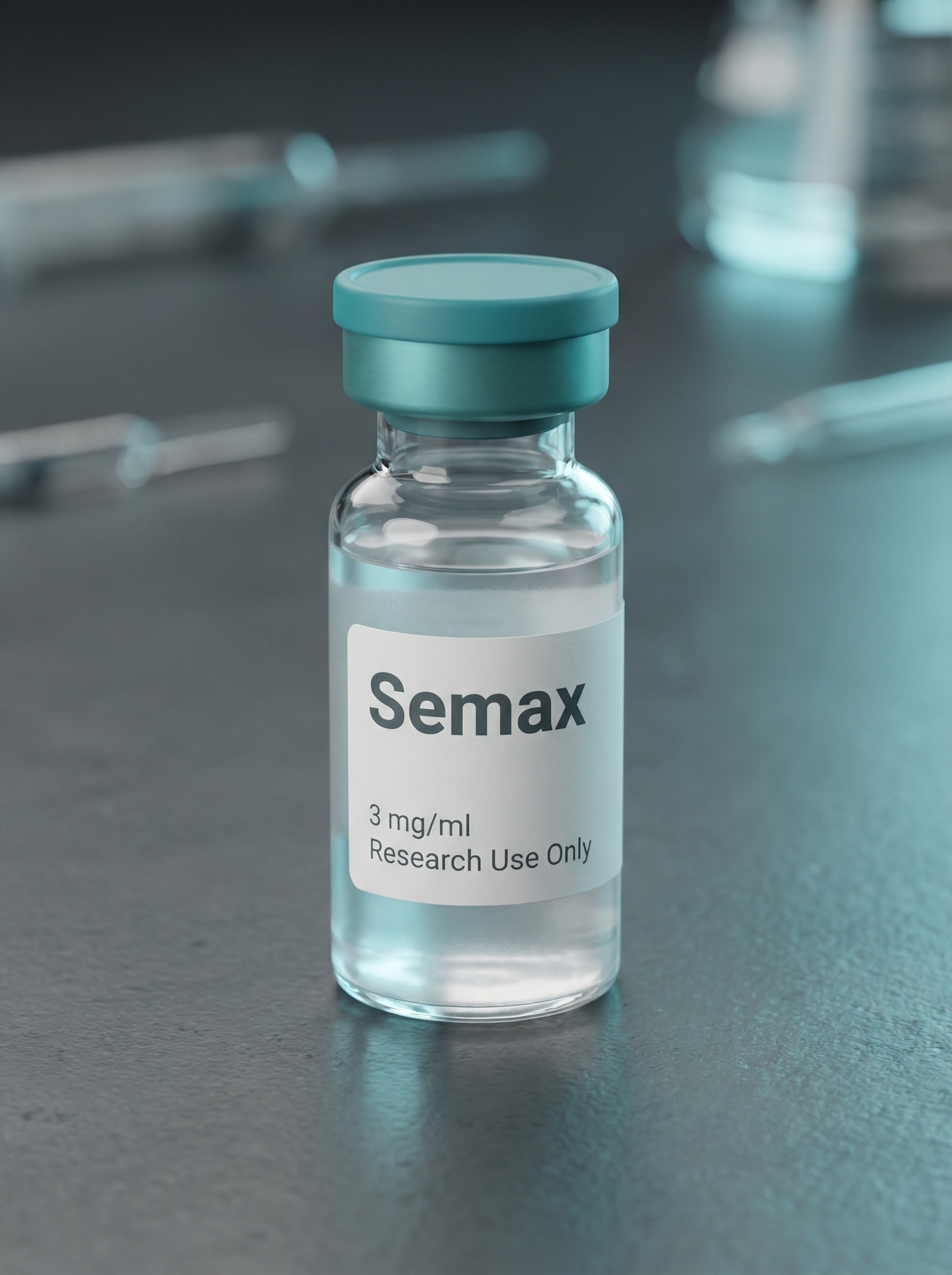
Semax is a synthetic neuroactive peptide derived from the ACTH(4-10) fragment and is best known as a Russian prescription medicine and research compound rather than a globally established peptide therapeutic. It is widely discussed for nootropic, neuroprotective, and recovery-oriented uses, but the evidence base remains geographically concentrated and methodologically uneven. The repository should present Semax as a real pharmacologic peptide with documented biologic activity, while clearly separating that status from the much looser claims made in Western peptide-commerce circles.
Key names include semax, ACTH(4-10) analog, and region-specific product references associated with intranasal formulations. Semax is distinct from full ACTH and is specifically designed to preserve neurotrophic or neuromodulatory effects without functioning as a classic hormonal ACTH drug. The naming section should emphasize that despite broad online marketing, Semax is not FDA approved and is not a mainstream approved neurotherapeutic in the United States or European Union.
3. Sequence and structure
Semax is commonly described as the heptapeptide Met-Glu-His-Phe-Pro-Gly-Pro. It is a short linear peptide based on the ACTH(4-10) motif and is generally presented without the complex half-life extension chemistry seen in long-acting metabolic peptides. The structural simplicity makes Semax relatively easy to describe, but product form still matters because most practical use centers on intranasal delivery rather than a standardized global injection product. Structural identity is stable in the scientific literature even though commercial products vary in packaging and quality disclosure.
Semax appears to work through a blended neurobiologic mechanism rather than one simple receptor label. Public literature points to effects on neurotrophic signaling, monoamine systems, inflammatory modulation, and neuronal calcium handling, with repeated emphasis that the peptide lacks classic ACTH hormonal activity. BDNF-related, dopaminergic, serotonergic, and neuroprotective narratives recur in the literature. For repository purposes the cleanest summary is that Semax is a neuroactive regulatory peptide with broad central signaling effects, but not a narrowly targeted receptor drug in the modern precision-pharmacology sense.
Regional use cases and literature most commonly involve cognitive dysfunction, cerebrovascular recovery, stress-related cognitive impairment, optic-nerve or retinal contexts, and related neurologic support settings. In the global peptide market, it is heavily promoted for attention, memory, focus, and productivity, but those commercial claims should be labeled as extrapolative when they go beyond published clinical contexts. This entry should therefore distinguish recognized regional medical use from global wellness marketing.
Most real-world Semax use is intranasal, which is a meaningful part of the product identity. Public modern ADME data are still much thinner than for major approved peptide drugs, so exact half-life claims should be treated cautiously unless linked to a specific source. A reasonable repository summary is that Semax is active at low doses by nasal delivery and likely exerts biologic effects that outlast simple peptide presence in circulation, but full Western-style PK characterization remains incomplete.
The efficacy literature is stronger than pure anecdote but weaker than high-confidence contemporary registrational medicine. Preclinical neuroprotection, anti-inflammatory signaling, and behavioral effects are substantial, and regional clinical studies support activity in several neurologic settings. However, study quality is heterogeneous, many publications are older or difficult to cross-compare, and there is limited large-scale replication in internationally standardized trial systems. The repository should rate the evidence as moderate for biologic plausibility and limited-to-moderate for clinical validation.
Semax is generally presented as well tolerated in the literature, especially compared with more sedating or systemically disruptive neuropsychiatric drugs. Even so, the modern global safety package is not robust, and product-quality uncertainty becomes important outside regulated pharmaceutical channels. Nasal tolerability, formulation consistency, and overinterpretation of anecdotal cognitive-enhancement claims are practical safety concerns for repository users. As with Selank, the main caution is not just intrinsic toxicity but the mismatch between online enthusiasm and formal safety characterization.
Semax is usually encountered as an intranasal drug or research solution. Because product concentration and regional labeling vary, the repository should avoid presenting one universal human dosing standard unless it is clearly tied to a specific product monograph. It is enough at this stage to note that nasal administration is central to the compound's practical identity and that regimen details should be source-specific rather than generalized.
UNVERIFIED RESEARCHER-REPORTED DOSING INFORMATION
The following dosing information has been compiled from community forums, researcher discussions, and gray-market sources. This information has NOT been verified through peer-reviewed scientific studies or clinical trials. It does NOT constitute medical advice, a prescription, or a recommendation for human use.
This data is presented solely for informational and educational purposes to document what is commonly discussed in research communities. Dosing protocols may be inaccurate, dangerous, or based on anecdotal reports with no scientific validation. Individual responses vary significantly, and unregulated compounds carry inherent risks including contamination, mislabeling, and unknown side effects.
Always consult qualified medical professionals before making any health-related decisions. The repository maintainers assume no liability for the use or misuse of this information.
Researcher-Reported Dosing Protocols
Common Dose Range: 300-1000 mcg per day
Administration Route: Intranasal or Subcutaneous injection
Frequency: Once or twice daily
Timing: Morning or early afternoon
Schedule / Protocol: 5-14 day cycles, followed by a break of 1-3 months
Dose Escalation: It is commonly recommended to start at a lower dose (e.g., 300 mcg) and titrate up based on individual response.
Additional Notes: Semax is often cycled to maintain its effectiveness. It is a nootropic peptide and not a stimulant.
This researcher-reported dosing information was compiled from unverified community sources and does not represent validated scientific or medical guidance.
Modern globally visible clinical-trial registry activity appears limited compared with the historical and regional literature. Most evidence remains concentrated in Russian or regionally published studies rather than in large multinational registrational programs. Future repository improvement would come from adding verified registry identifiers or official monographs where available, especially for stroke, neurorecovery, or ophthalmic indications.
Semax is not FDA approved and is not broadly approved in the EU. It has recognized medical use in Russia and appears in Russian essential-drug contexts, which is materially different from being an internationally approved medicine. The repository should classify it as a regionally established neuropeptide drug with limited Western regulatory adoption and persistent gray-market circulation elsewhere.
13. References and source quality
Highest-value sources include PubMed-indexed Semax papers, modern reviews of the peptide and its derivatives, and reliable regional regulatory or formulary references where obtainable. Source quality is mixed because core clinical literature is geographically concentrated and often not represented in the trial-reporting style familiar from Western regulatory submissions. Continued curation should prioritize translated primary documents over marketing summaries.
Semax is a short synthetic peptide most often formulated for intranasal use. Manufacturing complexity is modest relative to long-acting depot peptides, but formulation quality still matters because nasal delivery depends on peptide stability, pH control, excipients, and sterility. Research-vendor products and wellness-clinic formulations should not automatically be treated as equivalent to regionally registered pharmaceutical presentations.
Version 0.1 starter entry created March 14, 2026. Evidence basis for this draft: recent PubMed-indexed Semax literature, older mechanistic studies, and current public descriptions of Russian-use status. Recommended future upgrade: add a verified regional product monograph or registry-linked clinical protocol if available.