Sermorelin Acetate
Synthetic 29-amino-acid GHRH fragment analog with historical U.S. approval history, later market withdrawal, and ongoing off-label / compounding interest.
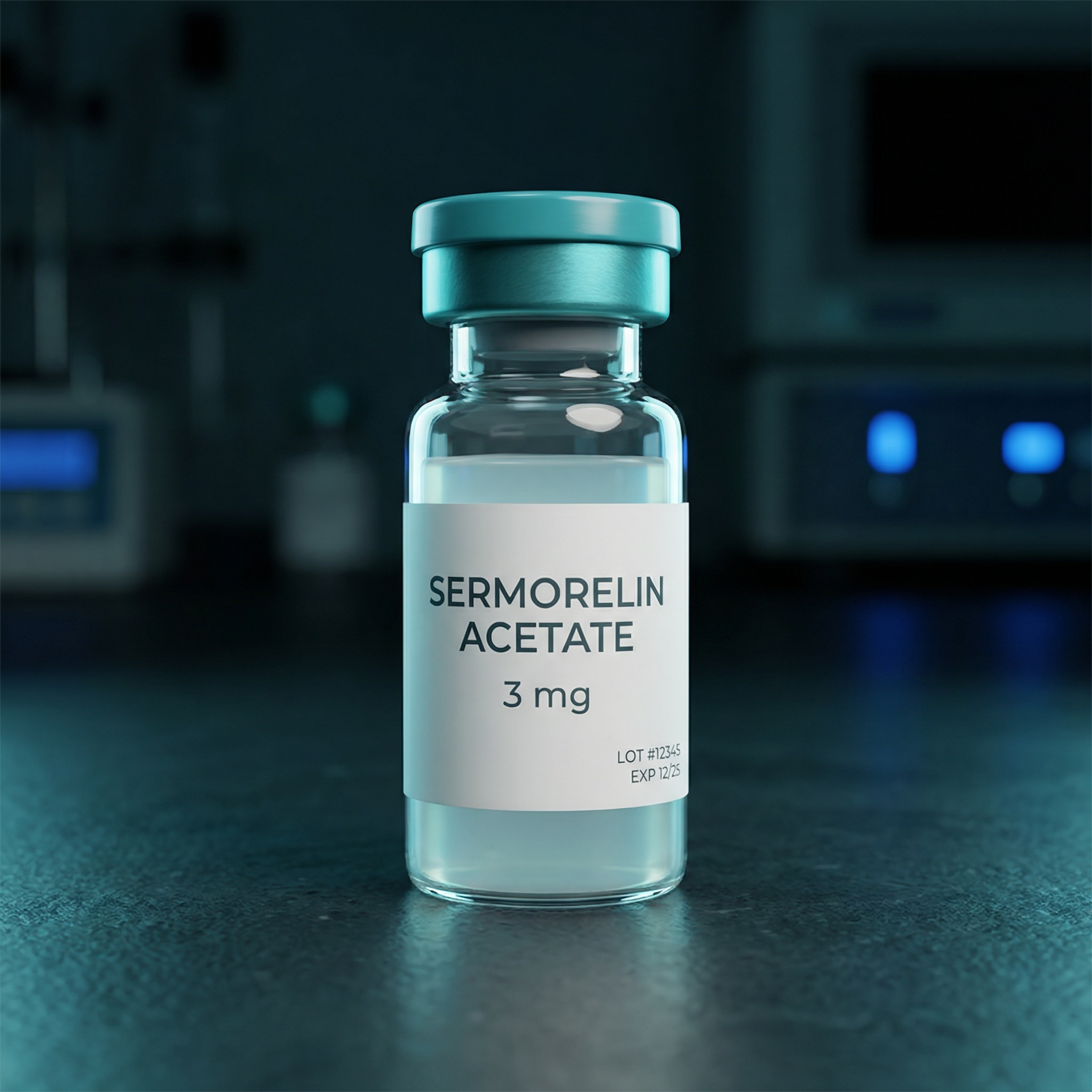
Sermorelin acetate is a classic growth-hormone-releasing hormone analog representing the active N-terminal segment of endogenous human GHRH. It occupies an important historical place in peptide therapeutics because it had formal U.S. drug history, but unlike tesamorelin or somatropin it is no longer a mainstream marketed FDA-approved product. The repository should present sermorelin as a real endocrine peptide medicine with legacy legitimacy, while also noting that current visibility comes largely from compounding, wellness, and retrospective endocrine use rather than from active modern commercial development.
Important names include sermorelin, sermorelin acetate, GRF(1-29)NH2, and the historical brand Geref. It is also cataloged in regulatory and ligand databases as a synthetic 29-amino-acid fragment of human GHRH. Identity records should distinguish legacy approved-drug history from withdrawn orphan designations and current compounding activity, because those categories are often blurred in peptide marketing materials.
3. Sequence and structure
Sermorelin is an amidated 29-amino-acid peptide corresponding to human GHRH(1-29), commonly handled as the acetate salt. It is a linear peptide without long-acting lipidation or depot chemistry, which helps explain why it does not mimic the sustained exposure profile of newer engineered endocrine peptides. Structurally it is best viewed as the minimal fully active fragment of native GHRH rather than as a radically redesigned analog.
Sermorelin acts as a GHRH receptor agonist at the pituitary, stimulating endogenous pulsatile growth hormone release and secondarily increasing IGF-1 signaling. That makes it mechanistically distinct from exogenous GH replacement: it works upstream through the physiologic axis rather than replacing GH directly. The target biology is therefore straightforward and well understood compared with many gray-market peptides, even if the modern commercial footprint is limited.
Historically, sermorelin was used in pediatric endocrine contexts involving growth failure and growth-hormone deficiency assessment or treatment-related use. Today it is more commonly discussed in anti-aging, wellness, and adult hormone-optimization circles, but those modern uses have a very different evidence footing from the original endocrine context. The repository should clearly label legacy medical use separately from current off-label or compounded positioning.
Because sermorelin is a short unmodified peptide, exposure is relatively brief compared with long-acting depot GHRH analogs or GH analogs. It is usually administered subcutaneously and exerts its main practical effect by triggering endogenous GH pulses rather than by remaining in circulation for extended periods. That short-acting physiology is central to understanding both its appeal and its limitations. Robust modern PK discussion is much thinner in public view than for actively marketed endocrine peptides.
The peptide has real biologic efficacy in stimulating GH-axis activity, and legacy endocrine use gives it more credibility than many wellness-market peptides. Even so, the evidence should be interpreted in context: historical pediatric endocrine value does not automatically validate broad contemporary anti-aging claims. Compared with direct GH therapy, efficacy may be more physiologic but also more limited or variable because intact pituitary responsiveness is required.
Safety concerns generally track the GH / IGF-1 axis rather than an exotic peptide-specific toxicity pattern. Practical issues include injection-site reactions, edema-type effects, altered glucose handling, and excessive IGF-1 response in susceptible contexts. Since most current use occurs outside the original mainstream marketed setting, product quality and source reliability are again major real-world safety variables. The repository should emphasize that historical legitimacy does not eliminate the risks of modern nonstandard sourcing.
Sermorelin has typically been used by subcutaneous injection, often in nightly or periodic regimens intended to engage physiologic GH release. However, because contemporary use is fragmented across compounded products and legacy reference patterns, dosing should be recorded only from specific labeled or study sources rather than presented as one universal standard. Product form, concentration, and intended population matter substantially.
UNVERIFIED RESEARCHER-REPORTED DOSING INFORMATION
The following dosing information has been compiled from community forums, researcher discussions, and gray-market sources. This information has NOT been verified through peer-reviewed scientific studies or clinical trials. It does NOT constitute medical advice, a prescription, or a recommendation for human use.
This data is presented solely for informational and educational purposes to document what is commonly discussed in research communities. Dosing protocols may be inaccurate, dangerous, or based on anecdotal reports with no scientific validation. Individual responses vary significantly, and unregulated compounds carry inherent risks including contamination, mislabeling, and unknown side effects.
Always consult qualified medical professionals before making any health-related decisions. The repository maintainers assume no liability for the use or misuse of this information.
Researcher-Reported Dosing Protocols
Common Dose Range: 200-500 mcg per injection
Administration Route: Subcutaneous injection
Frequency: Once daily
Timing: Before bed, typically 60-90 minutes after the last meal.
Schedule / Protocol: 3-6 month cycles, often with a 5 days on / 2 days off schedule
Dose Escalation: It is common to start at a lower dose of 100-300 mcg and titrate up based on individual response and tolerance.
Additional Notes: Sermorelin is intended to be administered at night to mimic the body's natural growth hormone release cycle.
This researcher-reported dosing information was compiled from unverified community sources and does not represent validated scientific or medical guidance.
Most meaningful clinical evidence comes from older endocrine literature rather than active large contemporary trials. No major modern Phase 3-style redevelopment program was identified in current public sources. For repository purposes, this places sermorelin in the category of historically validated but currently legacy-positioned peptide therapeutics.
Sermorelin had U.S. drug approval history, but the marketed product was withdrawn and is no longer available as a current mainstream FDA-approved commercial therapy. Importantly, FDA records indicate the reference product was not withdrawn for reasons of safety or effectiveness, which is a key nuance often missed in online discussions. The peptide is therefore best described as historically approved, commercially discontinued, and currently active mainly in compounded or off-label contexts.
13. References and source quality
Highest-value sources include NCATS / GINAS substance records, Federal Register documentation regarding the historic product withdrawal status, endocrine reference materials, and ligand-database entries describing sermorelin as a peptide drug. Source quality is relatively strong for identity and regulatory history, but weaker for contemporary broad-use claims. Any future update should prioritize original labeling or monograph material over clinic-marketing content.
Sermorelin is a conventional synthetic peptide usually encountered as a lyophilized acetate salt for reconstitution. Manufacturing is simpler than that of depot microsphere systems or highly lipidated incretin analogs, but peptide purity, reconstitution practice, and cold-chain handling still matter. Current market heterogeneity means pharmaceutical-history identity should not be assumed to guarantee present-day product equivalence.
Version 0.1 starter entry created March 14, 2026. Evidence basis for this draft: NCATS / GINAS identity records, Federal Register documentation on Geref withdrawal status, and endocrine reference sources. Recommended future upgrade: attach legacy label excerpts or historical pediatric endocrine study citations.