SLU-PP-322
Nomenclature-ambiguous exercise-mimetic research compound; public primary literature centers on SLU-PP-332, a non-peptide ERR agonist, rather than a validated peptide called SLU-PP-322.
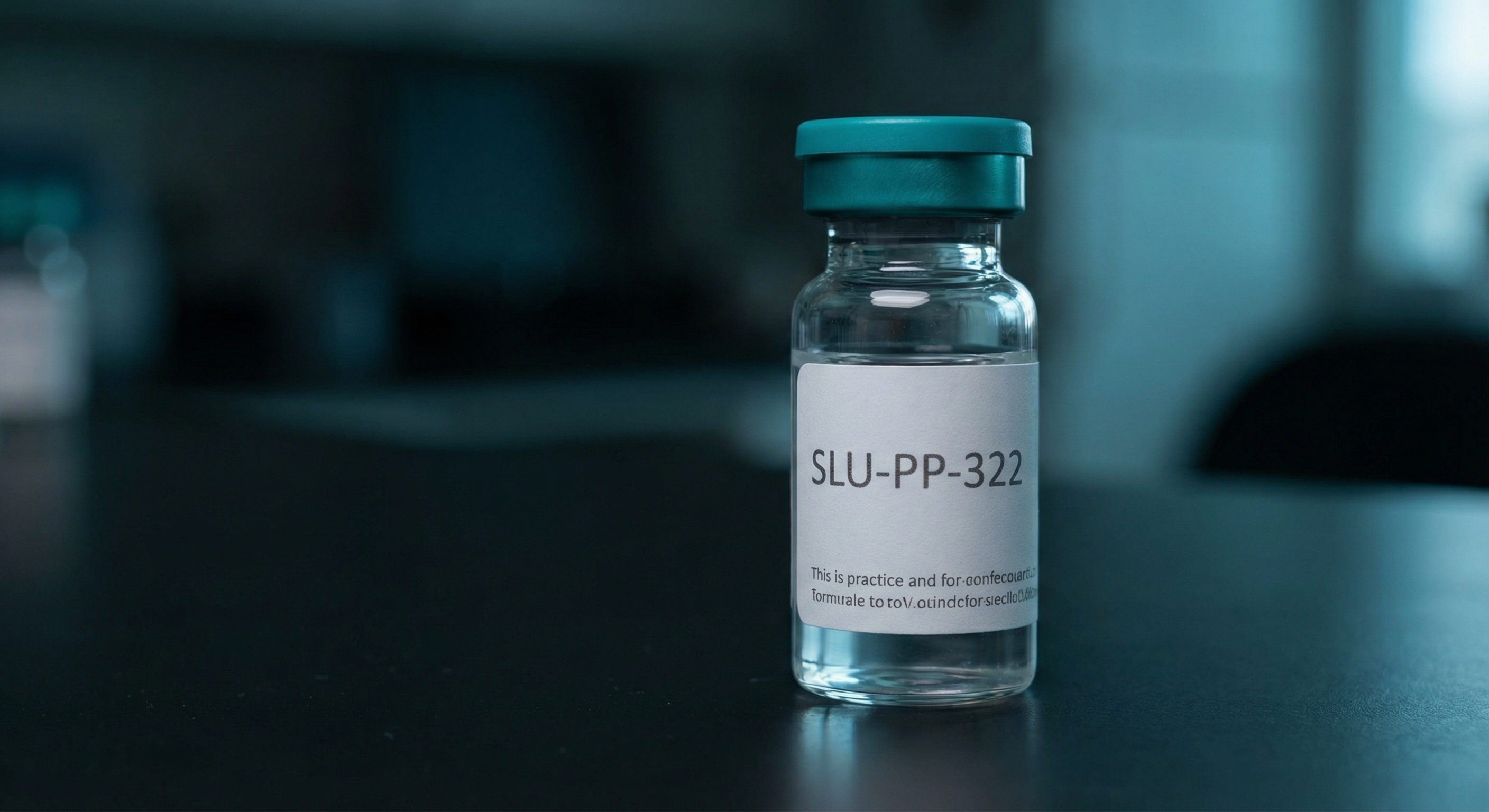
This entry requires an explicit identity warning. The user-supplied name is SLU-PP-322, but the publicly indexed primary literature overwhelmingly centers on SLU-PP-332, a small-molecule pan-ERR agonist developed in academic exercise-mimetic research. Online vendor markets frequently blur 322 and 332, and they also misclassify the compound as a peptide even though the published academic compound is not a peptide. For repository quality control, this entry should be retained for discoverability but flagged as an ambiguous non-peptide research compound unless a specific certificate of analysis or exact chemical identity is provided.
The key identity issue is whether the intended compound is truly SLU-PP-322, or whether that label is a market typo / alias for SLU-PP-332. The best-supported public papers describe SLU-PP-332 from Saint Louis University-linked work as an ERRalpha / beta / gamma agonist with exercise-mimetic effects in mice. Because peptide vendors often reuse inaccurate names, the repository should capture both the user-facing label and the evidence-based correction note. This is one of the clearest examples in the database where catalog hygiene matters more than repeating market language.
3. Sequence and structure
No amino-acid sequence should be assigned here unless a product-specific document proves that a peptide version exists and is actually distinct. The academically described SLU-PP-332 is a synthetic small molecule, not a peptide, so section 3 should explicitly record sequence as not applicable for the literature-anchored compound. If future documentation confirms a separate SLU-PP-322 entity, this entry should likely be split into two records: the literature-backed small molecule and the vendor-labeled market product.
If the intended reference is SLU-PP-332, the mechanism is agonism of estrogen-related receptors (ERRs), especially in an exercise-mimetic metabolic program affecting mitochondrial function, fatty-acid oxidation, and energy expenditure. That biology is intellectually interesting but very different from peptide-receptor pharmacology. If the intended product is some separate compound labeled 322, the public mechanistic evidence is too weak to describe confidently. The repository should therefore tie mechanism claims to the 332 literature and maintain an uncertainty flag for the 322 label.
Published use cases are preclinical and center on metabolic disease, obesity, endurance, mitochondrial bioenergetics, and exercise-mimetic research in animal models. No validated human therapeutic indication was identified for either the ambiguous 322 label or the better-supported 332 literature compound. Any marketplace claims about fat loss, performance, or endurance should be treated as extrapolations from preclinical work rather than as established human uses.
For the literature-based 332 compound, discussion is primarily preclinical and oral small-molecule oriented rather than peptide PK. Human absorption, distribution, metabolism, elimination, and dose-exposure data are not established in the public clinical sense because no approved or late-stage human drug program was identified. This section should therefore be concise and explicit about the absence of validated human PK information.
The strongest efficacy evidence comes from animal studies showing exercise-mimetic metabolic effects, including increased energy expenditure and improved metabolic parameters in mouse models. Those findings are real and publication-backed, but they do not justify treating the compound as a proven human anti-obesity or performance drug. Evidence quality is therefore high for a preclinical concept and low for human therapeutic use.
No robust human safety package was identified. Because identity ambiguity already exists at the naming level, safety interpretation is doubly uncertain for products sold under the 322 label. Risks include the usual problems of unapproved research compounds - unknown human dose-response, missing chronic toxicology context, and potentially poor manufacturing transparency. Repository users should be warned not to infer safety from mouse metabolism papers.
There is no validated clinical human dosing standard for SLU-PP-322, and published animal-work regimens for SLU-PP-332 should not be translated casually into human use. If the repository later stores vendor-specific data for research purposes, that information should be isolated from the evidence-based clinical field structure.
UNVERIFIED RESEARCHER-REPORTED DOSING INFORMATION
The following dosing information has been compiled from community forums, researcher discussions, and gray-market sources. This information has NOT been verified through peer-reviewed scientific studies or clinical trials. It does NOT constitute medical advice, a prescription, or a recommendation for human use.
This data is presented solely for informational and educational purposes to document what is commonly discussed in research communities. Dosing protocols may be inaccurate, dangerous, or based on anecdotal reports with no scientific validation. Individual responses vary significantly, and unregulated compounds carry inherent risks including contamination, mislabeling, and unknown side effects.
Always consult qualified medical professionals before making any health-related decisions. The repository maintainers assume no liability for the use or misuse of this information.
Researcher-Reported Dosing Protocols
Common Dose Range: 100-1000 mcg per day, orally. Some sources report ranges of 1-5 mg per week via subcutaneous injection.
Administration Route: Oral administration is most commonly reported, although subcutaneous injection is also mentioned.
Frequency: Once or twice daily.
Timing: Typically taken in the morning. For higher doses or pre-workout benefits, doses may be split between morning and pre-training.
Schedule / Protocol: Typically cycled for 8-16 weeks, followed by a 2-8 week break.
Dose Escalation: It is consistently recommended to start with a low dose (e.g., 100 mcg) and titrate up slowly while monitoring for side effects.
Additional Notes: SLU-PP-332 is an experimental ERRα agonist. It is often used in cycles and stacked with other compounds for enhanced effects. The information available is based on anecdotal reports from research communities and is not a substitute for medical advice. The reported dosages and protocols vary significantly.
This researcher-reported dosing information was compiled from unverified community sources and does not represent validated scientific or medical guidance.
No major human clinical-trial program was identified for the ambiguous 322 label, and no registered late-stage therapeutic program was found in the public literature for the better-known 332 compound. As of March 2026 this remains a preclinical research story, not a clinically established drug-development story.
This is not an FDA-approved peptide drug. The best-supported public compound in this naming neighborhood is a non-peptide academic research agonist, still in preclinical development territory. The repository should classify this entry as identity-ambiguous, non-approved, and likely non-peptide unless better documentation is supplied.
13. References and source quality
Highest-value sources include the primary academic papers on SLU-PP-332, later analytical / metabolism papers discussing the same molecule, and institutional news coverage tied back to those studies. Source quality for the exact label SLU-PP-322 is poor and heavily contaminated by vendor pages and market chatter. Future curation should prioritize primary chemistry data or a product certificate before expanding this record.
For the literature-backed compound, manufacturing belongs to small-molecule synthetic chemistry rather than peptide synthesis. This should be stated plainly so that downstream users do not misfile it in peptide-sequence workflows or peptide-synthesis procurement systems. If a separate 322 product is ever documented, its formulation would need to be recorded as a distinct item.
Version 0.1 starter entry created March 14, 2026. Evidence basis for this draft: primary literature on SLU-PP-332 and public analytical papers, with an explicit nomenclature warning applied to the user-supplied SLU-PP-322 label. Recommended future upgrade: confirm the exact intended substance from a COA, patent number, or direct product documentation.