Tesamorelin
Synthetic 44-amino-acid GHRH analog approved in the United States for reduction of excess abdominal fat in adults with HIV-associated lipodystrophy.
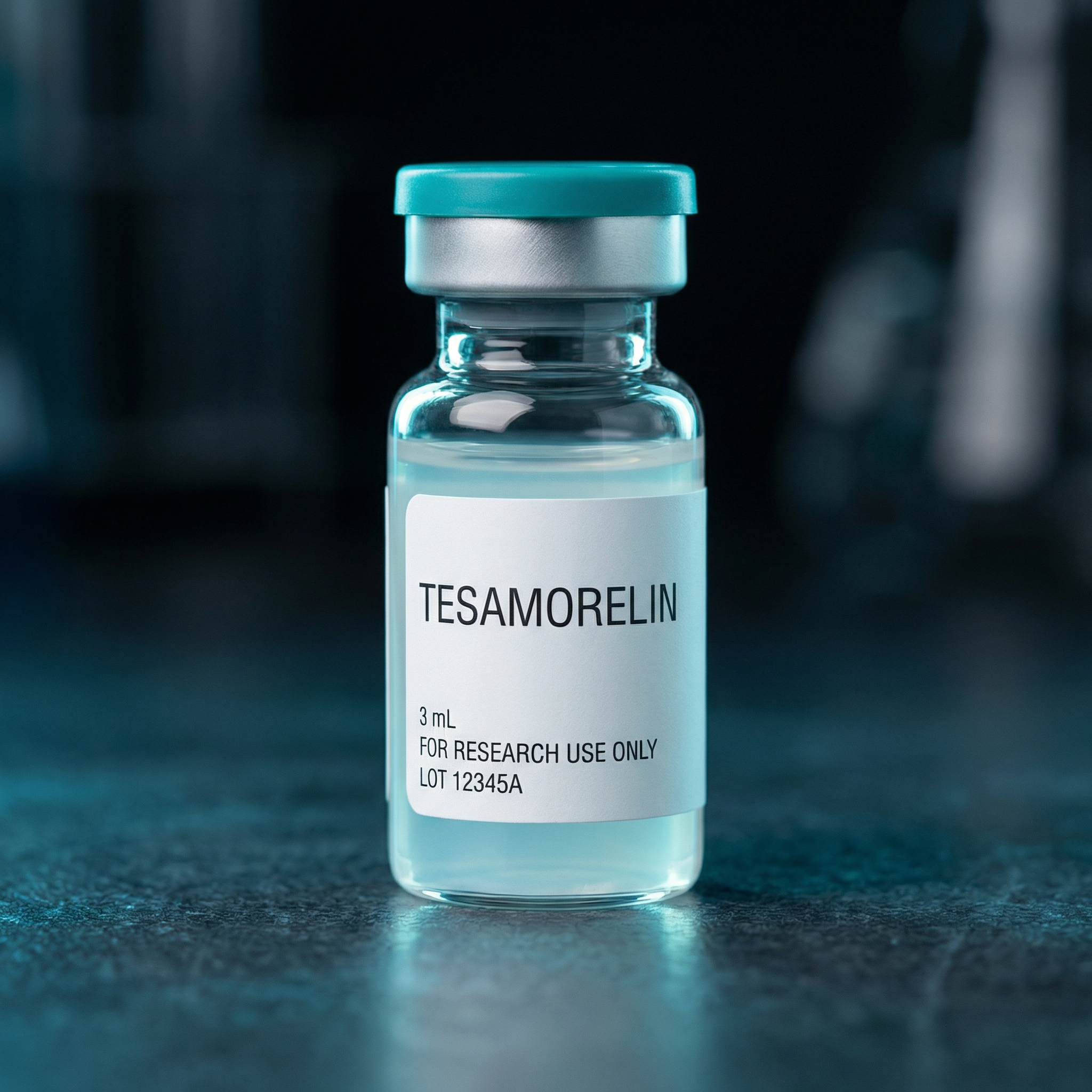
Tesamorelin is one of the clearest examples of a peptide that is both clinically important and often misunderstood in broader peptide culture. It is not a general anti-obesity peptide and not a generic anti-aging product; it is an approved GHRH analog used for reduction of excess abdominal fat in adults with HIV who have lipodystrophy. With the 2025 approval of the Egrifta WR formulation, it remains an active and clinically relevant peptide therapy. The repository should keep its approved indication front and center rather than letting general GH-optimization narratives take over the entry.
Key names include tesamorelin, tesamorelin acetate, TH9507, Egrifta SV, and Egrifta WR. Identity management should preserve product-generation differences because the WR formulation changes practical handling and reconstitution context. Tesamorelin is a GHRH analog, but it should not be confused with sermorelin, CJC-1295 variants, or direct growth hormone replacement.
3. Sequence and structure
Tesamorelin is a synthetic analog of human GHRH(1-44) with an N-(trans-3-hexenoyl) modification at the N terminus. That modification is central to the drug's identity and distinguishes it from native hormone sequence alone. Structurally it is a long endocrine peptide, but still much more straightforward than lipidated incretin multi-agonists or depot GnRH microspheres.
Tesamorelin acts as a GHRH receptor agonist, increasing endogenous growth hormone release and downstream IGF-1 signaling. In the approved setting this translates into reduction of excess visceral abdominal fat in HIV-associated lipodystrophy. The biology is axis-based and well understood: pituitary stimulation first, metabolic body-composition effect second. That is different from using an exogenous GH product directly.
The approved U.S. indication is reduction of excess abdominal fat in adults with HIV who have lipodystrophy. The label explicitly does not position tesamorelin as a general weight-loss therapy, and that distinction should be visible in the repository. Research and off-label interest may extend further, but the approved use case remains very specific and should anchor the entry.
Tesamorelin is administered subcutaneously and produces growth-hormone / IGF-1 axis activation consistent with a GHRH analog. Clinical use requires attention to IGF-1 elevation, glucose tolerance, and diabetes-related monitoring. The current label and sponsor materials also make formulation handling relevant, because the newer WR presentation changes reconstitution burden relative to earlier product versions.
Efficacy is well established for its approved body-composition indication in HIV-associated lipodystrophy, particularly reduction of visceral adipose tissue. That evidence should not be generalized carelessly into broader obesity or bodybuilding claims. In its actual approved niche, tesamorelin is one of the better-supported endocrine peptides in the database.
Safety concerns are mostly those expected from GH-axis stimulation in a vulnerable population: increased IGF-1, glucose intolerance or diabetes risk, retinopathy considerations in diabetic patients, hypersensitivity reactions, and injection-site issues. These are label-grounded, practical monitoring concerns rather than speculative peptide-market rumors. Repository summaries should stay close to the approved safety framing.
Tesamorelin is a daily subcutaneous therapy with product-specific preparation instructions. The Egrifta WR formulation still uses daily administration but changes the practical reconstitution burden relative to prior versions. This entry should therefore record dosing in approved-product terms rather than folded together with legacy or compounded GHRH analog regimens.
UNVERIFIED RESEARCHER-REPORTED DOSING INFORMATION
The following dosing information has been compiled from community forums, researcher discussions, and gray-market sources. This information has NOT been verified through peer-reviewed scientific studies or clinical trials. It does NOT constitute medical advice, a prescription, or a recommendation for human use.
This data is presented solely for informational and educational purposes to document what is commonly discussed in research communities. Dosing protocols may be inaccurate, dangerous, or based on anecdotal reports with no scientific validation. Individual responses vary significantly, and unregulated compounds carry inherent risks including contamination, mislabeling, and unknown side effects.
Always consult qualified medical professionals before making any health-related decisions. The repository maintainers assume no liability for the use or misuse of this information.
Researcher-Reported Dosing Protocols
Common Dose Range: 1-2 mg per injection
Administration Route: Subcutaneous injection
Frequency: Once daily, 5-7 days per week
Timing: Before bed or in the evening
Schedule / Protocol: 2-3 months on, followed by a 1-month break
Dose Escalation: No specific dose escalation is commonly reported; researchers typically start with the standard dose.
Additional Notes: The most common injection site is the abdomen, and it is recommended to rotate injection sites to avoid skin issues. There are different formulations available, such as Egrifta SV® and Egrifta WR™, which have different dosages.
This researcher-reported dosing information was compiled from unverified community sources and does not represent validated scientific or medical guidance.
Clinical development is mature in HIV-associated lipodystrophy, and the product has a long approval history with formulation evolution rather than a brand-new efficacy story. There is less reason to focus on speculative future trials than on preserving the approved-indication evidence base and formulation lifecycle history.
Tesamorelin is FDA approved in the United States, and the current lifecycle story includes the 2025 approval of the Egrifta WR formulation. It remains the only U.S.-approved medication specifically indicated to reduce excess abdominal fat in adults with HIV and lipodystrophy. This should be stated plainly in the repository.
13. References and source quality
Highest-value sources include the current FDA-approved labeling for Egrifta WR, earlier FDA chemistry / review materials for tesamorelin, and official Theratechnologies product announcements and monographs. Source quality for approved use, mechanism, and safety is high. Broad non-approved claims should be weighted much lower than the labeled evidence base.
Tesamorelin is supplied as a peptide drug product for reconstitution and injection, with formulation specifics differing between Egrifta versions. Manufacturing notes should capture the modified peptide identity, lyophilized presentation, storage requirements, and the practical distinction between daily administration and weekly reconstitution in the WR formulation. Those real-world formulation details matter for users comparing endocrine peptides.
Version 0.1 starter entry created March 14, 2026. Evidence basis for this draft: current Egrifta WR labeling, earlier FDA review materials, and official Theratechnologies lifecycle documents. Recommended future upgrade: add a concise formulation-comparison table between historical Egrifta versions.