Testagen
Ultrashort bioregulator peptide most commonly described as KEDG, marketed for endocrine / healthy-aging support claims but supported mainly by limited bioregulator literature rather than mainstream drug development.
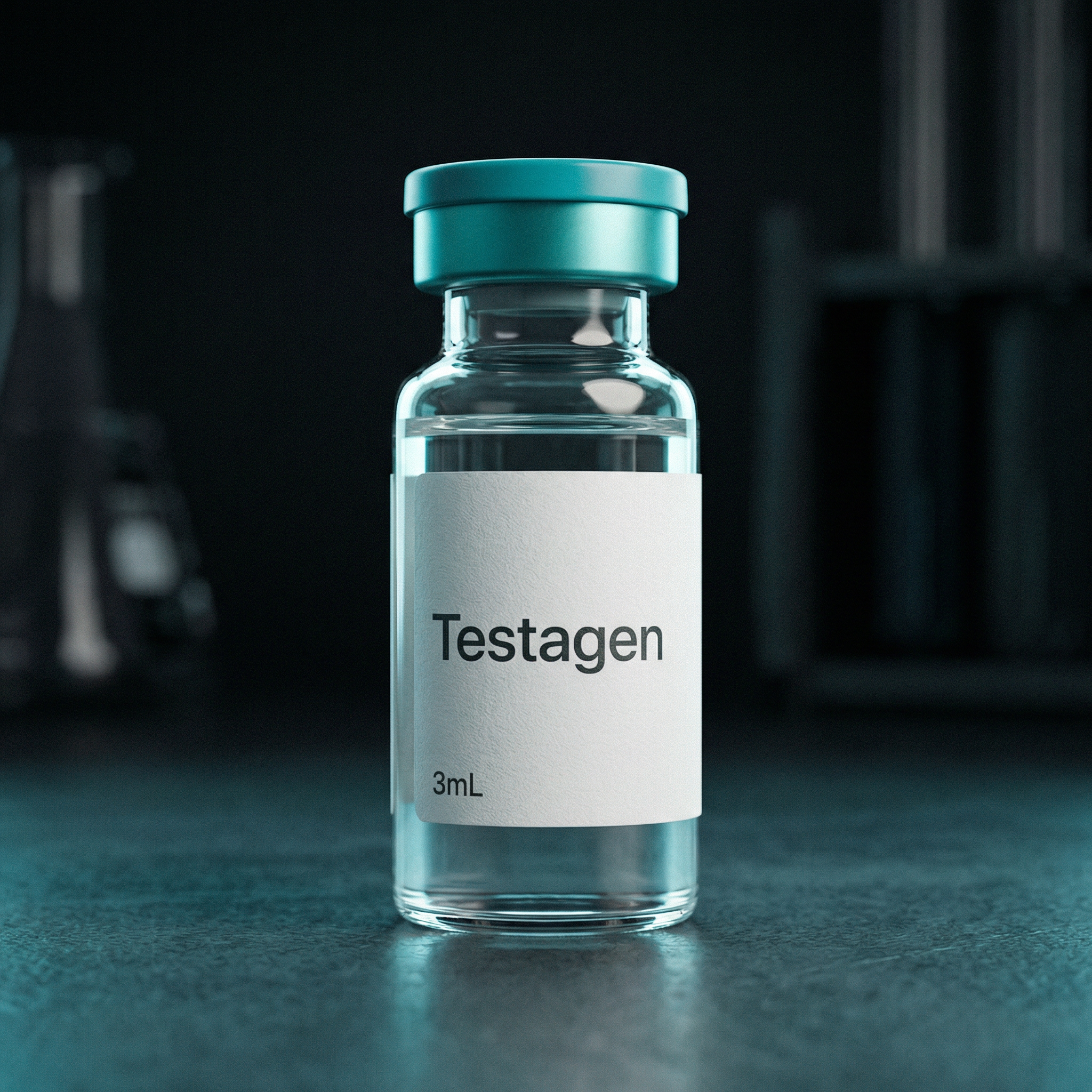
Testagen belongs to the Khavinson-style ultrashort bioregulator family rather than to the mainstream pharmaceutical peptide world. It is marketed for endocrine, gonadal, pituitary, and healthy-aging support, but the underlying evidence base is much smaller and less internationally standardized than the sales language often suggests. In this repository it should be treated as a niche bioregulator entry with uncertain clinical importance and limited modern translational validation.
Public bioregulator and vendor literature most commonly describes Testagen as the tetrapeptide KEDG, although identity reporting is not as standardized as it is for approved drug peptides. The naming section should also warn against confusion with unrelated products that use the word Testagen in commercial branding, because not every item carrying that name refers to the same peptide concept. Clear identity handling is essential here.
3. Sequence and structure
Testagen is most commonly represented as Lys-Glu-Asp-Gly (KEDG), a very short linear tetrapeptide. As with several other bioregulator entries, the sequence is simple but the evidence around tissue specificity and mechanism is much more interpretive than receptor-driven. The repository should store the sequence with an identity-confidence note rather than pretending the structural literature is as mature as for approved peptides.
Mechanistic claims around Testagen come mainly from peptide-bioregulator theory, DNA-binding discussions, and gene-expression modulation narratives rather than from a classic validated receptor pharmacology model. It is often positioned as acting on pituitary or endocrine tissues, with downstream effects on reproductive or hormonal regulation proposed in some literature. Those claims should be presented as mechanistic hypotheses with limited modern confirmation, not as settled drug biology.
Typical claimed use cases include endocrine support, male reproductive health, healthy aging, and hormonal resilience. These should be labeled as investigational, low-confidence, or community-driven depending on the specific claim. No major-agency-approved indication was identified, and the current evidence does not justify treating Testagen as an established medical therapy.
Modern PK and ADME data for Testagen are sparse. Any attempt to present detailed absorption or half-life numbers would likely outrun the evidence. The most honest repository summary is that human pharmacology remains poorly characterized, especially by contemporary drug-development standards.
Efficacy evidence is limited and fragmented. Some bioregulator literature and commercial summaries suggest endocrine or rejuvenation-related effects, but the evidence base lacks the scale, standardization, and independent replication expected for strong therapeutic conclusions. Repository confidence should therefore remain low to modest depending on the exact endpoint discussed.
There is no large modern international safety package for Testagen. Short-peptide size does not automatically mean strong safety certainty, particularly when product quality and regulatory oversight are inconsistent. The main concerns are evidence scarcity, variable sourcing, and overinterpretation of mechanistic narratives into real-world clinical claims.
Marketed regimens vary and are not supported by a clean approved-product standard. Any future dosing field should be explicitly source-linked and labeled as non-approved / investigational where applicable. At this stage the database should avoid implying a validated human protocol.
UNVERIFIED RESEARCHER-REPORTED DOSING INFORMATION
The following dosing information has been compiled from community forums, researcher discussions, and gray-market sources. This information has NOT been verified through peer-reviewed scientific studies or clinical trials. It does NOT constitute medical advice, a prescription, or a recommendation for human use.
This data is presented solely for informational and educational purposes to document what is commonly discussed in research communities. Dosing protocols may be inaccurate, dangerous, or based on anecdotal reports with no scientific validation. Individual responses vary significantly, and unregulated compounds carry inherent risks including contamination, mislabeling, and unknown side effects.
Always consult qualified medical professionals before making any health-related decisions. The repository maintainers assume no liability for the use or misuse of this information.
Researcher-Reported Dosing Protocols
Common Dose Range: 100-300 mcg per injection
Administration Route: Subcutaneous injection
Frequency: Once daily
Timing: Any consistent time of day.
Schedule / Protocol: 8-12 week cycles
Dose Escalation: Start at 100 mcg daily and increase by approximately 50 mcg every 2 weeks as tolerated.
Additional Notes: One source suggests a much higher dose of 2mg (2000 mcg) for a 10-day cycle, but this appears to be an outlier. Another source mentions an oral form with a dosage of 5-10mg daily. The most commonly reported protocol appears to be the gradual titration of subcutaneous injections over a longer cycle.
This researcher-reported dosing information was compiled from unverified community sources and does not represent validated scientific or medical guidance.
No robust contemporary international clinical-trial program was identified for Testagen as a peptide therapeutic. The entry is better supported by scattered mechanistic, bioregulator, and small-study literature than by formal clinical development.
Testagen is not FDA approved and does not appear to have mainstream EMA-backed therapeutic status. It should be classified as a niche peptide bioregulator / research product with low regulatory maturity.
13. References and source quality
Highest-value sources include peptide-bioregulator reviews, transport and DNA-interaction papers that mention Testagen, and any direct structural confirmation from reputable peptide suppliers or academic sources. Source quality is weaker than for major drug peptides and often mixes mechanistic speculation with marketing. This entry especially benefits from conservative wording.
Testagen is usually presented as a short synthetic peptide product, often sold as a lyophilized powder or capsule-based supplement-style item depending on vendor. Manufacturing transparency and identity confirmation should be captured whenever possible because this is not a tightly standardized pharmaceutical market.
Version 0.1 starter entry created March 14, 2026. Evidence basis for this draft: public bioregulator literature, sequence references describing Testagen as KEDG, and broader reviews of ultrashort peptide regulatory theories. Recommended future upgrade: add verified source documentation tying a specific commercial or academic Testagen product to the KEDG identity.