Vesugen
Ultrashort vascular bioregulator peptide, often transliterated as Vezugen, with a narrow literature base focused on endothelial / vascular aging contexts rather than mainstream drug development.
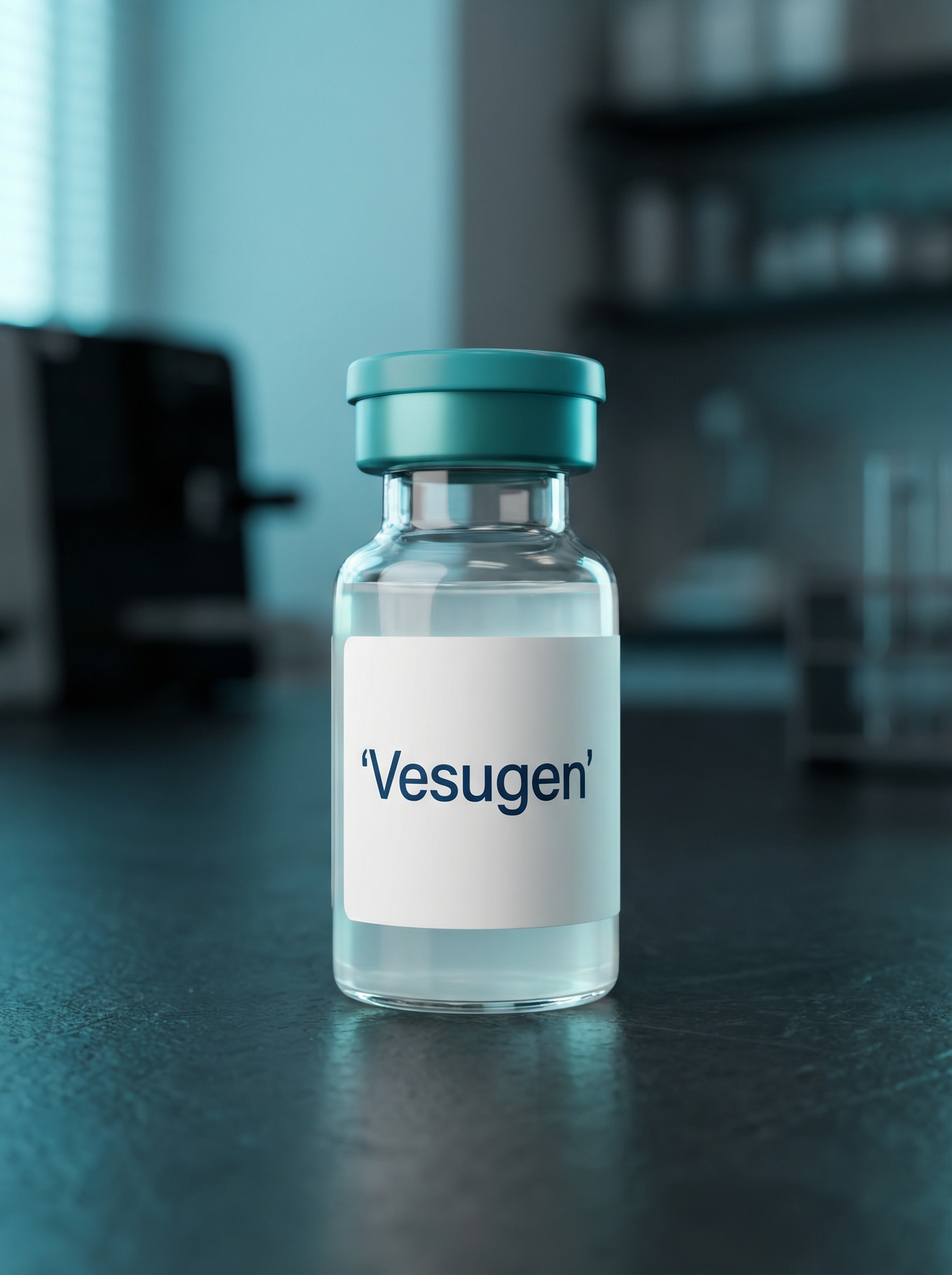
Vesugen belongs to the ultrashort Khavinson-style bioregulator family and is most often discussed as a vascular-support peptide. It appears in a small but real literature base involving vascular aging, endothelial biology, and limited regional clinical work, yet it has not entered mainstream international therapeutic development. The repository should therefore frame it as a niche vascular bioregulator with interesting but low-maturity evidence.
Important names include Vesugen and Vezugen, reflecting transliteration differences across sources. Vendor and bioregulator literature most commonly present it as a vascular-directed short peptide rather than as a classic receptor agonist drug. Naming consistency should be preserved because users searching one transliteration may miss the same compound under another.
3. Sequence and structure
Vesugen is commonly described as the tripeptide Lys-Glu-Asp (KED). It is a very short linear peptide with none of the complexity seen in endocrine or incretin therapeutics. As with other ultrashort bioregulators, sequence simplicity contrasts with a comparatively speculative mechanism literature.
The mechanistic narrative centers on gene-expression regulation and support of vascular endothelial function, proliferation-associated signaling, and tissue resilience in aging-related vascular contexts. Some literature also points to antihypoxic and endothelial-restorative actions. These claims are biologically interesting but should be tagged as mechanistic / preclinical / limited-clinical rather than fully validated therapeutic biology.
Use cases in the literature include vascular aging, endothelial dysfunction, circulation support, and even vasculogenic erectile dysfunction associated with atherosclerotic disease in small regional studies. None of these should be treated as globally approved indications. The repository should preserve them as research or regional-use contexts.
Detailed modern PK data are sparse. The most honest summary is that Vesugen is an ultrashort peptide with limited formal ADME characterization and that most mechanistic claims rely on downstream regulatory biology rather than on classical dose-exposure modeling. This is a low-precision pharmacology entry compared with mainstream peptide drugs.
Evidence includes cell-culture work, animal observations, and a small regional human literature base. The signal is interesting enough to justify a repository entry, especially for vascular-aging researchers, but far too limited to support strong therapeutic conclusions. Evidence quality should therefore be recorded as low-to-moderate at best depending on endpoint.
No large modern international safety dataset was identified. Short-peptide size and regional-use history may suggest tolerability, but confidence remains limited by the scale and nature of the evidence. Product source and formulation quality remain important practical variables.
Marketed use patterns vary and are not anchored to a globally standardized approved product. Any dosing or cycle claims should be treated as source-specific and non-approved unless connected to a named regional formulation or study. At baseline, this entry should avoid implying a universal regimen.
UNVERIFIED RESEARCHER-REPORTED DOSING INFORMATION
The following dosing information has been compiled from community forums, researcher discussions, and gray-market sources. This information has NOT been verified through peer-reviewed scientific studies or clinical trials. It does NOT constitute medical advice, a prescription, or a recommendation for human use.
This data is presented solely for informational and educational purposes to document what is commonly discussed in research communities. Dosing protocols may be inaccurate, dangerous, or based on anecdotal reports with no scientific validation. Individual responses vary significantly, and unregulated compounds carry inherent risks including contamination, mislabeling, and unknown side effects.
Always consult qualified medical professionals before making any health-related decisions. The repository maintainers assume no liability for the use or misuse of this information.
Researcher-Reported Dosing Protocols
Common Dose Range: 500-2000 mcg per day for subcutaneous injection; 10-20 mg per day for oral capsules.
Administration Route: Subcutaneous injection, oral (capsules), and sublingual (drops).
Frequency: Once or twice daily for subcutaneous injection and oral capsules; 3-4 times daily for sublingual drops.
Timing: Any consistent time for subcutaneous injection; with food for oral capsules; 10-15 minutes before meals for sublingual drops.
Schedule / Protocol: 8-16 week cycles for subcutaneous injection; 10-30 day cycles repeated every 3-6 months for oral/sublingual forms.
Dose Escalation: For subcutaneous injection, a gradual titration is recommended, starting at 500 mcg daily and increasing weekly. Higher doses (e.g., 2mg) are often split into two administrations per day.
Additional Notes: Vesugen is a peptide bioregulator available in multiple forms. The most commonly discussed form in research communities appears to be subcutaneous injection. Different forms have distinct dosing protocols.
This researcher-reported dosing information was compiled from unverified community sources and does not represent validated scientific or medical guidance.
Clinical-trial visibility is low. The most notable human-facing literature appears as small regional clinical studies rather than formal multinational registry programs. Future updates should catalog any verifiable clinical protocols separately from bioregulator marketing narratives.
Vesugen is not FDA approved and does not have mainstream EMA-backed approval. It is best classified as a niche ultrashort bioregulator peptide with limited regional clinical literature and low global regulatory maturity.
13. References and source quality
Highest-value sources include PubMed-indexed regional studies on Vezugen / Vesugen, broader peptide-bioregulator reviews, and mechanistic papers on endothelial or proliferation-related signaling. Source quality is modest and often geographically concentrated, so evidence grading is especially important.
Vesugen is usually marketed as a simple synthetic short peptide. Manufacturing complexity is low in principle, but the lack of a standardized mainstream pharmaceutical market makes identity confirmation and purity still important. This entry should preserve the distinction between elegant peptide simplicity and low market standardization.
Version 0.1 starter entry created March 14, 2026. Evidence basis for this draft: PubMed-indexed Vezugen / Vesugen studies and broader peptide-bioregulator review literature. Recommended future upgrade: add transliteration-aware indexing and any validated product-monograph details.